

Tenkara Cast / Episode 28 / Conversations
Conversations: Dave Hughes
- 35 min
- With Dave Hughes
- Apple Podcasts
- SoundCloud
- RSS
- Download MP3
-
Link copied to clipboard
Daniel talks with Dave Hughes, the author of more than twenty fly-fishing books, who has been fishing with tenkara for far longer than most people in the United States. They recorded at the Fly Fishing Show in Somerset, New Jersey, on a small travel recorder in a noisy room, so the sound quality is rough.
It is a friendly chat about how Dave found tenkara, how he uses it, and the freedom to fish it however you enjoy.
In this episode
- Dave's first sight of tenkara on a trip to Japan with his future wife, Masako Tani, and a photo of him fishing a tenkara rod in an aquarium tank, probably from 1992.
- Why a tenkara rod became his way to relax, a break from fishing as work.
- The appearance of tenkara in a short Oregon Public Broadcasting segment and in the second edition of his book on trout from small streams.
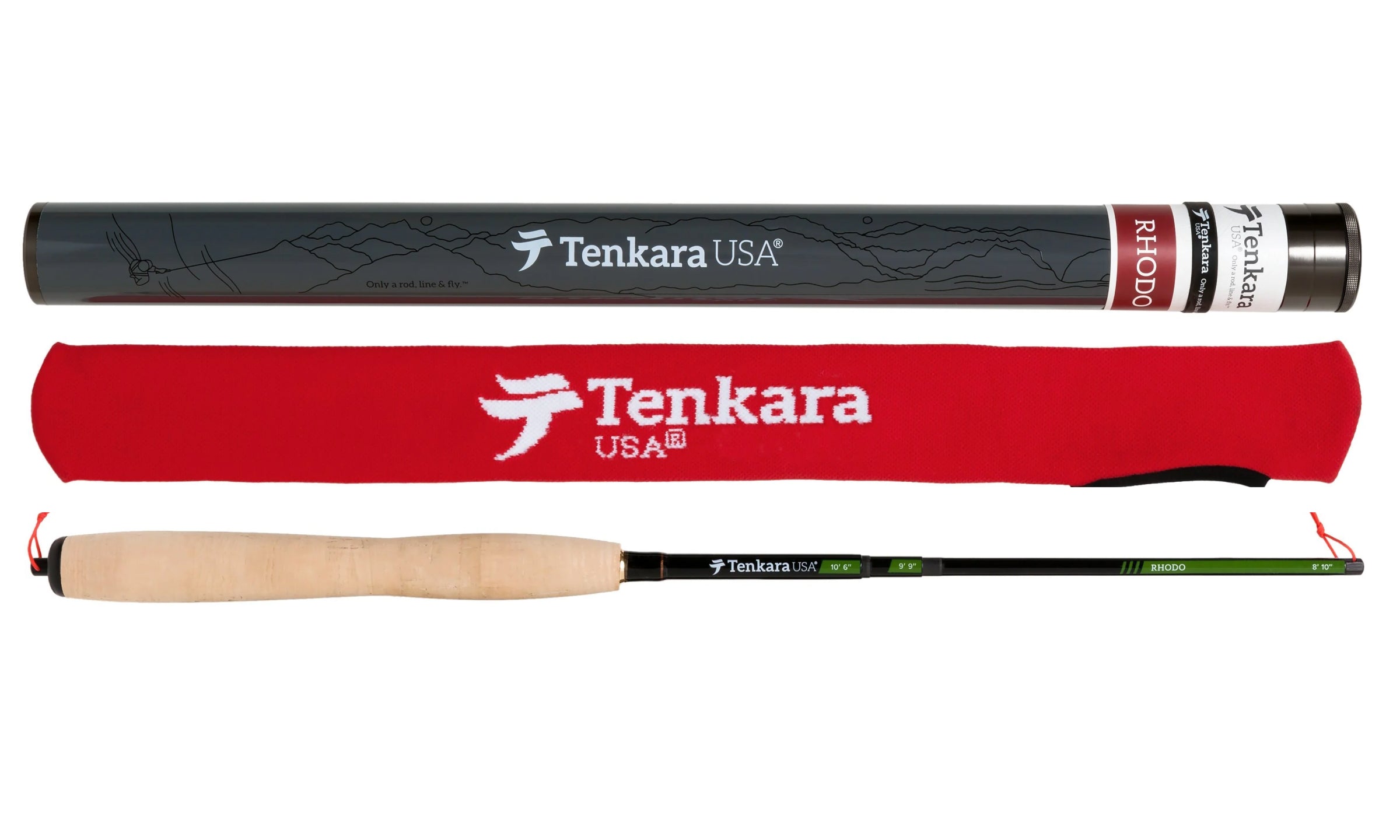
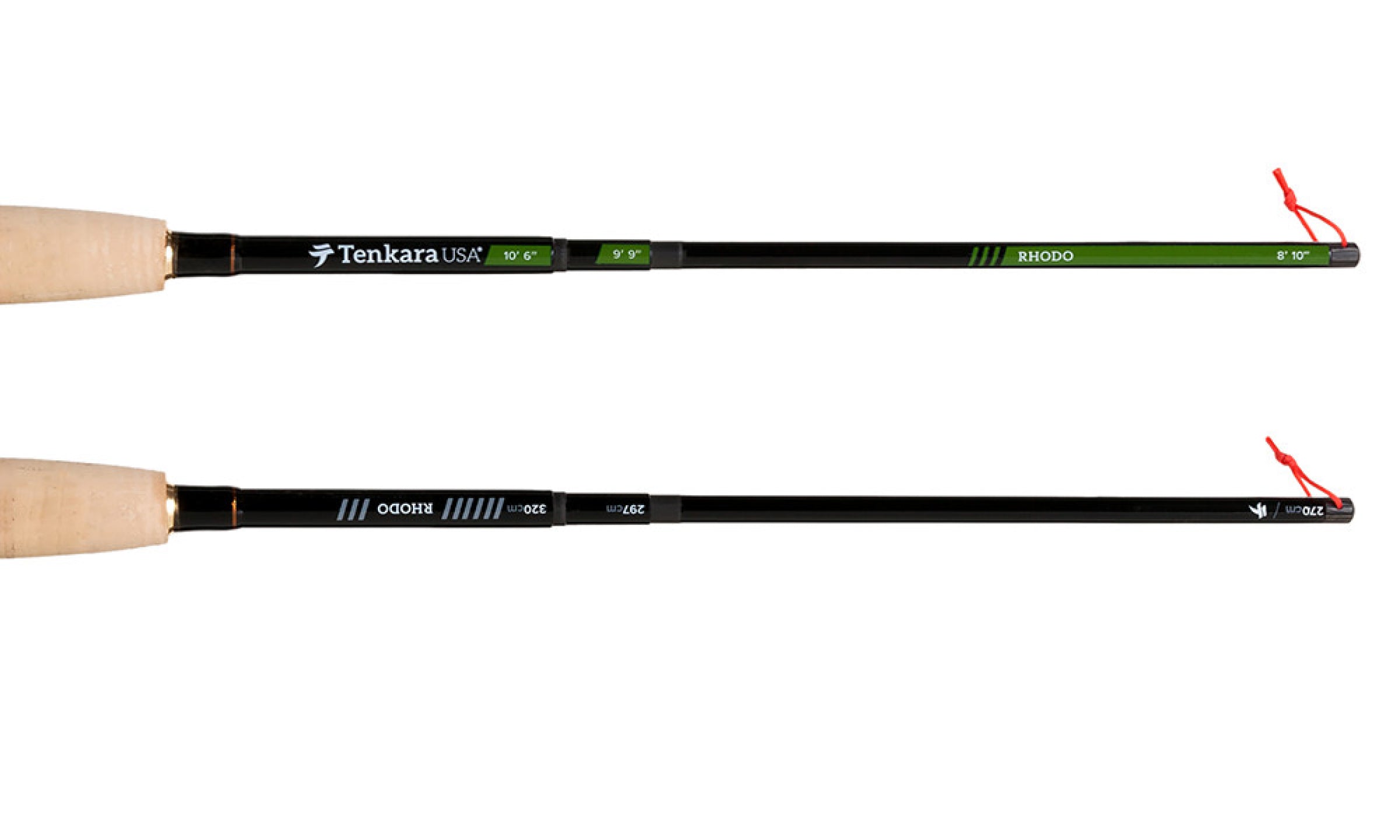
- Why the adjustable Rhodo suits his tight, tree-covered Oregon streams, and how its action seems to change with length.
- How he fishes tenkara like Western small-stream fishing, including a dry fly and a small beadhead nymph under a yarn indicator, and his view that everyone should please themselves.
- Daniel's reflection on possibly coming across as dogmatic early on, and sharing Japanese methods as a different way of thinking rather than a tradition.
- Soft-tackle wet flies, kebari, and a shared interest in mushroom foraging.
Mentioned in this episode
- RHODO adjustable rod
- Dave Hughes' website and Dave fishing with tenkara in Oregon (Oregon Public Broadcasting)
- Dave's books on wet flies and trout from small streams; Ralph Cutter; Tom Rosenbauer of Orvis
Read the full transcript
0:00This is Daniel Galhardo and you're listening to the Tenkara Cast, a podcast about the simple Japanese method of fly-fishing, Tenkara. In the Tenkara Cast we'll be sharing information on techniques, history, philosophy, and Tenkara stories from anglers all over the world. This podcast is brought to you by Tenkara USA, introducing Tenkara outside of Japan since 2009. It's only possible we create content such as this podcast and videos because of your support. So we thank you so very much for purchasing Tenkara USA rods, lines, and flies. I hope you enjoy learning more about the simple method of fly fishing. All right, so today I'm super excited to be here recording the Tenkara Cast in a secret location in New Jersey. I ran into Dave Hughes here at the Fly Fishing Show in Somerset. And I've known Dave for quite some time. we've fished together in the past, but this is the first time we're talking in a recorded environment. I'm with a little recorder here to talk a little bit about Tenkara, Dave's experience with Tenkara, and it's pretty fascinating. Just to kind of give you a little introduction, I'm sure a lot of our listeners have heard about Dave Hughes. He's written a lot of books, a very prolific writer, and Dave is somebody that I've learned a lot about fly fishing through his books and all of a sudden at one point I learned that Dave had been familiar with Tenkara for longer than I had, probably 10 years longer, and he had been practicing Tenkara and it was absolutely one of the coolest things to have somebody of his stature, Dave Hughes, knowing Tenkara and then getting out and fishing with him.
1:45So Dave, thank you so much for joining me today. Welcome to the studio. Oh, it's good to be here in this little spot. Yeah, the secret location. But Dave, so why don't you tell us a little bit about when you discovered Tenkara, how you got into it? Well, about 20, probably more than 20 years ago, I was on a trip to Japan with my future wife, Masako Tani, who's a fly fishing rider from Japan. and we were fishing a small stream and one of the people we were with pulled out a little rod and extended it and went fishing down a little stream that was tumbling over rocks and down through brush and etc. And he didn't catch a fish but I got hooked by what he was doing. I thought that is the coolest thing in the world and I want to do that. And I can tell you about the first picture of me fishing tenkara was on that trip and I'd forgotten it until I saw it recently.
2:45But we stopped by a little pay pond and they had the trout that were going to go into the pool in a tank. And as a joke, we set up the tenkara rod and I put on an old Vietnam hat, kind of coolie hat, and it was raining like crazy. And we pretended we were fishing in this little aquarium tank. And I have pictures of myself and pictures of Masako So fishing with a tenkara rod in this tank, an aquarium tank in a parking lot, and that's the first picture of me ever fishing tenkara. And we didn't catch any. We didn't actually put a fly on. But I was quite surprised to find that picture in my old slides recently. Do you know when that was, what year that would have been? You know, I'm going to guess. I think those slides, I think I actually looked at the label on the slides, and it seemed to me like it was 1992. Oh, wow. So we're talking about 17 years before the introduction of Tenkara in the United States. So you've known about Tenkara for a long time.
3:46I've been doing Tenkara for a long time. A friend of mine gave me a rod very soon after we came back from that trip, and I started doing it. But I think what needs to be known is that while Daniel's Tenkara fishing is shorter than mine, it's much broader, it's much deeper. But my tenkara fishing is over a very, very long period of time. But my experience is thin because I didn't do it many times a year. Well, you're busy writing books about soft tackle, wet fly fishing, and traveling all over the place to write your books that everybody knows about. Those were busy years. And the way I used tenkara in those years was, unfortunately, going fishing became somewhat my work. And when I wanted to go fishing to completely relax, it was usually on a small stream. And if I took out the tenkara rod, there was no camera, there was nobody else around. I took that out to relax completely, and it became somewhat of a kind of a, think of it in terms of a meditation, where the only thing involved when I went with the tenkara rod was fishing.
4:57There wasn't anything else around that. That's amazing. I can see that I've just kind of taken a break by using the tenkara rod. Maybe I should use a reel to take a break on my own time and not feel like I'm working sometimes. I think what you should do is take the tenkara rod out with no leader or no line. I think that we're going to solve this because you have to go simpler. And the only way you can go simpler with tenkara, Daniel, I'm sorry, is to leave off the line. Or I can leave the rod behind and go tickle fish under the rocks too. Ralph Cutter does that. I've seen Ralph Cutter do that down in California. That's a very good way to fish. It's minimal. It's the simplest. I'm not sure if it's the simplest way to fly fish, but definitely a simple way to catch fish. Now, tell me about Masako, too. So your wife is Japanese from Japan. Because it's really interesting. It's kind of like my wife and I. My wife is Japanese-American, Margaret.
5:57and she does Brazilian drumming. I'm from Brazil. And I do this Japanese method of fly fishing. So we kind of took over each other's cultures in a way. What about you and Masako? Well, it's a very close parallel. We were just on Oregon Public Broadcasting Television doing a tenkara thing. And the reason they came to us is they wanted somebody Japanese doing tenkara fishing. and so the producer came to our house and interviewed us a little bit about doing this and Masako said well it's interesting that I'm not that interested in tenkara fishing but Dave is and he laughed and he said that makes a really better angle and and it was kind of cute that Masako is Japanese and doesn't do a lot of tenkara fishing and I'm not Japanese and I absolutely love tenkara fishing. That's amazing. It is they were amazed It became the angle that they used when they did that segment of television. And did you mention that that's an available segment that people can find online, possibly, the video?
7:04It is. It's only a seven-minute segment, and you would have to just Google Oregon Public Broadcasting, and you might be able to just add Tancar to that and come up with it. I have a link to it, but obviously I can't remember the link in my head right now. Well, we are not going to try to give you the link, but I will try to put the video on these episodes page. So our podcasts are on tenkarausa.com forward slash podcast. And when we have our episode there, I'll try to have the video embedded for anybody that wants to watch Dave Hughes' Tenkara Fishing video. You caught one trout and it was a small one. It was. That's how it happens when you're filming. It's so hard. Really, really, really. It was October. Masako had actually flown in from Japan the day before. She landed. We went out the next day. I was amazed she stayed awake. She looked fine. She didn't look like she was just in from Japan. She actually was just in from Japan and we filmed the next day.
8:06And it was a rainy day in October. Yeah, well, when you have a camera rolling, it's just so hard. I've been making videos. I haven't written a book like you have yet. But, you know, videos, when your life depends on it, it seems like, it's hard to catch fish. That's something I've never gotten into video. In fact, I told the guys from Oregon Public Broadcasting that I normally didn't allow myself to be filmed. And I'm getting into old age now, or approaching it at least. And I have actually intentionally avoided being filmed. So I might relent. Perfect. Maybe we'll have to get out again and do some filming. You and I fished probably two or three years now. We fished on the Crooked River in Oregon. That was pretty fun, but I didn't film anything, unfortunately. Well, I probably wouldn't have let you. Yeah, but maybe things will change now. I would probably enjoy it now. I'm actually thinking about leaning that way.
9:06and you know and after we fished together um you were i don't know if you were working at the time but you released a new edition of one of your most popular books i believe uh small stream uh fly fishing or yeah yeah trout from small streams was done in a second edition recently just as kind of background the first edition of the book was a hardbound with no pictures and the reason for that was that the president of Stackpole, who just unfortunately recently passed away, read the manuscript and said, you know, Dave, the pictures are in the words. We don't need pictures. And that was extremely flattering. However, the book needed pictures because as a hardbound with no pictures, it fell flat. So we just recently redid it with probably 150 photos, and it's been doing fine. And there's a chapter on Tenkara fishing in that book that I added. And it's a great chapter. I mean, I can't tell you how honored it was to be included in your book, one of your books, you know, having a chapter on Tenkara, and you recounted, you know, the experience of us fishing together.
10:17And that was pretty cool. But one of the things that you mentioned a little bit earlier, too, is, you know, your knowledge of Tenkara is longer. You've been doing it for much longer than I have. You know, I've done a little deeper. I've gone in search of Tenkara in Japan. You've done a lot deeper. A lot deeper. But there's some stuff, for example, that, you know, you might have mentioned in the book. But what do you think were some of the things that you were doing perhaps differently or things that you've learned once we started kind of communicating and went fishing as well? Well, once we started communicating, the rods became infinitely better when you started devising them or designing them. And the difference was that the rods, although my first 10 car rod to this day may still be my favorite, it was about 10 feet long, probably somewhere around a 300 centimeter. And it was a very light, delicate rod. It would not be considered a 10 car rod. It would be kind of a microfishing rod.
11:19But it was a very delicate thing that cast really well. and the reason I say it was perfect is because the streams I fish up in the northwestern part of Oregon have canopies of trees and those canopies of trees make it inconvenient to cast with a longer rod. But the roto then has solved that problem because it's the adjustable length and that short length really, really is suitable for my small streams. I think I don't know if you folks are aware, but I immediately went when my editor at Fly Rod and Reel asked me for Kudo ideas, Kudo award ideas. The Rhodo just popped into my mind instantly, and I asked for permission to write about the Rhodo as a Kudo award winner and was given that permission. I just think it's an amazing rod that extends from, I'm going to say, 9 feet to 10 feet to 11 feet. And as it extends, in my opinion, it not only extends, but it changes its action to suit the length, which would, you have to think in terms of as you change that length, you change the size of the water you're fishing, and you want a different action for each of those different kinds of waters.
12:34So I was surprised that the action suited each of those different sizes of water pretty perfectly. So I use it mostly on the short setting. Yeah, if you're fishing tight streams, the road is such a delightful little run. That was absolutely one of the coolest things to have the CUDA award coming from Dave Hughes. I was very pleased and thank you for recognizing the work I guess I made into it. As I've said before, that award was eminently well-deserved. To me, that rod just solved some problems that were very unique and in a unique way. I appreciate that. Any other things? A lot of people that are listening to this podcast, Well, let me mention, too, by the way, I'll take a quick second. If people listening to the episode are hearing a lot of noise in the background, in our secret location here, there's a lot of people from the fly fishing show behind us.
13:41Forgive if there's any big noise going on. We couldn't find a room that was with closed doors. We tried to get everybody else to leave, but they wouldn't. Yeah, they're all partying too much right now. Everybody has to be out drinking. I don't know how they have the energy to do that. come as a long day. I can see how they have the energy to do that. I don't see how they have the energy to do what they have to do tomorrow. That's true. That is very true. Another day of show tomorrow. But beyond the equipment, so a lot of people maybe listening to this have been kind of playing with Tenkara on their own, trying to discover it. And some people might have got some tips from us, maybe not. But you self-taught Tenkara. I mean, pretty much you picked up a rod and start fishing with that. And that's the way I learned fly fishing. I self-taught fly fishing. So I was never, I taught a lot more fly fishing than I've taken. Now, so after so many years of doing Tenkara, just kind of self-teaching, like myself too, when I started learning how to fly fish, I completely self-taught as well.
14:46And then, of course, I started taking some little clinics here and there, and I just started learning all the stuff that I had no idea. What do you think you've learned or seen in Tenkara that maybe was done a little differently from how you kind of had been practicing or teaching yourself? Anything that comes to mind about that? You know, I'm probably going to disappoint you here that when I go Tenkara fishing, it's still a meditation. And I almost always fish the same box of flies that I would fish on small streams with Western gear. And I essentially fish a little bit the same way. I don't, that's why I say that your experience is deep and mine is shallow, because I just go out there and I fish dry flies if the condition's right for them. Maybe sometimes I'll even drop a nymph off the dry fly tenkara fishing. One of my favorite rigs tenkara fishing, and it may be a heresy, is to take about a size 14 beadhead nymph and put a yarn indicator, a little pea-sized or a little bit bigger yarn indicator, three feet up from it or four feet up from it, and use that i do that a lot on my tiny small streams and um i think maybe that's heretical in terms of tenkara fishing but again i'm out there for my pleasure not out there for i'm not even out there to um observe the tradition of tenkara fishing i'm out there to please me please myself oh and honestly and that's how it should be and i think you know in the beginning too um you know it's always been challenging for me like personally because um you know like i had this idea of introducing Tenkara as its practice in Japan and kind of sharing the story, sharing how it's done, not because of any sense of tradition, but partly because I think the way it's done in Japan, it's the best way to keep it simple, you know, like just kind of keeping very small fly selections and that kind of thing. And I think, and I recognize it, and I think maybe in the beginning I might have possibly come across as dogmatic, you know, preaching how it should be done. And I And I hate the fact that I might have done that.
16:52I think I wasn't aware of coming across that way. But, yeah, I think the one thing that I always like to try to tell people, it's like I like sharing the way it's done there so that we know there's a different way of thinking about it. But I apologize if I ever made it feel like there's a tradition or anything. I don't think there's a heresy to it. And I don't think the masters, if you will, think it's heresy, really, because everybody does it a little differently as well. Well, who said that you should each take your pleasure from Tenkara in your own way? The Japanese writer. Very well said. Yeah, I think there's been a few variations of that. I'm not sure who said exactly that, but it can be done in a lot of ways. And I think part of it, too, is the battle of trying to be like, you know, what is Tenkara? Kind of trying to understand a little bit more and having those discussions, that kind of thing. I deal with this, and not in Tenkara, but I just had a book come out on wet fly fishing, a second edition.
17:53And just today I had a room full of people and gave a slideshow on wet fly fishing and wet flies. And the main question that comes up every time I talk about wet flies is, well, Dave, what about weighting them? And what I say, and this reflects back on me, is I say, well, if you weight it, it's fine, but it's no longer a wet fly in my definition. So I think what we're talking about here in this whole thing is your own definitions and your own dogmas. And if you want to be dogmatic yourself, that's great. And if I want to be dogmatic and say that if you weight a wet fly, it's not a wet fly anymore, it's a nymph, that's great. And I tell these people, look, go ahead and weight your wet flies, but you might be nymph fishing when you do it. Exactly. And that's only my opinion, and I think everybody should please themselves in the way that they desire to. Yeah, and I think that really is kind of the one thing that I'd love for people to know, and I'd love to kind of repeat that. You know, it's like you should fish how you want, and I try to make that a point in my presentations.
18:56I get into the flies chapter of my presentation, flies part. And when I talk about that, I talk about some traditional flies, how they're used, and the fact that the kind of English in Japan might not be switching flies. But before I even start talking about that, it's like, hey, I want to make sure that you know you can use your favorite fly. You can use it with dry flies, with nymphs. I'm going to share it the way it's done here because it's a different way of thinking about fly fishing. And I think to a large extent, too, it's like the definition. We all know what a dry fly is. It's a fly that kind of floats. And I think we only know that because people have somewhat discussed what constitutes a dry fly. And there might have been a little bit of that. and think how to as well. I'm glad to know you're fishing it how you want to fish. Just kind of a less than comical example, but fun that I just recently had on one of my favorite streams. I was fishing it with a muddler daddy, which is, who knows, is that a streamer, a wet fly?
19:58It's pretty big, size 8, size 10. And there were grasshoppers around, and I was fishing with tenkara, and I started catching a lot of fish on it. but I would see one or two fish chasing it at the same time, and just for fun, and it was fun. I tied on another mother-daddy as a dropper about two feet from the first one, and then I started fishing it downstream, just kind of dapping and hammering it here and there, and fish started chasing, and I had a couple on, and they went in different directions and broke it off, and I thought it was fishing the Iwana that day. I don't know I'm putting my rod in danger here but gosh I had a lot of fun fishing two I'm not recommending anybody else do this but they actually amounted to fishing two streamers on a ten car outfit at the same time and and it was an adventure when you'd get two fish and there's 12 13 inches and they'd go in different directions I bet it was going to be a disaster I haven't had that problem or you know it's a it's a kind of a cool fun problem to have potentially but maybe because of the used to flies usually and usually the fish solves the problem for you and you just have to tie on a new fly yeah yeah that happens though I'm talking about streamers too I will share and we I talked about this with Tom Rosenbauer from Orvis at one point I was visiting Orvis and the guys there took me to one of the their local rivers and they're chucking streamers for brown trout and ended up being a very slow day but we did talk about the fact that I did chuck some big streamers.
21:32Oh, that's good. I just actually wrote an article on fishing streamers with bamboo, and that wasn't Tenkara fishing, but we were fishing these big weighted streamers on bamboo rods, and it turned out to work real well, but it didn't have anything to do with bamboo, but I guess, I'm sorry with Tenkara, but I guess it does tell you you can get your pleasure in a lot of different ways. Yeah. Now, let's talk a little bit about wet flies, too, because, like, you're very famous for wet flies your book you know i don't know if it was a title wet flies and i you know it's this is an impromptu kind of conversation so i don't have the list of titles of the books they've done but the title is just wet flies right title just wet flies it has a subtitle yeah um tying and fishing soft tackles and flints and all for wets perfect yeah and i'll put that on our blog on our podcast page as well but you mentioned one of your favorite flies being a little nymph do you use soft tackle wet flies pretty often with Tenkara as well? No, I don't. I can't say that I do.
22:34I guess that I use, when I'm fishing Tenkara, I'm going to have my small stream fly box with me. And my small stream fly box has a selection of dry flies, and it has a small selection of nymphs, and a small selection of soft tackles and wet flies, and a small selection of streamers, most of which are muddlers and muddler daddies. And I can't say that the soft tackle is one that I really fished a lot. I fished the kebari fly a substantial amount on the tenkara, and that's a soft tackle, just reverse soft tackle maybe. So I'm going to say it this way. Most of my soft tackle fishing with tenkara has been done with kebari flies, if I'm pronouncing it right. Yeah, yeah, that's great. And actually, I should mention, too, like now I remember, that just kind of brought up a memory that your book is so famous. When you and I were fishing together out in Oregon on the Crooked River, all of a sudden this woman, I think there was only one person there, and she comes and, you know, you're dressed up in fishing waders and probably a hat, and she was nearby our campsite, and she's like, are you Dave Hughes?
23:43And she goes to her car, gets a couple of books out, I think, but one of them was the Soft Tackle Wet Flies book, and she comes out, And it's like, I have your book right here in my car. And I thought that was pretty cool. Thank you for reminding me. That was an ego trip I didn't even remember until now, but I remember it now. And I actually think she came up, and I actually introduced you as the Tenkara guru. And then you introduced me as Dave Hughes, and that's when she said I have to. Oh, you're right. So wasn't that the way it went? Yeah. I actually introduced you. Your memory is better than mine. I introduced you to her and said, have you heard of Tenkara? this is the guru and she said no that is true yeah and daniel said this is dave hughes and she recognized me and and had a couple of my books handy that is still true yeah that was pretty wild that was wild yes that was fun um and the other thing that i want to talk to you about you know i don't want to take all of your evening we got a long day tomorrow but you know we share one at least one other passion which is mushroom hunting i got into that pretty heavily a couple Actually, I think soon after you and I fished together, I had always wanted to go mushroom hunting.
24:56And we moved to Colorado about a year later, and this thing kind of stayed in my mind, but you and I talked a little bit about mushroom hunting, and I actually went and started researching. Good, good. Yeah, and my wife and I really got into it big time about, actually, it's been three years now. Started going after morels and, you know, boletes, and, you know, we actually, we kind of know about a dozen mushrooms now kind of comfortably. that we go harvesting. But one of the things that you mentioned in your book that I liked, it's when you say that Tenkara is a great, and I'm just paraphrasing here, a great activity on its own, but it's also a really good adjunct to other activities. You can go hiking, backpacking, mushroom hunting, I think you might have mentioned, and bring a Tenkara ride along. Do you and Masako fish take a ride along when you do different things? How do you do that? We typically go tenkara fishing to go tenkara fishing. We very often go to a small stream, and our intent's just to fish it.
25:58You have to understand a little bit that our mushrooms, when it's mushroom season in Oregon, it might be freezing out when we're after matsutakis, and when we're after chanderelles, it's going to be raining heavily, and that's what we go after. And so we don't combine it just because of seasonal problems. But I would say that in a typical day on a stream that I'm tenkara fishing and Masako is western fishing and we're leapfrogging kuros and we're combining it with berry picking quite often. We go up berry picking and tenkara fishing. I want to kind of unspool. There's two things I'm going to tell you. Number one, you've just gotten yourself in trouble again because we've been doing mushroom hunting for 20 years, ever since Masako and I, she came from Japan to here, and we got married. And we've been mushroom hunting. But again, that experience is long but thin. We go once or twice a year, we get a bunch of mushrooms. We only go after chanterelles, and now we go after matsutakis.
26:58but you just took up mushroom hunting three years ago and from what you just said you are more expert at it already than I am so again my experience is long but thin and yours is short but deep well but you know what I've heard it so it was really surprising to me because when we fished together I used to live in San Francisco and I drove up to Oregon not too long after that we went to Colorado and started mushroom hunting there when I got to Colorado I did not expect to find any mushroom hunting. I thought it was going to be a very dry state. And lo and behold, I did a little research, and there were some groups that were going out and looking for mushrooms, and I joined them. And then I learned that Colorado is one of the top two regions in the country to search for mushrooms. Yeah. So the Pacific Northwest, you know, has a good number, like a big abundance of mushrooms, but Colorado has one of the biggest diversities of mushrooms, too. And it's a little bit of feast or famine, you know, depending on how dry a year it is.
27:58But you have to come over in the summer. Hey, I'm ready. Masako is ready. Masako loves to hunt mushrooms. Yeah. She is wild about it. And it sounds like, from what I'm hearing, that you have more diversity than you do. We might. That's kind of what I've heard. That's what I'm hearing from you is that you're seeing more different kinds of mushrooms. There is definitely a lot. I mean, the biggest one is probably the bolites. And we found some basketball-sized bolites over the summer. That was pretty fun. Well, that's interesting because we started off with chanterelles, and then we added masutakis. And my next goal is bolites. So you're on. Come over. Come over. You're on. You're on. And the one thing we cannot find, and I have to go back to visit you guys, is we have the ferns that we eat, the Japanese ferns. They eat a ton of them. Yeah. And for some reason, I'm blanking out on the name. That's the Brackenfurn. The Brackenfurn in English. They call it the fiddlehead, but it's not that really. No, it's a different one.
28:59Yeah, the Brackenfurn, but I'm forgetting the Japanese name for some reason. It's one of my favorite things that you'll come back to. Oh, a wallaby. Yeah, a wallaby. Yeah, so, you know, like when we went fishing together, Masako and you had just gone and found a bunch of wallaby or the Brackenfurns, and we have, I found a couple of the spots that have them as well, but a little harder to find. I have to say that she likes it better than I do. Yeah. I do. I eat it. What she does, she's really a harvester. You can't get her out of a patch of anything until the patch is gone or the light is gone. And what she does is she actually takes care of it all and gets it all ready. It has to be soaked in, I think, in baking soda to get the carcinogen that has to be soaked out. And then she gives it to everybody that she knows. all of her Japanese friends get a big load of this. And when we go mushroom hunting, sometimes if the chanterelles are really abundant, we'll come home with 100 pounds. Whoa. And, boy, everybody on our street, everybody in town who's got relationships to Japanese, everybody is very happy.
30:08Oh, wow. We just get a ton of them. We can't eat them all. And now you caught my attention. The chanterelles is one thing that's been kind of elusive for us. I know we have plenty of them, but I've had a hard time finding them. True. Well, they're really abundant in Oregon. We've missed it. And we'll start wrapping up the conversation, but you and I talked a little bit about Japan. I'll be going there in April this year, and you're looking at going there as well, right? Yeah, we're going to spend the month of March there. Our daughter's studying there. She's gone to college in Tokyo, and she's a sophomore now. She'll be junior next year. and we're going to go over and spend the month of March looking around, trying to get in some fishing and spending time with our daughter. Perfect, and hopefully you'll find some good fishing. We've got a little bit more conversation to do about where to send you guys to find some good fish, I think. I hope so. But maybe we'll even try to cross paths in Japan. That would be fun. Get a chance.
31:10Well, we've got a long day tomorrow here at the Fly Fishing Show. anything else that you think we missed that you still want to discuss about Tenkara we might have another opportunity to do an episode if you guys come visit I want to add one thing it's not on a high note but it's a sad note yet a good note a good friend of mine passed away not long ago and I went to his funeral in Astoria my old hometown and on my way home from the funeral I had my Tenkara rod a pair of wading shoes in the car and I stopped along an old familiar stream and just got out, parked the car, went down to the stream through the trees and then I fished up maybe only two, three hundred yards of stream and car fishing. Sat on some rocks and sat on some logs and did some thinking about my friend and caught some nice cutthroats and then at the end of that two, 300 yards I just moved my rod down telescoped it back down and walked back through the trees to the road and back to my car but I just you asked about what kind of activities you can combine Tenkara with and I think what it reflects back to is you can combine it with meditations even about things like a funeral. It's touching it's yeah I think there's a lot of times it's one of those times we can somewhat tune off and kind of find ourselves a little deeper that kind of thing. Exactly. Sorry about your friends passing him. He's fine now that I went Tenkara fishing. There you go. He never did Tenkara fish. And Dave, I know you're also speaking at a fair number of clubs throughout the country. And you also mentioned that you talk about your experiences with Tenkara fairly often in this presentation. Is that right? That's correct. I put together a slideshow on Tenkara fishing for club meetings and presentations, and it's been quite popular.
33:10Probably, well, maybe my second or third most popular show, I think out of curiosity. And I think out of, I recommend it if people aren't sure what they want to have, I say, well, how about Tenkara fishing? And since we're in the East, I'll say that the first time I put that slideshow together was just about 20 slides because the club in Pennsylvania said, well, we've been hearing about this Tenkara and we heard you do it. Could you put something short together on it before your real presentation? So I put together about 20 slides and did that short presentation on it. And then from there I decided, well, it's worth spooling it out into a full-size program. So I've been enjoying giving that, and it's a nice way to. But you know what it's done? It just made me go out there Tenkara fishing with a camera now. It's your fault. Now what are you going to do for a break? You know, mushroom hunting, I suppose. No, no, no. Well, so, you know, for our listeners, if you have a chance to find Dave Hughes speaking at your local fly fishing club or Trent Unlimited club, definitely don't miss the opportunity to go and shake his hands and learn about his experience with the encounter in person as well as his best experience of fly fishing as a whole in general.
34:27I think you won't regret having seen his presentation. so but Dave thank you so very much for sitting with me having a brief conversation about Tenkara I know our listeners are going to appreciate listening to that and hopefully we'll get together at least once more this year sometime in the summer or in Japan who knows sounds good you're welcome and like everything to do with Tenkara it's fun awesome until next time guys on the Tenkara Cast thank you
This transcript was generated automatically and may contain errors.
Keep listening
More from the Tenkara Cast
-
44 min
-
42 min
Ep. 61Skills and how-to
Covering Water + a 5-minute Meditation
1 hr 3 minEp. 59Stories and philosophy
Social Distancing
32 minEp. 58Conversations
Tenkara in Salt? A Conversation with Henry Barber + The River Network
With Henry Barber, Nicole Silk
1 hr 37 min-
1 hr 4 min
Mentioned in this episode
Shop the episode
Watch next
Related videos


JOIN OUR COMMUNITY
Welcome
Get tenkara tips, new videos and exclusive sales in your inbox.