

Casting

Tenkara Cast / Episode 61 / Skills and how-to
Covering Water + a 5-minute Meditation
Daniel explains how he works through a pool, how to stay unseen and what to do in the wind. The episode ends with a guided five-minute meditation.
- 1 hr 3 min
Episode 61
0:00
-1:02:33
Also on
- Apple Podcasts
- SoundCloud
- RSS
- Download MP3
-
Link copied to clipboard
Daniel Galhardo answers listener requests for a big-picture look at how he fishes a stream: where he starts in a pool, how he stays out of sight, and how he handles wind. He stresses that this is his own approach, not the only one.
The episode, recorded in April 2020, closes with a five-minute guided meditation for listeners spending more time at home.
In this episode
- Why Daniel generally moves upstream but presents the fly upstream, across and downstream in the same pool.
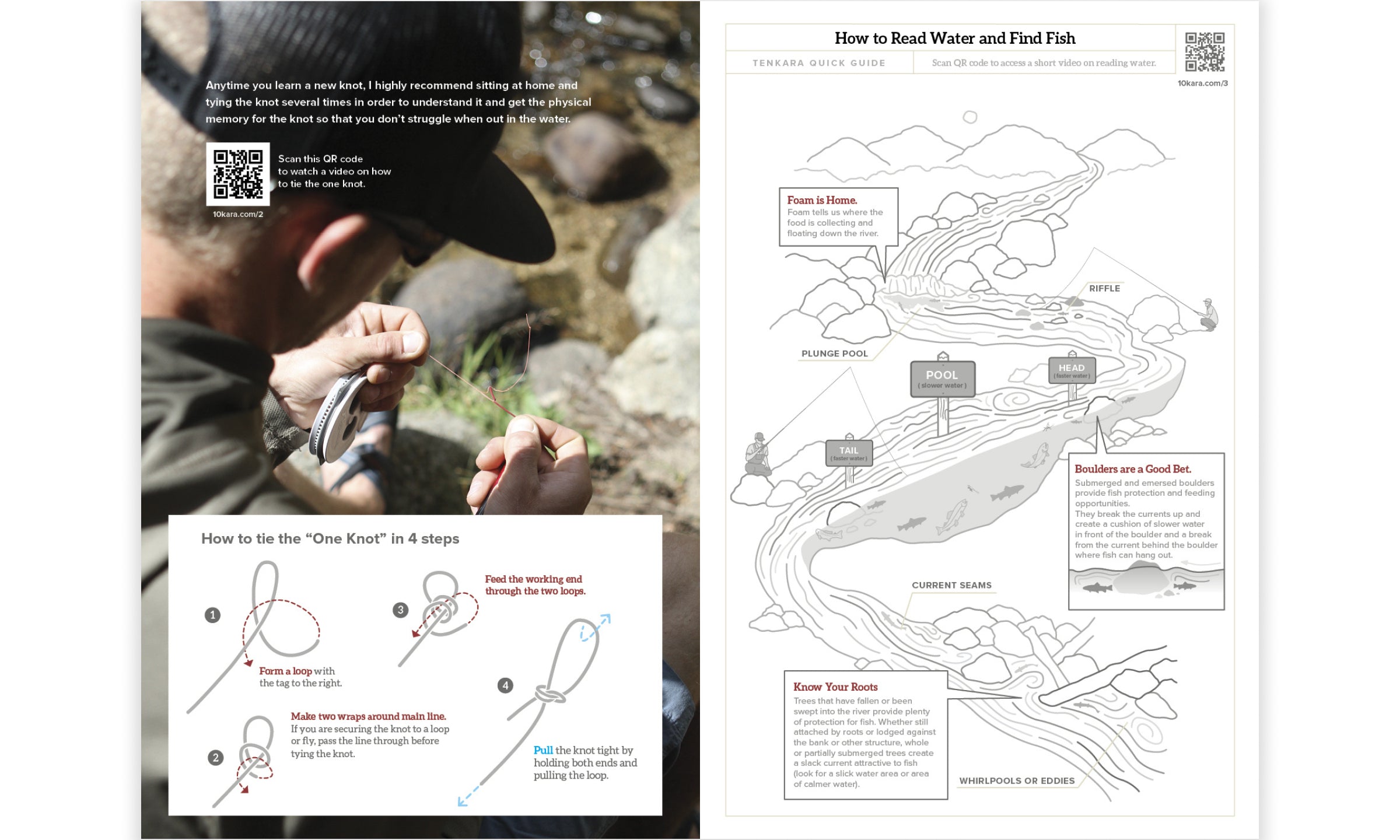
- How he works a pool from the tail to the head and from the near shore to the far shore, using a rough nine-spot grid. The diagram is in his book.
- Why he fishes the water closest to him first: a hooked fish can be handled near your bank without spoiling the pool above.
- Stealth: slow movement matters more than clothing color. Daniel suggests about three seconds for a step, and recalls advice from friends in Japan.
- How to deal with sun and shadow, including switching banks or crouching, especially where there are no trees behind you.
- Wind: cast against it with a fast, low rod, or change direction and fish downstream. Daniel also describes using the wind for a dapping-style presentation.
- A guided five-minute meditation, starting around 52:42.
Mentioned in this episode
- Listener questions from Joseph Aydin, Adam Trahan of Tenkara-Fisher.com and Jonathan Antunes
- Ralph and Lisa Cutter, and Eiji Yamakawa
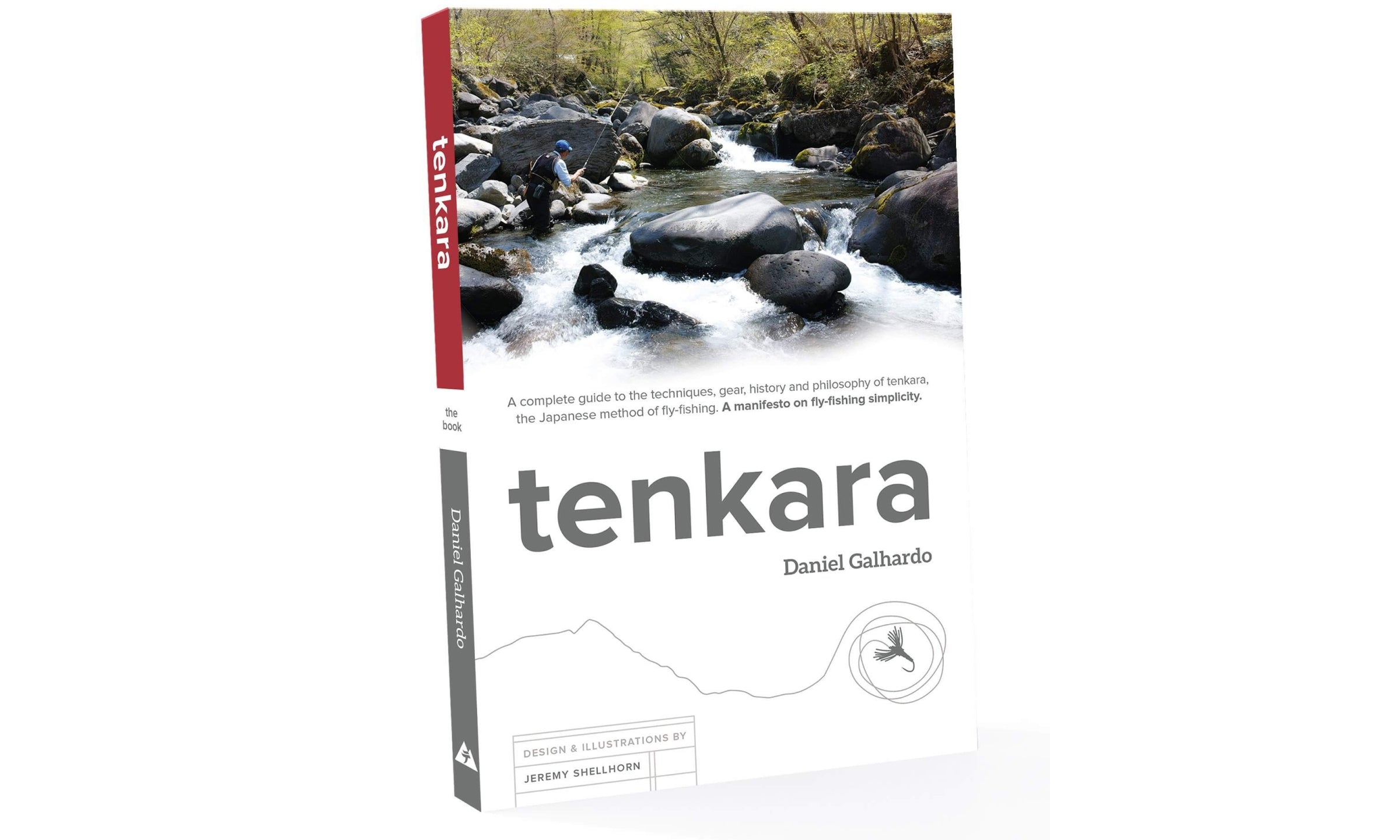
- "tenkara" - the book by Daniel Galhardo
- Music by Takenobu
Read the full transcript
0:00This is Daniel Galhardo and you're listening to the Tenkara Cast, the podcast about the simple Japanese method of fly-fishing, Tenkara. In the Tenkara Cast, I'll be sharing information with you on techniques, history, gear and philosophies, as well as Tenkara stories from anglers all over the world. This podcast is brought to you by Tenkara USA, introducing Tenkara outside of Japan since 2009. It is only possible we create content such as this podcast and all the videos that we create because of your support. So we thank you so very much for purchasing Tenkara USA rods, lines, and flies. I hope you enjoy learning more about the simple Japanese method of fly fishing, Tenkara. Hello everyone, welcome back to another episode of the Tenkara Cast. My name is Daniel Galhardo, I'm the founder of Tenkara USA and your host for this other episode. one out of probably about 60 some episodes at this point.
1:00So if you're new to the Tenkara Cast, I've been doing this podcast for, I did it for a couple years and then took a little bit of a break, and I'm back at recording it. But if you go to tenkarausa.com forward slash podcast, or if you just look up our podcast on your favorite podcast app, you can go back and look at a pretty large, fairly extensive archive of episodes that will cover everything from different techniques to some of the philosophy, some travel posts, and so forth. And my intent now is to continue recording, trying to find new topics to cover. Maybe I'll touch back on some of the stuff that I've covered before, but mostly try to cover new things. And before I get into the episode, I want to thank again everyone for really being so supportive over the last few weeks of our business. As I mentioned before, we were very anxious actually about what's been happening with COVID-19.
2:09It's impacting businesses around the country. and we were very fortunate that we have a primarily online business where our staff is already remote. We do have an office in Boulder, but most of us, including myself, are actually very used to working from home. And we continue having the capability to ship our product. but that anxiety that the warehouse could close at any moment with almost no notice was definitely, you know, tough to kind of have that hanging over us. So we did a sail. We started a sail, I should say, over a week ago, and everybody has been really supportive. Of course, you're getting a great deal on Tenkara USA rods just ahead of spring. Hopefully this whole thing blows over soon and we can be fishing, you know, without any dilemmas that we might face. But thanks again for buying Tenkara USA rods. We are continuing the sale, by the way.
3:12Right now we changed it to 20% off on Tenkara USA rods as well as my book. And the idea is just we're going to keep this going until we feel comfortable. Either we kind of get through it or we feel really certain that the warehouse is not going to close. But while we have that possibility hanging over our head, we're going to continue the sale going. And we'll try to give you one or two day warning when we decide to discontinue it. But at this point, as of today, April 3rd, we are having a sale. and we are going to continue to sail, I would say, for at least another week. You know, so pretty much guaranteed at this point until April 10th or so. But keep an eye on our social media channels for information on that. And if you go to tenkarausa.com forward slash rods, you can purchase a rod that way. Or if you have a dealer near you that is still somewhat open for business, you know, maybe with curbside pickups, you know, you can give that a shot. Although at this point, I imagine most shops that we work with might be closed. You know, this is a, it's an unprecedented time. We, we are being asked to stay home and for a good reason, you know, we want to minimize as much as possible the possibility of any spread. And I know it can be debated, but my side, you know, My wife is a nursing assistant. She works at a hospital.
4:43And I'm in touch with people that are in the search and rescue group here in Boulder. I know people that are paramedics and so forth. And I know that at this point, there is a very high stress situation going on, whether it's some impacted areas, like we're seeing New York City, for example, that are already running short on beds because of COVID-19, or communities that are preparing for what's coming ahead and they're in training mode, they're changing the layout to hospitals and so forth. It's a tough time to take any chances of getting injured. You don't want to be in a hospital. And I've come to the decision that I'm probably not going to be fishing much, almost at all, in the coming weeks. I do have a couple of creeks really close to home that I'm not going to take long hikes. They're, you know, really nearby. I'm not going to go far into them.
5:45I'm not going to, you know, accidents do happen, hopefully. But the worst that could happen in these two spots, maybe I'll twist an ankle and knock on wood. That's not going to happen. But mostly I just want to advise you to be responsible in your decision making. We think that fly fishing is a great social distancing tool. As I mentioned in previous episodes, it is. But more and more, I'm realizing that there's other impacts. If we decide to drive a couple hours away, even if it's a day trip, we are exposing ourselves and other people. When you touch the handle on a gas pump or when you stop to get a coffee or a drink, these are all chances for exposure. and if you're nearby your home and you're going a little deeper, you're going to steeper creek and so forth, you are putting yourself in a situation where, yes, there's a very, very low likelihood of anything happening. But if something does happen and you need some assistance, you are exposing people that are going to come and help you or exposing yourself.
6:50And, you know, so there is a shortage of protective equipment and all this stuff. And I want us to be mindful of that. You know, fishing is a sport that we all love. But I think it is important that we make a responsible call and realize that we can storm, you know, go get through the storm together for a few weeks and fish last or stop fishing. Just really stay at home and look at every possibility to minimize chances of exposure to ourselves and to others. You know, that's what we're kind of like what I've been seeing. We're being asked to stay at home on the couch. It's not that hard. tie some flies, watch some videos, you know, cook, walk around your neighborhood, get some exercise, but look at every possibility of minimizing exposure to others. That's my soapbox. Again, the third episode where I kind of talk about that, but I do feel it's extremely important to talk about it. And, you know, and that's just kind of understanding different perspectives, I guess of what's happening. In any case, so today's episode, to change tunes here, I'm going to be covering kind of how to cover waters, actually. So that's a little bit of a funny statement there. But I'm going to be covering how to cover waters, how do I fish, how do I approach different streams. And largely that episode is, I've got to thank some people.
8:18I put a call out for ideas for a new podcast on our Facebook page, and we got messages from Joseph Aydin, and then we have a message from Adam Trahan of Tenkara-Fisher.com, and Jonathan Antunes. I'm sorry if I'm butchering that, Jonathan. But all three messages were actually very similar. So Joseph said that he'd like to hear more about stealth, some of the ways that it's best to sneak up on a spot. He says that he fishes several spots that hold fish, but he thinks he can do better if he was more stealthy. Stay in the water, fish from shore, you know, question mark, sun location, shadow, so forth. How about casting, load to get under, blah, blah, blah. So that's kind of the gist of Joseph's question. And that was soon after followed up by Adam Trahans, where he suggested that I cover the big picture of Tenkara fishing a stream, breaking it down into smaller pieces of approach and movement.
9:24So I thought that that was very similar, you know, and just kind of covers the same theme. And then Jonathan asked for more downstream presentations. You know, he says in Colorado, as a lot of places, we deal with a lot of windy conditions. And usually the wind is not in our favor. So how do we deal with this? How do we flow with this, he says. So we'll talk a little bit about covering water, fishing up and down the stream. And again, this is going to be my perspective. There's a bunch of ways to go about it, but I'm going to share my thoughts on that. And at the end of the episode, today I'm going to try something a little bit different that I haven't done before. but after I cover the how to cover waters I'm going to spend a few minutes let's do about five minutes where I'd like to try something new which is going to be a meditation and part of that is I got inspired because many years ago I heard that there was a meeting between fly fishing industry executives and this was very early on when I started introducing Tenkara to the country, and one of the executives of the big companies said, yeah, but what are we going to sell with it?
10:40Yoga mats? You know, because we're promoting this really simple method of fly fishing, and that company, which made reels, maybe still makes them, maybe just felt like there's not an opportunity there because he couldn't sell you more products. So I thought that was a very funny comment. And he was hearsay. I wasn't in a meeting, but I thought it was pretty funny that he would be like, yeah, but we can't sell anything except for yoga mats. So I thought about that the other day, you know, 11 years on to introducing Tenkara. And I actually have been doing yoga for, I don't know, it's getting close to 15 years or more actually. So I've got no problem with that. But one thing that I started doing again recently is I'm trying to build a practice of meditation. I spent some time living in China back in 2004 where I studied Buddhism and got really interested in the philosophies there. But I also started practicing meditation.
11:43And I had a practice for years and I kind of let it go. And in recent times, you know, like last couple of years, first I mentioned a couple of episodes ago I've been dealing with some depression issues. but also some kind of things that I think are generated by either social media, too much time spent on social media at one point, which I've been trying to get off of, but there's general anxiety produced by, like, news. And right before, actually, right as this thing was starting to hit us, but before it really became clear that COVID-19 was going to be a thing, I decided to pick up the practice again. So, and I've been finding that it's been really, really helpful for me in terms of just kind of like getting my mind to not be so attached to my phone, you know, like not checking things all the time, not going to read little pieces of news, just taking a few minutes to do something a little different for myself that gets my mind in a different place.
12:46So after I cover, you know, the covering waters, how do I fish? I'm just going to, we're going to sit here together. You know, a lot of us might be spending time inside. And I'm just going to meditate with you. And, you know, hopefully there's some value in that. But, you know, if it's interesting to you, you can look up the way I've been doing it. Recently, I just looked up a podcast on meditation. There's all kinds of apps nowadays. You can certainly do it by yourself. But as I kind of regained the practice, I found that the podcast with a little bit of a guided meditation has been very helpful. So hopefully it's not too out there, but Tenkara is out there anyway. So this is the right channel for it, for alternative ways of thinking about things. That's kind of my thinking. So let's get to the meat of the episode today. So I'm kind of visualizing when I get to the stream, you know, how do I go about fishing it?
13:53So there's a lot of different ways that people think about covering waters. Back in the day, you know, if you look at earlier written history of fly fishing, and, you know, you might read things by like Charles Cotton and earlier writers, you know, writers after that, most of them will talk about fishing upstream. and I think there's even like quotes about the gentleman in the UK you know just kind of saying like the only way to fly fish is to fish upstream presenting your fly upstream and that was kind of like a thing that was perceived by people and somehow it still finds its way in as a fly fishing kind of main mode of presenting the fly And with Tenkara, all of a sudden we start analyzing, or not analyzing, but we start realizing that there are many different ways to present a fly, and we can work with the stream to present the fly in the way that it's going to work best in a particular situation, whether it's upstream, across the stream, downstream, for example.
15:02So when I get to the stream, and by the way, on the upstream part, I think I mentioned in the past, the only really good argument that I've heard about it in favor of fishing upstream is that if you're in a piece of water that has potential to have a lot of people, if everybody's moving upstream, maybe you cannot see everybody or you cannot see each other, but if everybody's moving in the same direction, you're generally speaking, not going to spoil the water for each other. You know, if you cannot see that person, chances are the pool that you're at now has been rested and you have a chance to catch fish, even if somebody fished there half an hour ago. Whereas if you're going, you know, if somebody's fishing downstream and another person is going upstream, you're going to cross the waters and all of a sudden for a period of time, the waters where you cross and soon after, they're going to be spoiled, if you will. So in terms of etiquette, I think that's the only thing that made sense for me.
16:04You know, if you go into a place that is busy, that is kind of potentially crowded, where you can see a lot of people, I think generally speaking, the moving upstream is a good idea. Although, we're not talking necessarily about moving. In this episode, I'm going to talk a lot more about covering water as opposed to move. So you can keep in mind that even if you are moving upstream, you can still present your fly downstream in a particular pool. So that's a big difference. Oftentimes people ask me, do you fish upstream? Do you fish downstream? The reality is that I generally fish upstream. And I'll talk a little bit about why in a second. But I do present my fly up and downstream. So I'm moving upstream, covering different pools. but depending on the place that I get to or the situation that I'm presented with, I will, generally speaking, cast upstream first, but then I will present my flight downstream or across in the same pool if I'm able to, if it's big enough, if it warrants doing that.
17:07So that's the main differentiation that I want to make right now. Now, when I get to a piece of water, in my book I have this diagram, and I'm going to post it. I'm going to do some screenshots of the diagram of how I might cover a typical pool. And the diagram just kind of has me, you know, like where do I position myself and in which direction I'm casting from that position. And it goes in sequence, like where do I start first, you know, what's my second step, second place that I might hang out, and which direction I'm going to cast, and third place, and so forth. So later on, if you go to tenkarausa.com for a slash podcast, and you look up this episode on covering water, and I'm not sure what I'm going to call it, but mostly covering water, it's going to be one of the more recent episodes. If you're tuning in around this time, April 3rd, 2020, you can see the diagram in there.
18:08but generally speaking you know the way I usually fish a stream or a let's talk about a pool not a stream because typically as I mentioned most of the time I'm going to be fishing a stream going up a stream sometimes I do go down but when I'm getting to a pool and right now I'm going to cover just streams because lakes are a completely different story I might touch on it a little bit But mostly in a lake, I'd say you can either hang out in one spot waiting for the cruising fish, you know, if the fish are very active. But I find it a little bit more effective to spend a few minutes in a spot and just keep moving up the shore or even back and forth, you know, like on a 200-yard stretch or something. That's my general thing about approaching lakes. There's not too much there that I can talk about. But when I get to a pool, generally speaking, I'm going to be fishing from the tail to the head. So the tail is the downstream portion of the pool.
19:11And the head is where the water is kind of coming in. So if you visualize a pool, the water is coming in, that's forming the head. Then you have the middle of the pool. And where the water kind of leaves that little pool, that's going to be the tail. And it's easy to visualize that in a more pocket kind of water. but generally speaking even if a stream is a little bit flatter flowing not as clearly featured sometimes you can still kind of make out what could be the head and the tail of the pool but it's a little bit different you know you just have to look for visual cues of you know is there like a big boulder you know upstream and another one downstream that kind of create a little bit of a pool. But for the purposes of fishing a pocket water, you know, so I want to have us visualize more of a pocket water with a well-defined pool. For the purposes of fishing that, fishing from tail to head. If I'm fishing a bigger river, flatter, less well-featured, you know, where I cannot quite define where the features are, most of the time I'm just going to be fishing moving upstream and and sometimes changing my presentation.
20:25But then I'm kind of treating every 20 feet, 30 feet space as its own pool. I'm kind of making up my pools based on essentially a length that I can cover effectively as opposed to the stream defining a pool for me. So if we visualize more of a pocket water, well-defined pool, I'm going to be fishing from the tail end to the head. And I'm also going to be trying to fish from the shore closest to me, where I'm approaching from, towards the opposite shore. And that's to maximize how many spots within a pool I can fish and potentially catch fish. So, you know, if you just kind of visualize that pool again, and as I mentioned, generally speaking, not always, but generally speaking, we're going to be moving upstream. I'm going to get to a pool from let's say I'm on the left side of that pool and I'm approaching moving upstream about 10 to 15 feet before depending on the terrain depending on the trees that are above me before I get anywhere near the closest shore downstream on the pool I'm going to be trying to present my fly and that goes with that question of how to be stealthy.
21:52So Joseph asked about covering stealth. So the main thing is, I think in my opinion, is casting before you think the fish can see you or presenting the fly from a position where the fish cannot see you. So before you get to the pool, you cast upstream. And upstream on the shore closes to you on the tail. So you might be 15 feet away, you might be 20 feet away. It depends on your setup, depends on your rig on the terrain around you and so forth. But here's where fishing upstream sometimes comes in handy. Again, if we imagine fishing a pocket water, more of a tumbling stream, and the reason I want to have you visualize that is because if we exaggerate the features a little bit, It's easy to visualize it, but it applies to a variety of conditions. So if we are, let's imagine we're fishing this tumbling stream, you know, with like little tiny waterfalls, like one or two feet, you know, in height.
22:58And we are fishing upstream. Oftentimes, we are going to be at a lower level than the pool above us. So when we're fishing upstream, we are a little bit shorter than the fish upstream might be. If we're in the same level, let's say we're five feet, you know, five and a half feet tall. If we are on the pool below you and there's a little tiny cascade, you know, let's say it's two feet tall, all of a sudden our effective height is four and a half feet. So that's, and I'm just kind of using these as general examples to kind of provide an idea of what's happening. The same thing can apply, you know, when we're moving in not so steep, not such high gradient streams, but moving upstream has that benefit oftentimes. So that's the number one with stealth. The other thing, as you're getting to that, you know, lower left, downstream left part of the pool where we're fishing, you know, again, we're on the left side of the stream.
24:00We're facing the current as the current comes towards us. the other thing as we approach it as we try to get closer is knowing when the fish might be able to perceive you so that's an important one to to know right we talk sometimes or sometimes people might read about you know colors that we're wearing you know there is some people that believe in camouflage and so forth and the colors that we're wearing and there's some importance to that as well. I'm not going to advocate that you should wear some super bright yellow clothes when you go fishing, although I have had a lot of success. You can see some of my videos where I have this bright blue jacket or something, and I'm still catching plenty of fish. So I don't pay a ton of attention to what I'm wearing, but I do pay a lot of attention to the speed at which I'm approaching a stream. So typically speaking, a prey animal, you know, a trout, which might be prey to a falcon or an osprey or something, or to, you know, something else, they're really keyed in on detecting motion more than color. So if you ever watch like a nigret, for example, trying to catch a little fish, they're going to be moving really, really slowly. So they're going to lift their leg up very, very slowly. And then they're going to move the leg forward like at a snail's pace. And then they put their leg down really softly. And if you imagine that, you know, that's the speed at which you need to be approaching the water to avoid detection by the fish. Oftentimes, I hear the case for fishing upstream where people say that a fish typically is going to be facing the current. It's going to be waiting for the food, so it's typically facing upstream. And that's one of the reasons that I hear people like fishing upstream and there's some truth to that but um i think it was ralph cutter uh and lisa cutter they both pointed out many years ago to me it's like yes there's some truth to that but for the most part so a fish might have like let's say a 270 degree field of view uh you cannot see immediately behind them uh but it's got this really very broad range uh of view that that you can see. So even though it has a blind spot behind it, if you visualize what a fish is doing in the current, the fish is going to be swaying from one side to the other with the current.
26:50So it's going to be moving its body a little bit to the sides. And it's doing that at a constant pace. So what it effectively is doing is having a 360 degree field of view, where with every little movement it sees a little bit more behind you so it moves to the left and to the right and you can have this really broad view but you know some of it is going to be on the peripheral vision of a trout and one thing that we know about peripheral vision is that especially of something that can be hunted is that the peripheral vision is much much more sensitive to motion than any color or even shadows and highlights, but particularly color. So that field of view, if you're moving fast, it's going to detect motion. It's going to spook. If you're moving slowly, I think actually it was Eiji Yamakawa, one of our friends in Japan, he mentioned, I'm trying to remember this right, I think he says about moving, taking about three seconds, I think it was, for one meter, so about three feet.
28:03So if you're trying to move, you know, like open your legs up and kind of moving three feet a little bit more than like a full arms or leg span, taking three seconds to move that, I think it was. And I'm trying to visualize that right now. One, two, three. To kind of take one step. So maybe one meter might be exaggerated, but, you know, let's say three seconds for a couple of feet. Just trying to kind of put a little bit of a rule of thumb here. So that's, in my opinion, the most important thing when it comes to stealth. The other ones, as Joseph, I think Joseph Aydan already has the answers, you know, it's a very intuitive thing, but he talks about, or he's asking about staying in the water, fishing from shore, but also the sun in shadow locations. So that's another very important thing because, sorry, just adjusting my leg here.
29:06That's another important thing because, yes, when we have the sun behind us, we're casting the shadow, and the shadow is going to be much bigger than we are. So any motion in the shadow, you know, it's going to be multiplied. So if we're moving at a certain speed, the shadow is moving potentially. it's not moving faster but the impression that the fish is going to have where I should rephrase that the shadow is going to be so much bigger than we are so there's more of a area where the fish can detect the motion and I think that's part of the reason why shadow avoiding shadows into the water is so important so if we have if we're fishing that stream going upstream and we have the sun in our back, we are not playing to our favor here. So we have to kind of work to minimize it. And this is going to be somewhat similar when I start talking about fishing in the wind and that kind of thing as well. But how do we minimize the shadow? First of all, can we position ourselves on a different side of the stream? So if we have the sun on our back, we're fishing upstream, can we move to the other side of the stream and maybe not have the sun on our back?
30:19So the shadow is going to be cast to the other side. Or if we cannot have that option, can you just kind of crouch down to minimize that? And the crouching down part I think is really important in a lot of places. So the same concept that I just talked about where we're casting a shadow, the shadow is going to be so much bigger than us, gives the fish a better chance to see or detect motion. When we are standing up, let's say we're five and a half feet tall and we have this area of our body that if we're moving, the fish can detect it. If you crouch down and you have to height, the fish has less of an opportunity to see any motion that you might be making. So how do we minimize the motion? We can slow ourselves down. We can also make our area smaller so that the fish has less of a chance to see it. So typically, ideally you're going to have the sun kind of like in front of you or to the side.
31:22Somewhere it's not going to be casting a shadow, but if it is, if you can't avoid it, what else can you do? Can you lower yourself? And typically speaking, just crouching down is going to be one of your better options. That's going to be particularly important, I think, in places that are more open. So if you imagine a metal kind of stream where there's no trees behind you to kind of help you, in a way, camouflage a little bit. You just have a bright sky and you're this dark object. That's going to be more important to kind of crouch down, minimize shadows. If you have trees behind you, they're providing you some kind of background that might help you a little bit. So those are kind of my thoughts about stealth and minimizing how the fish can see you. Now let's go back to the stream. And I started talking about, typically speaking, I fish from the shore closest to me to the opposite shore and down to upstream. So I'm going to post a diagram. You can kind of see it. Hopefully it's going to make it more clear.
32:23But every stream, every pocket or every pool in a stream is going to be different in terms of how many spots you might be able to fish. some small spots, let's imagine a three foot diameter pocket, we might just have one chance and really that's all we need in that kind of situation. But, you know, if we are approaching the stream from downstream, we see this pocket and he actually that brings, hopefully I'm not going on too many tangents, but that brings me up to another really good reason to fish moving upstream is that typically when you're looking Looking at the pools ahead, they're very clearly defined when you're fishing upstream. You can kind of see this pockets kind of forming up ahead of you. When you start looking downstream, things kind of get more flat and it's a little harder to pick where the pockets are delineated by rocks and that kind of things. So when we're fishing upstream, we can see that pool. Now we see this three-foot diameter pool.
33:25We're going to cast from as far away from it as we can. And then we kind of ask ourselves, like, is there some water besides that really immediate, the very obvious three-foot diameter pool, is there some water downstream and closer to me that I can fish before I fish that very obvious water? So, okay, I know that small pocket, I'm going to have, like, one way to present my fly to it. And oftentimes we kind of see the obvious spot, the money shot, the money spot. and we want to go straight to it. And sometimes that's valid. Sometimes if we're starting to run low on time, if we just kind of want to fish for the obvious pockets, that's fine. But I typically like to ask myself, you know, instead of focusing and developing a tunnel vision to look at this three-foot diameter spot, you know, like in this very well-defined delineated pool that can certainly hold a fish, I try to pick out, like, is there something a little less obvious closer to me or closer to my shore and farther downstream because here's another reason to do this, or actually the main reason I think for doing this.
34:39When you start fishing closer to your shore and on the downstream end, you catch a fish. Yes, the fish is going to run a little bit. It's going to try to run upstream a little bit. But typically speaking, it's not going to go very far. you can control the fish, you can keep it on the closest shore to you or the closest or the downstream thing without spooking all the fish up above. If you were to catch a fish on the head part of the pool or the opposite shore, you're going to have to bring the fish from the opposite shore or from the head of the pool all the way to you. So you're going to be having to cross the stream either up either downstream or across and you're going to spoil a ton of water. So that's one of the primary reasons that we're going to be fishing closer to us, breaking the stream down into closer to us towards farthest so that we don't spoil the water if we do catch a fish. The other reason, too, obviously, is minimizing the amount of motion that a fish can see.
35:42So if we're farther away, fishing closest to us, our rod is not going to cross in the stream in a way up above it. if we, most of the examples that I mentioned here are kind of exaggerated, but if we're, you know, imagine a place where we're casting and we're putting a rod up across the stream to cast to the opposite shore, that motion might spook all the fish that are below that rod's kind of field of view, for example. And that's just kind of generally speaking, obviously, and the lion also is going to do some of that. So yeah, fishing closes to you, you can bring the fish in, handle it without spooking the fish. So you're maximizing the amount or the number of places where you can have a chance to catch fish. Now going back, we see that three foot pool. We fished all the tiny little pieces of water closest to us and downstream. And then we fished a three foot pool. And then we started getting into like, how do we choose to present the fly in there? So A small pool, chances are I only have two, three casts at the most in that kind of pocket.
36:53Typically speaking, for the most part, for the most time, I'm going to be presenting my fly upstream with a dead drift. That's probably what I do maybe 80% of the time. If a pool is a little bit bigger, then we might have different opportunities to present the fly. you know so like if we imagine let's say that we're fishing a bigger pool of water similar to the diagram that's going to be on this page for this podcast that pool is probably about 40 feet long you know down to upstream and maybe 20 feet across we might have better or more chances to present the fly in different ways so typically I'm going to be fishing from downstream, I'm going to present the fly going up, fish it kind of coming downstream. But if the part of the pool looks really fishy or maybe I see that there's a submerged rock underneath it, I may present my fly from a different angle after one or two casts.
37:56So I cast upstream, let the fly drift, and then I might move to the side of that pool and cast more of a cross kind of situation so that my fly then drifts down to the tail end of the pool, still closes to me. So at this point, I start on the lower part, on the lower left part, and then I move, I kind of try to give a wide berth to the stream, try to stay as far from that near shore as I can, cast across a little bit. So the fly is going to land mostly right across from me or in front of me, like perpendicular to the stream and closest to my shore. So I'm presenting a fly there and letting it drift downstream. So all of a sudden I'm doing a downstream presentation to the spot that I already covered. I typically like to do that when I see big submerged rocks or structure and that kind of thing, where I think that there might be a high chance that the fish is going to be hanging upstream from it, waiting for food to come to it.
39:08Now I fish the nearshore and the downstream portion. Now I'm going to start moving first, usually across. So now I'm going to fish more towards the far shore and on the tail end of the pool. So I can either do, you know, depending on the pool, I can do a little bit downstream on the tail land across where I can cast directly across from me. And then after that, I typically like to fish the near shore upstream. And then after that, the middle of the stream, if I can, near the head of the pool. and then the last spot, generally speaking, it's going to be upstream and kind of like a quarter across at this point or like at a diagonal. So if we imagine that we break a larger pool into a grid of nine parts and we have the shore nearest us and the shore nearest us and on the tail end of the pool is going to be number one, the tail end of the pool in the middle, number two, the tail end of the pool, and across is going to be number three.
40:27And then the near end, or the near shore in the middle, number four, the very middle, the central part of the stream, number five, across six, and then near shore and near the The head of the pool is going to be 7, head of the pool in the middle is going to be 8, head of the pool and across is going to be 9. So that kind of gives you an idea of my approaches. And then of course, if a place is actually, and that's kind of where it ends right there. But sometimes you get to a pool and you arrive on the head of the pool. And that happens to me very often. So my rule of thumbs, you know, like often, pretty much always, you get to a stream and you're going to get to a pool, and you might be on the head of the pool, which is the tail end of the next pool. So oftentimes when I arrive at a stream, you have a choice.
41:30You have the, you know, you're arriving and the current is flowing from your left arm to your right, right? You're facing the stream. You have the choice to fish upstream or downstream. Typically, when I arrive, the first thing I do, I fish downstream. I fish the pool that I'm not going to fish next. And I present my fly casting kind of the opposite, actually. I'm going to be casting on the head of the pool first because I'm facing downstream and then move my way towards the tail end of the pool. So that's typically how I fish. Once in a while, I do move downstream the entire day. That's typically in places that don't have a whole lot of people. Or if once in a while, if it's a very steep kind of canyon and a terrain, upstream for me is really tough. Then I might just move downstream where the path is going to be easiest. Those typically also don't have many anglers. But then we kind of fish a little bit of the opposite. We have two options, essentially.
42:31We either fish the opposite way. We start on the head nearest to us again. and then we move towards the tail end across. Or you have the option, depending on the pool, even if you are moving downstream, sometimes you can just kind of give it a wide berth and go to the tail end of the pool and fish above. So you're kind of making these little circles. So you're moving downstream, but instead of fishing ahead of the pool first, What I often prefer to do, not always, but I should say sometimes I like to do is just moving downstream. I'm going to then stay away from the shore nearest me, and I'm going to go to the tail end of the pool and fish it as I described a little bit earlier towards the head. And then I kind of repeat the process on a few pools. In other pools, I'm just going to present the fly from upstream. oftentimes and you can present it in a bunch of different ways you can either have the fly land closest to you on the head of the pool and let it drift by just slowly lowering your rod so if you imagine you cast right by your feet and there's a current right there and the fly if you just keep the rod pointed up because you cast by your feet the fly is just gonna dangle there but if you start lowering the tip of the rod, the fly is going to start moving downstream towards it. So that's a dead drift when presented from above, from upstream. The other option might be casting towards the tail end of the pool and you have the line kind of stretched and purposefully dragging the fly in a couple of spots. And you can do that either just dragging or maybe drag and let it drift a little bit. So that starts getting into the presentation techniques. And we do have an episode where I cover all the presentation techniques, but I kind of want to have you visualize kind of how I'm fishing. So that's to Jonathan's kind of question, you know, more downstream presentations. And the second part of his question was also like, you know, how to deal with windy conditions because the wind is usually not in our favor. So a little bit similar to when I talked about shadows, you know, the first thing we have to ask ourselves is, can we position ourselves where, in a position where the wind is going to be favorable to us as opposed to unfavorable? So yes, if you're moving upstream and that's all you think you can do and the wind is blowing downstream, let's say you're in a little canyon or wherever you are, but the wind is blowing towards your face, there are techniques to cast against the wind.
45:24Primarily, it's just going to be moving the rod really fast when you go on your forward cast. You can cast pretty accurately against the wind. You move it really fast, very forcefully. Also, try to get the rod tip really close to the water, either by sidearm casting or on your forward cast, you just kind of go much lower than you normally do. You know, typically we're talking about stopping the rod in front of us at a three o'clock kind of angle. If I'm fishing against the wind, I might go, actually, typically, sorry, going back, we're stopping the rod, point at a diagonal angle in front of us, 45 degree angle, let's say. But if I'm fishing and trying to cast against the wind, I might stop my rod much lower, closer to the water, so that the line is going to shoot in the spot closer to the water where there may be a little bit less wind, depending on the stream that you're fishing. But that's really tiring. Even though you can do that, it's exhausting.
46:26The presentations are never going to be very good because once you cast, the wind is also going to tend to blow the line downstream towards you again really fast. It's going to make the fly be presented in an unnatural way. so how do we kind of make you know change the conditions so if that stream or the wind is blowing towards our face we always have the option to now all of a sudden just fish downstream even if that might require hiking upstream a little ways so you hike up several pools and then you fish that stretch just facing downstream and so forth so you can kind of present the fly in the ways that I suggested you know, cast closest to you and let the fly drift or cast farther from you and let the wind kind of present the fly for you. And that's kind of a very effective technique. When you're fishing downstream and you have some wind, one of my favorite techniques actually is the actual technique from the method of fishing called dapping. So this is where sometimes people think of dapping as lowering the fly onto the water, and that certainly is one of the techniques.
47:38But there's this whole method of fishing, actually, called dapping, where you typically speaking, you let the wind kind of take your fly or lure to kind of wherever you're presenting it, and you kind of like almost imagine flying a kite, you know, even though it's not going high up. But when the wind is kind of blowing, and I'm fishing downstream using the wind to my advantage. First of all, the wind is going to carry my fly, so I don't have to do much casting. But then what happens is you lower the fly into the water, and the surface tension wants to grab the fly. And you kind of play that against the wind, or the wind against the surface tension. So you kind of lower your fly, the fly is going to try to anchor into the water, but then the wind is going to like lift it a little bit and maybe kiss the water again, or just kind of dance on the surface in one spot so you can really have a lot of fun and the motion that the fly is going to be presented with because of the wind is a little erratic but it can be really really attractive to fish so as much as possible just use the wind to your advantage both on your casting and on your presentation techniques is my main way of thinking about it and then of course you can kind of try to position yourself in other ways too. So like if you maybe crouch down, you can kind of have a little bit less wind if you're fishing a steeper kind of stream.
49:04But oftentimes, you know, a stream is going to be meandering, it's going to be curvy. And just sometimes hiking in one direction or another, you're going to find places where there's more of a wind shelter, or actually what we call a wind shadow, where maybe some kind of feature, some trees, a cliff, so forth, are going to be blocking the wind a little bit more than other areas or turning the wind so that it's favorable to you. So that's kind of my main way of approaching wind in Colorado and how to deal with it. You know, I just kind of work with it rather than against it is kind of my main advantage, even though, as I mentioned, there are techniques to fight it if you really want to. And I think the last kind of question that I want to cover is to Adam Tran's suggestion, which is the big picture. So early on, I think I kind of gave a little bit of the bigger picture of fishing from up, you know, towards upstream and that kind of thing.
50:10and approaching, as Adam says, breaking it down into smaller pieces of approach and movement. And I guess I kind of did that. So I kind of break it into grids and then just kind of fish closest to me, tail end towards head, and then across, and so forth. So hopefully I kind of cover the bigger picture as well as the more specific how-tos. I'm kind of guessing this might not be the last episode on this topic. If you have any comments, any suggestions, or if I was not very clear, because most of my podcasts I'm kind of rambling. I have some notes with me, but it's not a scripted thing. So if I forgot to mention something, if I wasn't very clear on something, If you have questions on something, please leave a comment. You know, you can email us at tenkarausa.com or just via social media, Facebook, Instagram.
51:16But preferably if you go to this episode's page and you leave a comment there, then I'll try to be more clear, cover things that you might be asking yourself at this point. Or maybe things that I didn't think about. And if you have any suggestions or comments about that. So if you go to tenkarausa.com forward slash podcast, that will be the easiest way to kind of leave a comment in this episode. And hopefully I can cover more of the how to cover water, how do I break it down, and how to be stealthy and that kind of thing. And you can always leave comments. You know, people read those comments. And as I said, there's a lot of different ways of doing this, a lot of different ways of thinking about this. You know, when fly fishing in the UK, you know, was kind of developing and people were writing about it, upstream was the only way. And all of a sudden we were kind of learning, not only from Japanese anglers, but many other people, that there are different ways to present the fly so that the fly will be more attractive to the fish.
52:21And that's kind of the end goal. So hopefully I covered that. And now I kind of want to suggest that we, I'm going to cross my legs here. I'm actually just kind of sitting cross-leg most of the time. But I want to suggest that we just take a few minutes and just kind of sit together. If you're at home right now, you know, we're social distancing. We are trying to spend a little bit more time at home away from trouble. if you want to find a comfortable seated position, you can be on a chair, you can be on the floor, you know, if sometimes the floor can be a little hard on the back, if you're not used to it, but we're only going to sit here for five minutes at the most. And mostly most important is going to be to have a comfortable seated position, you can also lie down, you know, there's nothing wrong with lying down in a meditation, especially when it's a shorter one where you're not likely to fall asleep.
53:23And we're going to, you can do it one or two ways if you're new to meditation. You can keep your eyes open and you're not going to be very focused on that, but you're going to be looking at a spot roughly four feet in front of you, just a very soft gaze. You're just going to keep your eyes open looking at that spot. or you can close your eyes and just keep your eyes closed. Now together we're going to take a deep breath and we're going to inhale and exhale with your mouth open. Let's do it again. Inhale with your nose. Exhale, mouth open. And one last time and then we're just going to fall into our meditation here. I like to have my hands on my legs when I'm seated.
54:25Just a comfortable arms rested on your legs. And we're going to inhale one more time. And exhale. Now let's place ourselves in a stream. Let's bring the stream into our homes, into the place where we are. Just take a moment, just visualize the stream, just for a few seconds. Now the stream is there, we don't have to think much about it. The stream is just in the background. We're just sitting there, absorbing the fresh air, the smell of the water, the wet leaves around us.
55:33And we're going to breathe. Now let's just focus on our breath. That stream is just in the background. It's there. We're not going to do anything with it. Right now we're just going to focus on being. We're going to be here. We're going to be ourselves. We're not focusing on doing anything. We're not focusing on stream. We're not focusing on observing fish. We're just going to be, and we're going to focus on our breath for a minute. And we're going to inhale and exhale naturally. And you're going to think about different things. Things are going to come to your head. But whenever you find yourself thinking of those things, just think about your breath for a second again. And the goal here, we're not trying to have our thoughts stop.
56:49As a matter of fact, we don't really have a goal. Except that we're going to sit here just for a couple more minutes and we're just going to breathe. Breathe it all in because we are. you know we're just gonna be i've been finding that these are really good times to focus on that being aspect we're kind of forced to slow down our pace to not leave our homes too much but it actually might be a really good thing that we have in front of us we can learn a lot about just being there being present in the home in the beginning it's going to be unsettling kind of like a meditation sometimes in the first few minutes or first few sessions you don't know what to do with yourself but it becomes a little easier over time that's kind of what we're practicing right now I'm just gonna breathe and be here together just another minute and a half or so Then you're going to find yourself thinking of different things.
58:25Your mind is... You're going to find yourself thinking of different things. Your mind is going to wander. Let's just think about the breath. Another inhale and exhale. We're all in this together right now. We're all just doing this. We're sitting together even if we're distant. And let's think about that for a second in the next few breaths. Just perhaps if your eyes are open, let's just close your eyes for a second. Just imagine a stream back in your background. And think about all the other streams that we see around the world. A lot of streams and every one of them is going to have one angler just sitting on a rock right now like you are.
59:29So just think about that for a second. And breathe in and out. And through sitting on this rock, we're all together at this point. point. Let's do a couple more last breaths. Let's just do five breaths in and out. If your eyes are closed, slowly open your eyes. A couple breaths. Well, thank you so much for entertaining me and joining me in this meditation. I was meditating here with you.
1:00:30And it's a little out there if you're not used to it. But, you know, I think there's a lot of value right now in just sitting and learning how to be, even if it's for five minutes. It might not sound like a lot, but I think there's a nice, you know, way of just being here. And as a community, too, you know, that's kind of the other thing. We are not doing this alone. We're not going through this experience alone. And I think that's kind of one of the main takeaways here. All right, everyone. Thank you again for joining me for another episode of the Tenkara Cast. today with the meditation that we did together and hopefully you enjoyed that. And if you have any suggestions for future podcast episodes, just leave us a message at tenkarausa.com forward slash podcast. Until next time, I'm a Tenkara Cast. And as always, I'd like to especially thank Nick Ogawa Takenobu.
1:01:51You can find his music at takenobumusic.com, as well as our Spotify playlists. In Spotify, just look up Tenkara, and you should find Tenkara tunes with a lot of Takenobu's music. Find any information referenced in this podcast at tenkarausa.com forward slash podcast. just find the link to this podcast episode and you'll find any photos, links or other information referenced right there this song is called Voyage Across the Sea Taken
This transcript was generated automatically and may contain errors.
Keep listening
More from the Tenkara Cast
Ep. 65Skills and how-to
How to fish a mountain stream
49 minEp. 64Skills and how-to
Tenkara Q&A Part 2: Tenkara Lines, Tenkara Flies, and more
50 minEp. 60Skills and how-to
How to Find and Explore New Fishing Waters
35 min-
37 min
Ep. 55Skills and how-to
5 Tips for Avoiding Frustrations with Tenkara + Colorado Trout Unlimited
With Dan Omasta
45 minEp. 40Skills and how-to
Fishing small streams and tight waters
27 min
Mentioned in this episode
Shop the episode
Watch next
Related videos


JOIN OUR COMMUNITY
Welcome
Get tenkara tips, new videos and exclusive sales in your inbox.