

Tenkara Cast / Episode 3 / Skills and how-to
Tenkara rod breakages and how to repair your tenkara rod
- 31 min
- With TJ Ferreira, John Gere, Kirk Dieter, Jesse Thomas, Max Royal, Russell Husted
- Apple Podcasts
- SoundCloud
- RSS
- Download MP3
-
Link copied to clipboard
Rod breakages are never fun, but with a telescopic tenkara rod they are usually easy to avoid and easy to fix. Daniel Galhardo talks with TJ Ferreira and John Gere from the Tenkara USA customer service and repair team about the most common causes, and with several anglers about how they broke a rod and kept fishing.
In this episode
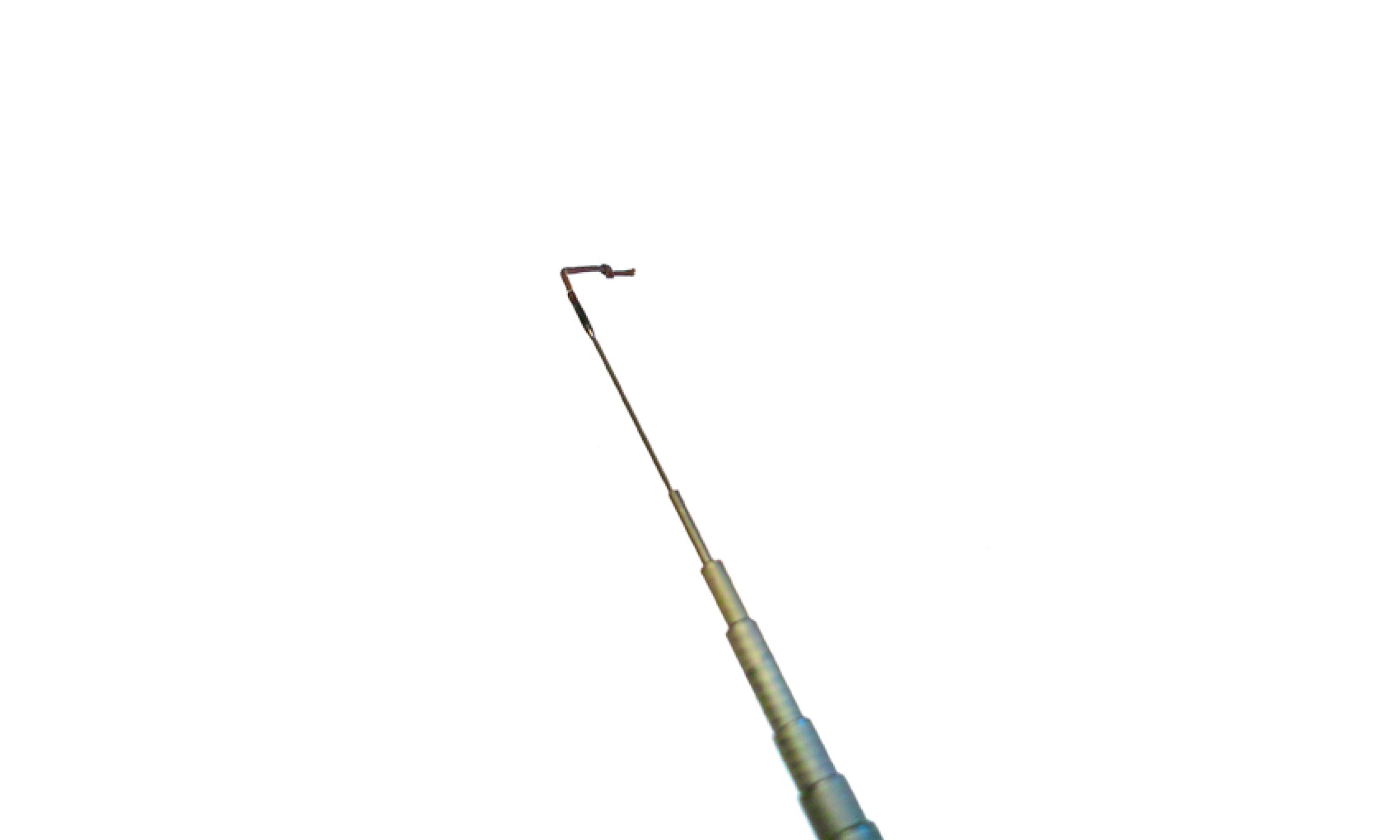
- The most common break is the thin tip segment, usually while tying or untying the line. Keep the tip inside the housing of the rod and put your thumb over the top so only the soft lillian string is exposed.
- If the line tangles on the tip, lift the rod tip and the line will often fall free. When snagged, close the rod and pull the line rather than wrenching on the rod.
- A field fix for a broken tip: remove the old lillian, file the break clean, slide the lillian back over the tip and seal it with a lighter or a spot of glue. Daniel did exactly this on a rainy day and kept catching fish.
- Every segment slides out of the back of the handle once you unscrew the cap, so you can swap a broken piece yourself without sending the rod in.
- To clean a rod, take it apart and wipe the segments dry with no lubricant or wax, then let them air dry before rebuilding.
- The most common repair case John sees is segments put back in reverse. Lay the sections out in order on a towel and line up the colored bands or the unfinished graphite at the base of each segment.
- Customer stories include a cracked rod on a crowded boat, a broken handle and a pike that was too big to land gently.
Mentioned in this episode
- Kirk Dieter and Chris Hunt, fishing for pike in Saskatchewan
- Tenkara Rod Replacement Parts (segments, tips)
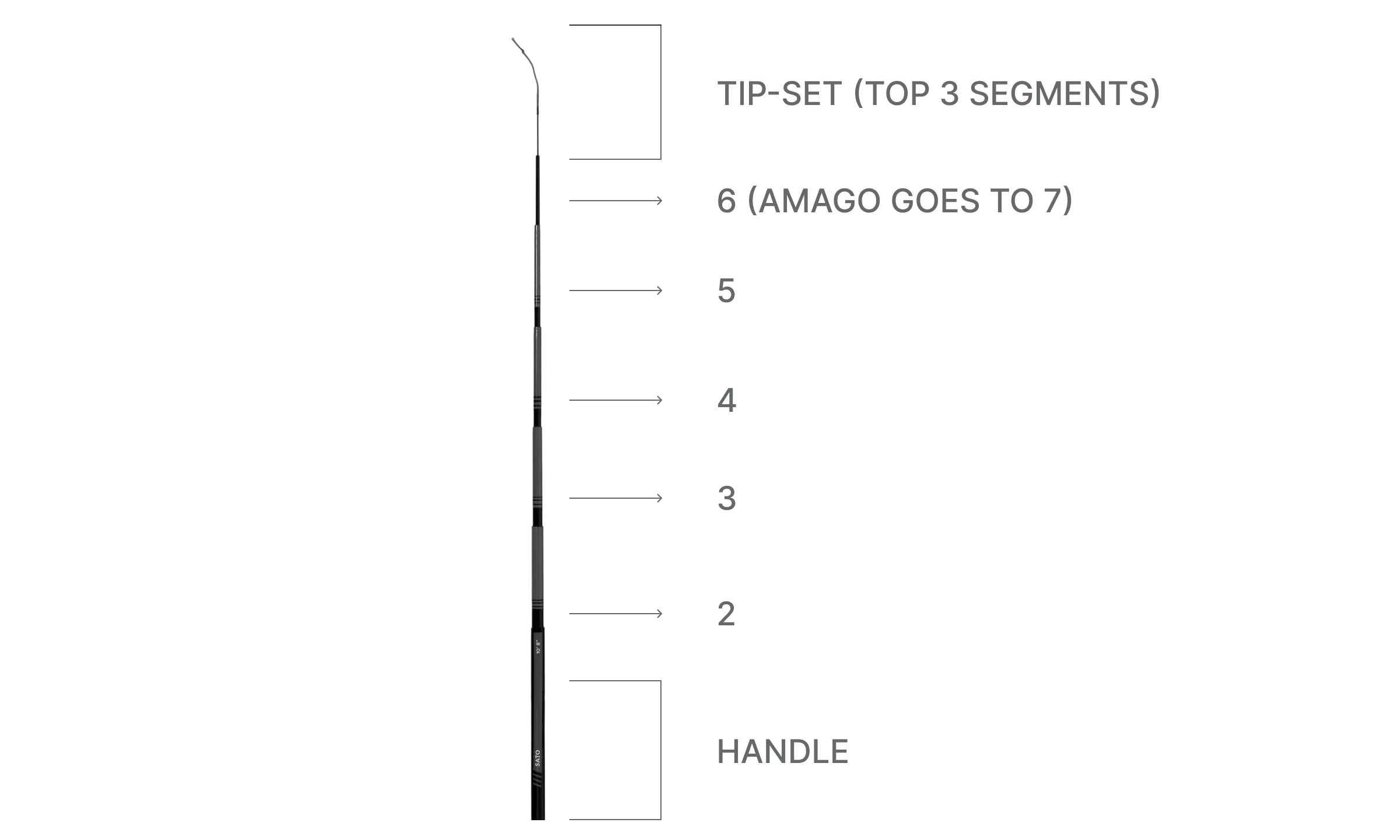
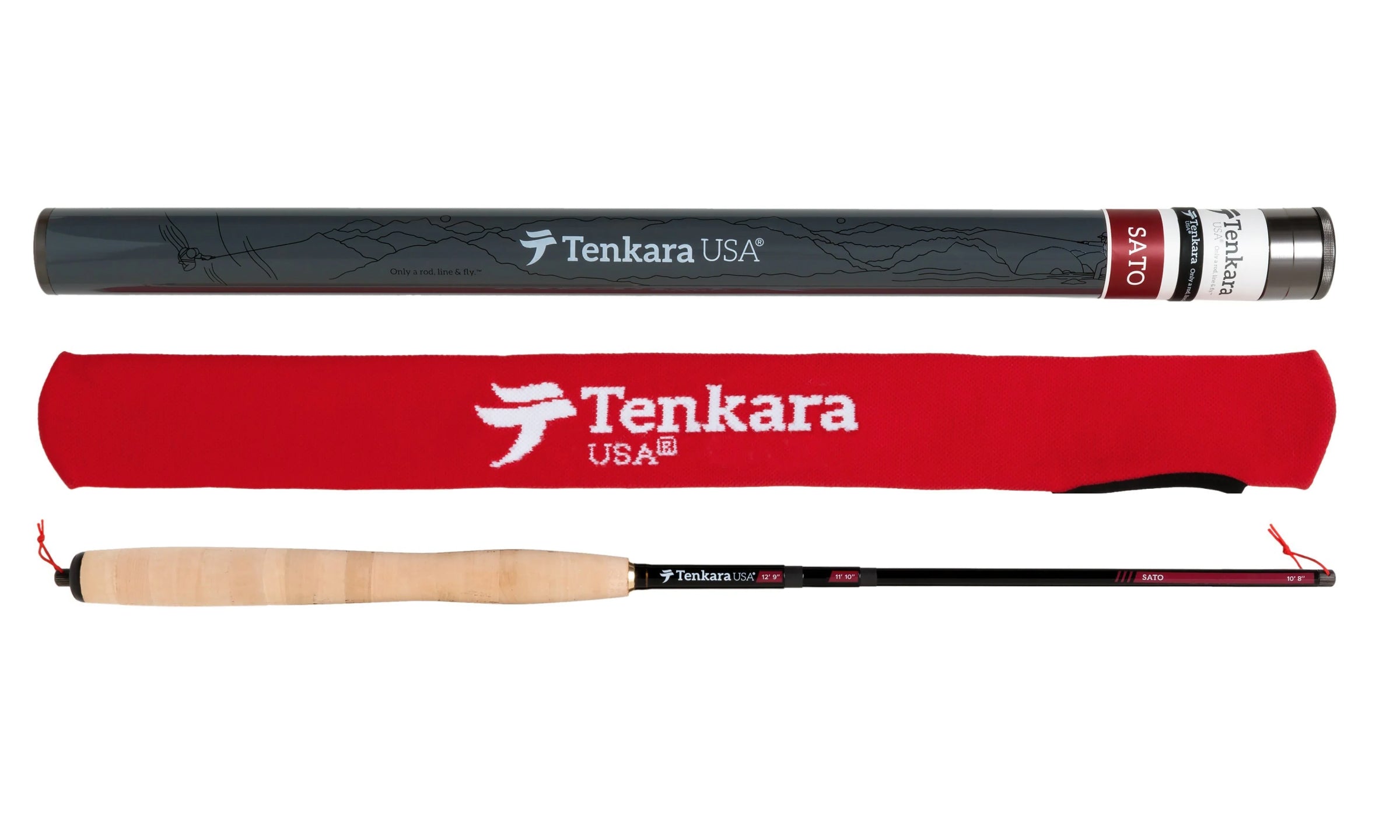
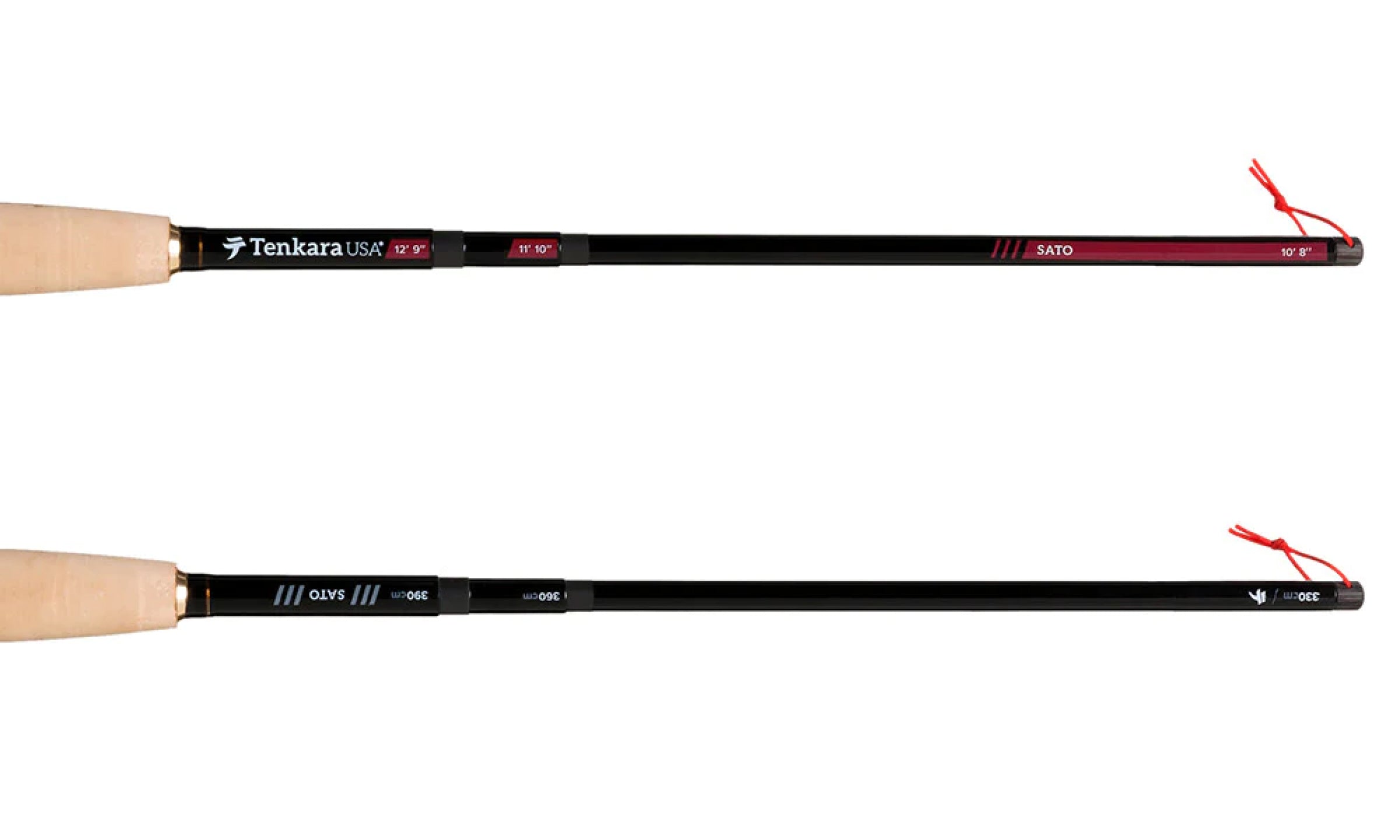
- SATO adjustable rod and RHODO adjustable rod
- Music by Nick "Takenobu" Ogawa, takenobumusic.com
Read the full transcript
0:00This is Daniel Galhardo and you're listening to the Tenkara Cast, a podcast about the simple Japanese method of fly-fishing, Tenkara. In the Tenkara Cast we'll be sharing information on techniques, history, philosophy, and Tenkara stories from anglers all over the world. This podcast is brought to you by Tenkara USA, introducing Tenkara outside of Japan since 2009. It's only possible we create content such as this podcast and videos because of your support. So we thank you so very much for purchasing Tenkara USA rods, lines, and flies. I hope you enjoy learning more about the simple method of fly fishing. That was a Tenkara rod breaking. Rod breakages are never fun. Nobody wants to go out fishing and be in the middle of a hatch, catch a couple of fish, just to have their rod breaks in their hand.
1:03However, rod breakages do happen. Luckily, with Tenkara, there's some really easy ways to prevent the rod from breaking. In this episode, we're going to be talking about the most common ways that Tenkara rods break, as well as how to repair that. We talk to different Tenkara anglers' experiences with when their rods broke and how they got it fixed. And we're also going to have a conversation with TJ and John, We're in charge of a customer service department as well as a repair department at Tenkara USA about things that they have seen and how they went about fixing people's rods. And we also have a couple of really interesting cases where rods broke in very unexpected ways. The best way I've ever broken a Tenkara rod, I wasn't even fishing. I was setting it up, brand new, just taking it. and I had the tip out, I was putting the line on it, and there I was, I was all extended, and I'm sitting here, dun-da-dun-dun-dun. My wife comes around the corner, and this is in my living room.
2:05With a vacuum cleaner. The line that I just put on gets sucked up in the vacuum cleaner. Bends it, explodes the tip of the rod. I had to get a new tip before I could fish it again. So that was Kirk Dieter. Kirk is the editor of Trout Magazine by Trout Unlimited. And he's had some great experiences with Tenkara, including fishing for tarpon in the Guyanas. And he's going to have another story later on in his episode about another rod breakage. He's been kind of hard on rods, but with reason. And let's now talk to TJ, who's in charge of our customer service. And TJ is going to shed some light on how customers can go about getting their rods fixed when they break a Tenkara USA rod. Well, I'm TJ Ferreira. I've been involved with Tenkara USA since about 2011, and I'm the director of customer service for the company. And most of the time when you call Tuesdays through Fridays, you'll get my friendly voice ready to help you. And then we have John Gere, who is Monday and weekends.
3:11We typically try to be available most of the time to help folks. So you'll either talk to me, TJ Ferreira, or John Gere, and we basically together make up the Tenkara USA customer service team. For Tenkara rods, most common breakages, I would say probably tip sets, mainly because folks get a little bit, when they're connecting and disconnecting lines, they've got to be a little bit more careful with them. A lot of folks, in fact, I've just recently seen a couple videos on YouTube that show somebody that's taking the rod fully opened and letting the handle be 10 foot away from him, and they're holding the tip up at an angle, tying the line on, and you can see the whole rod flexing as he's doing it. And I'm like, oh. So it's important that you keep the tip inside the housing of the rod at all times when tying and disconnecting the line because you don't want to bend that tip at an oddball angle and break it. That's where probably most breakages come.
4:12So it's a user type of thing. They just need to be a little bit more careful and making sure when they're tying and disconnecting lines, have that tip inside the housing. In fact, put your thumb over the top. By putting a thumb over the top and exposing only that soft little Lilian string, you know the tip's not going to break. Even if something happens, you're going to be in pretty good shape. Yeah, extend the rod. Yeah, and what you mentioned, too, like seeing somebody managing the tip of the rod with the rod fully extended behind them. Pretty commonly when I'm taking people out in their earlier times, if the person gets a tangle on the tip of the rod, which happens pretty often, And, you know, if you're very new to it and you're moving your arm a little too much, the line will get caught on the tip. And I always try to recommend, like, there's two tips that I give people. First of all, point the rod up because, like, very often when you get the line tangled on the tip, as long as you just lift the rod tip, the line will very often, like maybe eight out of ten times, the line will just kind of fall down to your hand and then you get rid of the tangly.
5:19but definitely like what I see that always makes me cringe a little bit is when the person has the rod fully extended behind them and then they go up to the tip and then the tip is flexing in all kinds of ways and I'm surprised that it doesn't break more often. And I guess that's kind of a western fly fishing thing when they're feeding the line through all the guides and getting it to the end, they have the rod fully opened at that point and the rod's kind of flexing as they're doing it. So maybe that's why some folks may think that's how they're supposed to do it. Yeah, I think that's a great point. I think people are very used to having the route fully extended because there's no other way. And then you pass the line through the guides. It's true. Now, besides the route tip braking, like when people are managing that, what do you see for other segments on the Tenkara Rads braking? Normally not too common. Other parts brake. I mean, periodically we can get a handle break or something, but it's mostly accidents, not the fault of the rod, but they've got it wedged in between something.
6:24They fall on it and bend it or crack it. But not too often do I see larger segments actually break unless there's just really undue stress on it. a very heavy snag, for example, like on a log, and they just start wrenching on the rod instead of closing it and grabbing the line and de-snagging that way. And that puts no stress at that point on the tip or any other part of the rod for that matter. But I normally don't have too many calls of people having other bigger segments break other than the thin tip segments. Yeah, that's true. And if somebody does break the tip, how does somebody go about replacing a tip? Like if something happens while they're fishing and they just snap the tip, what can a customer do in that case? Yeah, so if they call up, I'll normally, if they're kind of in a predicament where, hey, I'm going fishing tomorrow and I need to do something, I'll ask where exactly the break is, because if they break the very, very tip, like an inch or two down from the tip, we have a field kind of emergency fix.
7:33In fact, you made a video posted on YouTube where you can cut off the remaining lily and from the broke-off tip and then get a little file, if you have to, file around the broken part of the rest of the rod where that little tip broke off of. you can maybe clean up that tip segment a little bit. And the lillian material is hollow, so you can actually, if you have a small enough piece to run that hollow material over, you can do a feel fix by running that lillian over the tip. And if you've got a Bic lighter or some type of flame, a quick couple of flicks of that to kind of help seal that lillian over the tip of the rod to make it even better if you have access to super glue. and sometimes folks are backpacking or something out there and they carry all sorts of survival type of things and they have some type of glue. A little spot of glue would even be better, and that will kind of be a quick fix. So I'll tell them, hey, if you've got broke on a very, very tip, you might be able to do that to kind of quickly get you up and going again.
8:37But ultimately, you want to get a tip set ordered. They're very inexpensive. You get the last three segments of the rod. The Lillian's connected. All you want to do is unscrew the cap on the handle. slide out your broken tip set slide the new one in and you're done all of one minute and you're up and going again you can get a tip set typically within one to three days from the time you order it's very quick we have all those tip sets in stock so those are a couple of methods i normally tell folks right away yeah that's a good point about the field repair and i will post a video on you know the i'm going to embed the video of how to repair a rod tip that breaks in the field but I actually had to do it one time. So in about six, well, actually going more now, seven years of fishing with Tenkara, I've had one rod breakage in the field where the rod just broke like I was not really paying attention. My rod was collapsed, the line was tied to it, and I saw a fish rising, and I just started pulling the line out. And as soon as I went to pull the line out of the spool, the tip came out and snapped, and that was completely like my, you know, inattention.
9:43So it was raining. I had a friend with me. I gave him my phone, and I just asked him to record me kind of repairing the tip by myself, like right there. And I went on to catch it the same day. So actually what I did, I put the Lilian on top. It didn't have any glue with me. I had a lighter, though, and I cinched the Lilian with the lighter. So it shrunk a little bit, and it kind of adhered to the rod tip. And then just as a precaution, I got some tippet, and I wrapped a few times with a nail knot, kind of a knot, just as a secondary backup, and went on to catch another eight or nine fish that day and another probably about 20 fish after that. And I haven't really used that rod because I just got too many demo rods going on. I haven't seen that one with the broken tip, but it's still there. It's still working somewhere. Yeah, it's pretty cool. You have so many stories of people actually break, you know, oh, I slipped and fell and broke my handle on a rod.
10:45But I still had the rest of the rod and I fished the rest of the day and caught 30 fish. I'll get all sorts of those stories where, you know, just because you break a lower segment doesn't mean everything above that's not usable. So you improvise. And if you've got, you know, the tip and five or six or seven segments down from it, you can still fish what you've got in your hand. It's amazing. What does a customer do if they break one of the thicker segments that is not easily repairable in the field? What can they do when they get home? Yeah, so TenkataCare, we stand behind our products, and I think we have pretty much the best warranty out there. Not too many questions that we ask. Stuff happens. People slip. They break stuff. There's once in a great while a crack or something that can form in a rod. And if you break something, it's not the end of the world. I let people know. Once in a while, I'll get a person calling up going, oh, I broke my rod and my son's so sad and he does the end of the world. And it's like, no, don't worry about it because all those segments easily come out the handle of the rod.
11:46They're user fixable. You never have to send us a rod in for repair so you don't have all that wasted shipping, cost, and time going back and forth. I can mail you the part. We've got videos on YouTube that shows you how easily sliding segments out the handle can be. So we can send you the exact segment. One to three days later, you can easily put it in yourself. What exactly do they have to do to get a segment replaced? Yeah, so to get a segment replaced on any Tenkara rod, pretty much any of the models that we have, it's like an antenna of an old car. Each segment is a little bit smaller than the next, so it naturally houses and pushes into the next segment from behind and telescopes out when you're using it. So naturally, if you can build up a rod like that, it has to come out backwards the opposite direction. So each segment will naturally fall out the back of the handle once you take off a screw-on cap. And all those segments are basically removable, cleanable. Therefore, you want to maintain your rod, and some folks don't understand that.
12:47Hey, if you dip your rod in water all day, you want to go home and you want to dry it off and clean it off. You don't want grit and grime forming. So it's a good idea to get familiar with unscrewing your handle cap, holding the rod parallel to a table or something, and just tilt the rod slightly backwards, and all the segments will slide out the back, each one. And you can take them all apart from each other, wipe them off, just a dry wipe, no lubricants, no wax, none of that, just wipe them off. I normally like to just leave my segments out on my bathroom table overnight and just get a good air dry out with all the segments out of the handle. And then in the morning I come in and I just rebuild it back naturally by putting the next smaller piece into the next bigger piece all the way back to the handle. So each piece basically builds itself back up, and you just slide all those into your handle, put your screw-on cap back on, and you're done. So it's very simple. It might be a little scary the first time people do it, but once they've done it, they say, wow, this thing's a piece of cake. You just don't want to be nobody no more.
13:57So I had this conversation with TJ, you know, and he mentioned he was a piece of cake. I decided to actually put a post on my Facebook page and just kind of see if anybody would be willing to have a conversation with me over the phone and just kind of get an idea from the customers, directly from customers about their experiences. So as soon as I put a post, within one minute probably, I already had three different replies. and Jesse Thomas was the first person that responded and I gave him a quick call and chatted with him about the experiences because he's actually had a couple of rod breaks and here's what he had to say about his experience breaking and then fixing the rods. Tell me what's happened to one of your Tenkara rods. Well, I have a couple stories. Actually, the one that to me is, I think, I want to say a better story from your guys' end. Um, I had bought the Sado rod and I'd already owned your 11 foot of Juana and been fishing that for a while and was like, all right, you know, got a little money in my hands.
15:03It's time to upgrade. So bought it and hadn't fished it for a little while. And I was planning a trip up to Northern New Mexico to go fishing. So I thought, you know what, I should get out and actually cast with this thing a little bit before I just get out on the stream. And so I went and was doing some bluegill and bass fishing and I got hung up in a tree. And I shouldn't say I just like one time I did it like 10 or 15 times. It just was like, they just, my fly wanted to live in the tree. It just, and I got frustrated and I totally yanked on the, the, the rod too hard. And, uh, you know, trying to get it out of the tree when I should have just walked over and got it. And sure enough, you know, tip just busted and I'm leaving for Northern New Mexico the next day. um he's gonna be kidding me you know and then just sitting there going oh you're an idiot you knew better you knew better than do that don't do that so anyway i sent a a went online and did your guys's uh you know the warranty um replacement tips and got an email back from tj right away you know saying hey thanks a lot you know how quickly can you guys get this to me because I'm leaving in a couple days for this trip.
16:14And we started rolling through options. And he's like, well, you know, when are you leaving? Okay, well, it takes a couple days to process. Well, we could overnight it to you. And I was like, you know, don't worry about it. Got an extra rod. It'll be okay. And he was really insistent. I kept kind of trying to blow it off. Like, don't worry about it. And I just kept getting emails from him. Oh, I just thought of this. is there a shop up there in northern New Mexico you could go to? And maybe they could let you borrow one or they've got a spare tip and we can just swap something out or whatever the case might be. And even though I just keep wanting to, okay, TJ, thanks, but, you know, it's all right. It'll be okay. He just kept kind of being insistent about trying to get it out to me as quickly as possible. I still only had two days before I was up there, and there's not a shop up there that I could get to. So I was not able to get it before the trip, but of course, as soon as I got home, it was in the mail.
17:16So yeah, it was a pretty great experience with being able to just replace the tip rather than having to, like a traditional rod, send it in, wait four weeks for them to fix it or replace it and then get it back again. And you're still willing to have a chat with me and supporting us? I suppose you must be happy, huh? Well, after I broke my Iwana the first time with the tip and just how easy and reasonable the warranty process was, what you guys wanted for it, and how, like I said, how quick and easy. There's no fuss, no muss. And the fact that I can do it myself, where, like I said, I've closed a car door on a five weight before and had to have the rod tip replaced. that I had to, again, they were super friendly and helpful, but it was a darn near six-week process to get it sent out, repaired, and sent back to me, where, you know, the collapsing nature of Tenkara, you just send me new pieces and I fix it.
18:20So when it came time to want to buy a little better rod, I shouldn't say a better one, a different rod than the 11-foot Iwana, get a longer rod, you guys were my first choice, mainly because of the warranty. Obviously, I casted the rod and I loved it, but the warranty alone made me guys really stick with you guys. The breakage was actually a pretty funny story that had nothing to do with a huge fish on the line snapping the rod. It was actually mainly due to the fact that a really long rod on a really small boat. So that's Max Royal from North Carolina. I decided to call other customers and kind of see what their experience has been, and mostly trying to find if there's any really fun stories to share about how not to break it and cut a rod.
19:23And there really wasn't anywhere to put it with four other adult men in the boat. We were on a lake in Virginia. They were all using ultralight spin gear and just different spinning rods. And I was the only one with a Tenkara rod. And they were using huge fake lures, giant spinners, not catching anything. and I would put on just a beadhead nymph with a, I think it was a guinea tackle, a soft tackle, and I was pulling red-breasted sunfish as big as my palm out of the water here, every single spot. And with four guys on the boat, you really can't put a 12-foot rod just anywhere while you're bringing in the fish or handlining the fish in. And so I would set it across my lap, directly across the boat.
20:26And as I was pulling in, I think it was the biggest fish of the day for myself. And I was pulling it in, didn't realize my rod had slid down the side of the boat and got caught under one of the cleats where you tie in the ropes. And I went to pick up my rod after I tossed the fish back in, and I heard a loud cracking sound. I was like, oh, man. What just happened? Looked down, realized where it was, took out immediately, and I pressed on it ever so slightly with my thumb, and I could hear it just cracking under the weight of just my thumb. And I was like, well, we're out in the middle of the lake. Might as well just keep fishing until it dies. And I ended up fishing for about two more hours. It never snaps that day, but I had, I think, 17 fish on that day. Everyone else using their ultralight spring gear had those three. And so it was kind of heartwarming for myself being the only fincara angler out there.
21:31But in the exact next time I went to go fishing, the first cast I did snapped on the back cast. It was the handle. So it was the thickest part of the rod. It was completely shattered. And actually kept fishing that day, but would cast on the section right above the handle and ended up catching a small wild brown shot that day. Actually took a picture of it and posted it on the Appalachian Car Facebook group. When Max replied to my Facebook post, he said that his story had something to do with a boat and perseverance. I was really curious to see what he meant by perseverance in terms of rod breakages. I think I caught more fish after the initial cracking than I caught before it cracked. And then, I swear, the first cast of my next fishing trip shattered. I mean, I could bend it and twist it all over, just bend it in half, and the graphite would just shatter all over the place. Yeah, didn't you post that picture of the rod?
22:32Yeah, that was me, yeah. Do you mind if I snatch that photo when I put up the podcast page, if I use that photograph? Yeah, definitely. So your route is in working order now, huh? Definitely, yeah. I have a brand new handle. TJ got it out to me, I think, two days after I emailed him and gave him my card information. And yeah, I'm back fishing. And of course, I had to call John Gere, who is part of our customer service team. but also is in charge of the repair department of Tenkara USA. We hardly, hardly ever get any rods back, but I asked John to be the one that receives rods in case anything is stuck or unusual that somebody wants to send the rod back to us. So he's the one that sees the very unusual cases, and I thought he would have potentially some good stories. But before I spoke to John, I actually had a pleasure to speak to Russell Husted, who had some great things to say, And it was kind of a good reminder that even though we have a terrific customer service team, I still think that the best customer service is to not have to provide multiple customer service responses.
23:48So one thing that we try to do is always educate our customers so that they don't have a route breakage in the future. We try to take every opportunity to do that. And here's Russ talking about his experience learning a couple of things from John. And then we'll hear John's story after this. I called him up, and within three days, I had a new rod tip back at the house. Nice. And did you go out and fish right after that? Oh, yeah, for sure. And not only did he send me a new rod tip, but gave me instructions on how to properly do it. Got some new line, followed up with a personal call, and made sure I was rigged up properly and keyed me in on how not to do it. So not only did he save me from ever breaking any more rods, but gave me the correct knots to use and procedures. And now I've been able to show others how to rig up just really, really quick and get right into the fishing.
24:50So that's been really beneficial for me. I think my favorite rod breakage story, and it wasn't really a breakage per se, is we did have one customer that sent a handle back to us that had been chewed up by a woodchuck. And that's John Gere talking about one of the cases where he saw a rod coming back to him. And I think that that was probably my favorite. I got it in, and sure enough, it had the teeth marks on it and everything. And I don't know, I just had this funny image of this woodchuck fishing tenkara. So I think that was my favorite. That's great. That's excellent. What kind of cases do people usually send the rods? because we try to really make it easy so that they don't have to mail anything back to us. In what kind of instances do you see people are sending the rods back to you? I think the biggest one, probably the one that I see more often than anything, is when they get a bunch of sections reversed in the rod. And I've had a few come back where, you know, like each section is going the wrong way, and when they get jammed in there like that, it's pretty hard to get them out.
25:57In fact, usually it's pretty rare that I can get them out. Normally we just have to replace those sections. Do you have any tips for people to avoid putting the sections in reverse order? Yeah, I do actually because I've done it. I've built a lot of rods or rebuilt a lot of rods, and I've certainly never gotten one jammed to where I couldn't get it out, but I've certainly started them going the wrong way. I think the big thing is if you're going to take your rod apart for whatever reason, whether it's to clean it or to get grit out or just to check it. Or a lot of times it's in the process of doing a repair. It's the first time they've disassembled the rod. I think a really good thing to do is to open up the rod and lay it out in sequence on like a towel or something like that. It keeps those sections from rolling around. That's much better than like a hard table or something like that. And you can see like real obviously that the sections are all going the right way. Even on the rods, like the Amago or the discontinued Yamame that don't have real obvious banding, like, say, the Sado and Rhodo do, you can still see pretty easily that the sections are going the right way.
27:04And then just kind of make sure you always maintain that orientation. How do customers know which way to insert the rod segment? Yeah, the easiest way to avoid getting the sections going the wrong way on the rods is to make sure they're all lined up by the colored bandings on the rods, whether it's the silver rings of the Amogs or the red bands on like the Sato and the Rhodo. The other thing that you can look at, too, is that all the rods will have a little bit of unfinished graphite at the base of the section, so you can also line them up by that, too. And, of course, I mentioned that Kirk Dieter had another story about a rod breakage. I think he's up to three or four rods, but each one of them has a great story. the second story here is actually involves a fish but not your not your common trout i also broke chris hunt's rod fishing for pike you remember that one yeah chris had landed a northern pike we were in saskatchewan and we said let's try to catch a pike on ten car sure enough sees the pike come out of the weeds it's a little guy boom boom boom eats it land it And then I see another pike swimming and I've got it's his rod and I load up to cast But problem is that this was like a 42 inch fish and Chris is going slow motion from the back of the boat like Boom throw it down sure enough crack I've been hard on some of your rods, but it's fun. And they they're so easy to fix You know, it's like I slide them together and we back and do it again So we make it easy for you, sir. You thank you Thank you.
28:48That's such a great story. It's not the first pike that has been caught in Tenkara. There's actually a guy, I believe it was Sean in South Dakota, that caught a real large pike. And I'll try to post a picture on the page for this podcast, tenkarausa.com forward slash podcast, of the pike that was landed without breaking a rod. And I think there's also an article to Kirk's story about going after those pikes. So if I find the link, I'm going to post that. But, you know, I hope you enjoyed learning just a little bit about some of the common ways to break rods as well as how to fix it. And I hope you enjoy the stories that customers have shared with us about how they broke their rods. And hopefully the same is not going to happen to you. We never like having a rod break in your hands, of course. But it does happen. And I always like to think that if it's going to break, at least get a good story out of it. But again, if you need any help with your Tenkara rod, just give us a call.
29:51Our phone number is 888-i-TENKARA, 888-483-6527. Or you can email us, info at tenkarausa.com. We really try to make it very easy for you to get your rod replaced or repaired. we have this great program that we put in place this last year in 2014 called Tenkara Care and that's just the idea that no matter what if it's a tenkara yosei rod we're gonna take care of it I'd like to extend a special thank you to Nick Ogawa also known as Takenobu check out his music at takenobumusic.com we'll be posting links to any references we made in this podcast such as Takenobu's music on our website, www.tenkarausa.com forward slash podcast. And until next time on the Tenkara Cast.
This transcript was generated automatically and may contain errors.
Keep listening
More from the Tenkara Cast
Ep. 64Skills and how-to
Tenkara Q&A Part 2: Tenkara Lines, Tenkara Flies, and more
50 minEp. 63Gear
Tenkara Q&A Part 1: Tenkara Rods
42 minEp. 62Gear
All About Tenkara Nets
1 hr 22 minEp. 55Skills and how-to
5 Tips for Avoiding Frustrations with Tenkara + Colorado Trout Unlimited
With Dan Omasta
45 minEp. 40Skills and how-to
Fishing small streams and tight waters
27 minEp. 31Stories and philosophy
Taking up new sports
24 min
Mentioned in this episode
Shop the episode
Watch next
Related videos


 5:44
5:44
Product intro
Introducing the YAMA™ Rod
 10:20
10:20
Product intro
Introducing the IWANA™ 15th Anniversary Edition


JOIN OUR COMMUNITY
Welcome
Get tenkara tips, new videos and exclusive sales in your inbox.