

Tenkara Cast / Episode 44 / Stories and philosophy
Eclipse and Summit: learning more about tenkara flies
- 40 min
- Apple Podcasts
- SoundCloud
- RSS
- Download MP3
-
Link copied to clipboard
Back after a gap in episodes, Daniel Galhardo covers a busy stretch: a trip to Wyoming for the total solar eclipse of August 2017, the sixth Tenkara Summit in Estes Park, and a week of difficult fishing with Dr. Ishigaki.
The thread running through it is a question Daniel keeps testing on the water: how much does the fly matter?
In this episode
- The eclipse trip to the North Platte River near Casper with friends visiting from Japan, in honor of his late friend and guide Doug Haggart.
- Why he bought local nymphs for the first time in eight years, second-guessed himself all day, and still caught his biggest fish, 17 to 21 inches, on tenkara flies.
- His one-fly record: about 400 days of fishing with essentially one pattern, and only four days when someone clearly out-fished him with a different rig.
- A summit report: about 300 people attended, with talks from Yvon Chouinard on conservation and Dr. Ishigaki, plus casting clinics.
- Daniel's call to protect public lands and local waters, which he argues new tenkara anglers are helping to do.
- A hard week of fishing across Rocky Mountain National Park, South Boulder Creek, the Dream Stream and the Big Thompson, and his new excuse, river otters.
- Lessons: sometimes there is no clear reason, and drift matters.
Mentioned in this episode
- 12 Tenkara Flies in Box and Amano Kebari fly, the style of fly that took a 20 inch fish
- Dr. Ishigaki, tenkara master from Japan
- Yvon Chouinard, Patagonia founder
- Adam Trahan of Tenkara Fisher, who joined the Tenkara USA team to help with the online community
- Mark Bolson, Margaret and Mr. Tanaka, who fished the North Platte trip
Read the full transcript
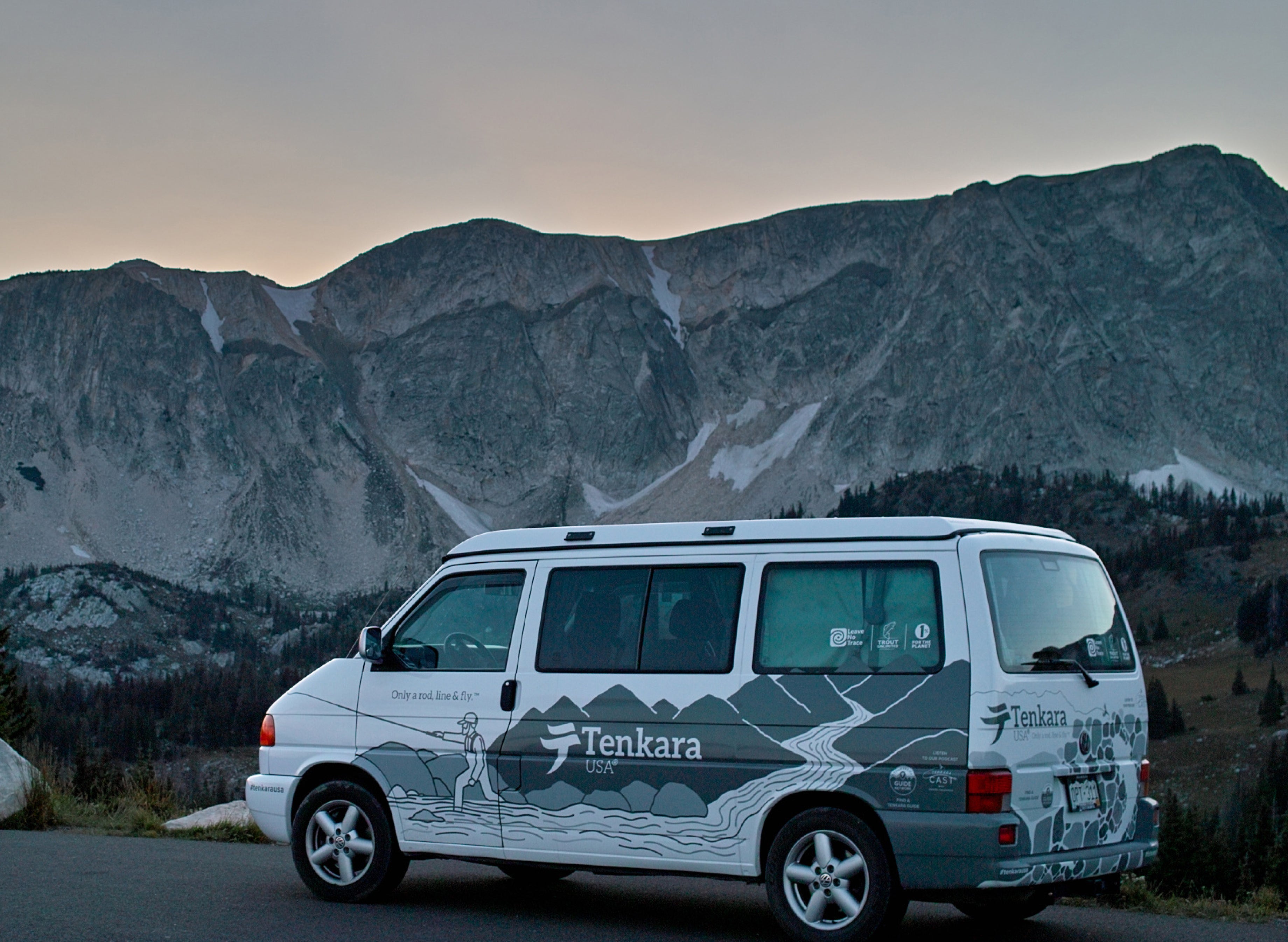
0:00This is Daniel Galhardo and you're listening to the Tenkara Cast, a podcast about the simple Japanese method of fly-fishing, Tenkara. In the Tenkara Cast we'll be sharing information on techniques, history, philosophy, and Tenkara stories from anglers all over the world. This podcast is brought to you by Tenkara USA, introducing Tenkara outside of Japan since 2009. It's only possible we create content such as this podcast and videos because of your support. So we thank you so very much for purchasing Tenkara USA rods, lines, and flies. I hope you enjoy learning more about the simple method of fly fishing. Hello, hello, Tenkara Cast listeners and fans. It's so nice to be back here recording another episode of the Tenkara Cast. Thank you so much for not giving up on us, not giving up on the Tenkara Cast. The episodes have not been as frequent as they'd like. It's been a little while, of course, since I recorded the last episode of this podcast.
1:03But a lot has gone on. A lot of material has come up to my mind about things that I want to talk about because it's been an interesting couple of months here since I last spoke to you. My last episode was on living on the road where my wife and I and our dog, she took off on a month-long or so, just under a month-long trip in our new van. And we had a lot of fun on that. We made it home safely. We learned a few things. I know I promised I was going to try to take some photographs of the van and videos, and we have, but I have not had a chance to kind of go through those yet. After we got back, soon after we got back, we experienced the solar eclipse, the total solar eclipse near Casper, Wyoming. and that was a fishing trip as well as a trip to see the solar eclipse. So that was immediately after we got back home and then there was a couple little weeks break almost but I had to go to California for an event, some speaking engagements and then we had the Tenkara Summit.
2:12So tons of stuff has happened and I want to cover some of those things and a few things that I've learned since that trip in terms of fishing and other things as well. But starting at the beginning, since the last time I spoke with you, we had the experience with the solar eclipse. And that was really, really cool. I just cannot speak enough of how interesting it was, how thrilling it was to witness the totality, the 100% solar eclipse. I did not know exactly what to expect kind of going into it. I think like a lot of people had seen solar eclipses before, but this is the first time when I saw the 100% solar eclipse. And I will tell you this right now. If you ever have a chance in your lifetime to go see Totality, go wherever you have to go to see it, please, because it was incredible. The next solar eclipse that's going to happen here is going to be in 2024.
3:15but I'm already planning to go to Argentina or Chile in 2019 and 2020 to see it. Yes, I totally got the bug. So the next eclipses are going to happen in Argentina and Chile, going right through Patagonia, and one of them is going to be in the middle of winter or beginning of winter in 2019. The other one is in the middle of summer in 2020, and I'm talking about their summer and their winter. So December 2019, June or July 2020. And I'm already making plans to go there and to fish and to climb and just to spend time targeting large fish and seeing the solar eclipse again. Pretty incredible. But the trip that we had here was really cool. Several months before the eclipse happened, I got an email from one of my friends in Japan, Mr. Tanaka. and he really wanted to come see the eclipse with a friend of his. They had actually already seen the eclipse before in I forget which country.
4:20I think it was in China. No, that one they got clouded. But they had gone and they had seen an eclipse before, and they wanted to travel all around the world to witness the eclipse again, and I totally understand now why. So they contacted me a few months before the eclipse, and they wanted to come here and they asked me if I was planning to go watch the eclipse. And as a matter of fact, I was. And they are fishing contacts of mine. So it just turned out that I was going to go witness the eclipse in a very good fishing area in Wyoming, near Casper on the North Platte River. So we made arrangements. They came over. Two other people got added to the trip last minute. There was four people visiting us from Japan to fish and to witness the solar eclipse. The day before, we got there a couple of days before the eclipse and got into a really nice campsite. Mark Bolson, who works with me here at Tenkara USA, reserved for us by getting there several days earlier.
5:21And it was right on a stretch in the North Platte. We took kind of one day just kind of resting and just hanging out. The next day we went fishing at Fremont Canyon area. And as expected, there was tons of people there. You know, everybody was from all over the world was near Casper to witness the eclipse, which is going right through there. And the North Platte River was pretty crowded, but I think nobody really held that against our anglers. We were not upset. You know, it was something to be expected. Everybody had pretty much a couple of good pools to fish. and that was enough. So we did have enough water. But I did have an interesting fishing experience that I wanted to share with you. So we caught some really good fish by the end of it. I'll see if I post a couple of photos on the podcast page for this episode. And I might call this episode the Eclipse and Tenkara Summit episode. So if you want to look it up, go to tenkarausa.com forward slash podcast and look for the Eclipse and Tenkara Summit episode.
6:25But in any case, So the times that I had been in the North Platte near Casper, the fishing was very difficult in terms of the approach of using just one fly. It didn't usually work as well as changing flies and knowing kind of what worked. So the times that I had been there, I fished the North Platte River in different stretches around there with my good friend Doug Haggart. And I do want to take a quick moment to share the unfortunate news that Doug has passed away not too long ago. And a big part of the trip was really kind of in honor of him. His untimely passing happened a very short period of time before the eclipse. And I was going back there with a pretty heavy heart, but Doug was in our hearts and thoughts the entire time. It was because I had some incredible experiences fishing there with him. So my thoughts going to Doug and his family and good friends.
7:27A lot of you who listen to this podcast might know him as well. He was a guide and terrific friend for us here in Boulder. But in any case, so the times that I had been there, I fished with Doug Haggard. And I used the thing to cut a flies. and I also noticed that Doug, knowing the water as well as he did and having the flies that kind of he knew would work, had much more luck. So I've talked in the past, especially in a video that I made, about the one-fly philosophy working about 99% of the times. And the reason I say 99% of the times is because I've estimated that I fish with essentially one-fly pattern for about 400 days of fishing. Out of those, there was about four days. Actually, there was exactly four days that I can recall where somebody was clearly catching more fish than I was by doing something different. Usually a different rig, but also different flies. Out of those four days, three days were on the North Platte.
8:32um so it was a it's a river that uh you know even though i had caught some fish uh using tenkara flies caught some very large size trout there um the times that i went there with dog he had something else and he was clearly working better so i switched and i used whatever flies he kind of recommended i don't recall the names of the flies now but they're usually like tiny little midges, you know, size 20. I was like little nymphs. And so when I got there for this trip, right before the eclipse, I, you know, I was kind of apprehensive about it because I was bringing about, you know, four friends from Japan and I wanted to get them to have a good time, wanted to get them into fish. So for the first time in about eight years, I actually bought flies. So for the First time in eight years, I went to the fly shop near the Great Reef area, and I looked at the flies that they had.
9:33They had a really good selection of flies, and I bought the flies that I remember Doug showing us. And I also added a few extra, I bought probably, I don't know, 15, 20 flies almost. And just in case something was working, I could give it to people and that kind of thing. And I bought the ones that I remember Doug recommended, I bought a couple that a guy that had been fishing there also recommended. And I was like, okay, this is the time. We only have one day of fishing. I'm going to have this just-in-case flies. We're going to get him to fish. And, you know, it felt weird to kind of put all these little nymphs and also put like, you know, some large kind of flies, like usually nymphs. Almost all the flies were nymphs that I bought, except for a few little dry midges that I bought as well. But it felt kind of strange to put them in my box. but I had no hesitation to do it. I just wanted to cover our bases. I didn't think about it. I had a trip. There was too much going on, so I had to buy some flies. And we get to the Fremont Canyon area, actually above the canyon, for those who are familiar, in the meadow-y kind of area.
10:39And we start fishing. It was actually a group of six of us, or seven of us, I think it was, because it was Mark, myself, my wife, Margaret, and four people from Japan. We all kind of take, you know, a little spot. We split a couple of the pools and took about two pools, three pools from the area. And the guys are using their, you know, tenkara flies. I think Mr. Tanaka had a size 12 kebari. And in my part of the river there, I was experimenting nonstop. I was doing something that I really absolutely hate doing, which is second-guessing my fly choice every few casts. which is to change flies all the time. I absolutely hate doing that. That's part of the reason the one fly philosophy appeals so much to me. But I really kind of wanted to see what was going to work, see if there was a clear fly that was going to work better. After several minutes of fishing and trying all these different flies, we had the first fish in our group, and it was not mine.
11:44It was actually Mr. Tanaka who had this brown kebari, just like an Amano Kebari style fly but brown thread. And he hooked a beautiful 20-inch fish. And we actually didn't really have a lot of gnats between us. I forgot to bring an extra net for a river that requires big gnats. And I grabbed Mark's net and I ran down the river to help him net the fish. And as soon as I got there, the fish got off the hook and he lost the first one. But it was like it was really, really cool to see that somebody finally hooked a fish after I think it took about 10 minutes. Not too long, actually. And he was on a tenkara fly. So I kind of go back to my station and I'm still, you know, now I'm going to try my tenkara fly. And I try something really small and then I try something a little bit larger. And then a little bit downstream from us again. I think it was Margaret that hooked the second fish and she also had a tenkara fly.
12:45So here I am wasting all this time changing flies and trying out these little nymphs that I had bought. And I was not having any luck with those, but the people using the Tenkara flies were having great luck. So I finally decided to put on a Tenkara fly, size 12, very light color. And I ended up hooking about four fish. The smallest of them was 17 inches. hooked a couple that were about 20 to 21 inch fish. So there you go. Moral of the story is I tried. I was very open-minded. I tried the flies that I thought could work really well. And at the end of the day, the Tenkara flies are the ones that panned out. I think everybody in our group actually hooked a fish. We did lose a couple, but we had fish on our hooks, and all of them were actually caught on the Tenkara fly. None of them were caught on the surface, as far as I know. uh, they're all just below the surface. There was no rising fish that we saw. It's a, you know, a river where the fish tend to stay a little bit deeper. Um, but it's not a particularly deep stretch. So we were able to get the flies close enough to the fish to hook them. Um, so yeah, that was a very interesting experience. Um, you know, one time, uh, it seems like I said, uh, Mark Cole actually mentioned that one time I was giving a clinic and I said that the one fly thing works until it doesn't. So far, out of 400 days of fishing, I've had four days that it didn't work. This other time was not one of them. So the Think Out of Fly worked beautifully on fish that are considered to be very, very picky. Some people might call them educated because they get a fair amount of pressure. So there you go. I second-guessed myself for quite a bit of time that day, and I I continued second guessing myself the entire day, even after we hooked some fish.
14:42But I kept going back to Tenkara flies. And those are the only ones that produced, actually. Very interesting experience. So that was the eclipse. After the eclipse, I went to California to talk to a couple of the fly fishing clubs out there. Had a good time, just kind of quick in and out trip. But then the more exciting thing that just happened was the Tenkara Summit, which happened this last weekend, September 16th. It was our sixth annual, or I'm not going to call it annual anymore, because we're still in the process. We skipped one year. We're still trying to figure out if we're going to do it every year or maybe skip a year and do it every two years. But in any case, we hosted our sixth Tenkara Summit and by far the most successful event we have put together. This time was really exciting. We had some terrific speakers. We, including Yvon Chouinard, our competitor at Patagonia, they're selling competitor, you know, they're competing with us, they're selling their own tenkara rods.
15:46But I invited Mr. Yvon Chouinard to come and speak to us about his tenkara, as well as conservation. And the main thing that we talked about, you know, was the fact that tenkara is bringing about so many new anglers. And if we love something, he says, you know, if we love something, we fight to protect it. And the fact that Tenkara is bringing so many new people to the sport of fly fishing is making people pay attention to their local waters, to the rivers, and fight to protect it. Whether it's protecting the threats that the river sees from global warming. For example, South Polar Creek here, you know, goes through periodic droughts. And if things, if we start getting drier and drier, it's going to be even worse in the future. So if we love South Boulder Creek here in Boulder, we're going to fight and we're going to pay attention and we're going to fight to make it stay healthy. And or whether it's to protect it from trash, you know, when people pick it up.
16:48So we hold a lot of different cleanups and people start noticing the trash when they're fishing and they start picking it up on their way out, which is great. or whether it's to fight for the rivers that we love because access to them might be taken away. In case of like the public lands access issue that we're having right now, it's a real threat. There's a lot of different areas that are under revision by Secretary Zinke right now and are at immediate threat of being taken away from us, areas that contain beautiful fisheries included. So I'm going to take a quick second to ask you to, you know, there's a lot of different kind of petitions out there. But the main thing is call your senator and express the fact that you're not very pleased. Call your congressman and express the fact that you're not pleased with your potential public lands that we all own be taken away.
17:49In any case, that's my soapbox for now. But Chouinard had a great speech. We're going to be posting that online pretty soon here where we have been posting little bits in the last couple of days from the summit on the Facebook page and our website as well, tenkarausa.com. So keep an eye out for that. You're going to be able to watch his entire presentation. Another speaker that we had was Dr. Ishigaki who came again all the way from Japan to talk to the attendees of the Tenkara Summit. So we're going to be posting his presentation as well very shortly. This time we had 300 people attending. It was mind-blowing. It was just incredible. I had been fully expecting 150 people. That was the number that we were targeting. Usually we get 110 to 130. I think the last one in 2015 we had just shy of 150 people. And so I had been fully planning for 150 people.
18:49All of a sudden, I started looking at the registration numbers, and we were like at 240, and then we had almost 60 walk-ins. So we had just about 300 people come in to the Tenkara Summit, which was phenomenal. I had an incredibly good time with all the people that helped us put the event together. We had a great crew of volunteers and staff members, and I'd like to take a quick second to thank everybody for pitching in, helping, you know, either with the food planning, like my wife did, with the registrations, with the Tenkara USA table, with the lights and the sound. There was a lot of little logistics to be done and everybody handled the event really, really well. So thank you all for pitching in and thank you all for who came to the Tenkara Summit as well. I heard from a lot of you who came that you listened to this podcast and you were missing an episode. So here I am doing one for you because you asked for it.
19:52When I asked where people came from, how many people are out of state, almost half of the room raised their hands. So a lot of people travel from all over the United States. We also had a visitor from Norway. People came from all over the place to attend our 6th Tenkara Summit. And it was a true honor that people would spend their time, their money to attend one of our events. And it was really fun. So we had presentations in the morning. At noon, we broke out for lunch. We had a couple of food trucks and then vendor time. And then we also had clinics like Dr. Ishigaki and Adam Trahan both held a fly casting clinic together with Tenkara Rods, of course. Adam brought in this really cool game, you know, target practice game that he brought for showing how to get better at casting. And then Dr. Ishigaki did a demonstration. We also had people helping with fly tying and we had people helping with rigging.
20:53So really fun. We're definitely going to do another one. Don't know yet when. So stay tuned for that one. But let me talk about fishing for a moment. So I've been talking your years off for, wow, 20 minutes already. Sorry, guys. Hopefully you're okay sitting in a car, not too tired of my voice because now I'm going to talk about fishing. So Dr. Ishigaki came the week before the Tenkara Summit took place. And, you know, it's, as I always say, the Tenkara Summit is probably first and foremost an excuse for people to go fishing somewhere new. and it started because I wanted to give Dr. Ishigaki an excuse to come to the United States in 2011. So this time it was an excuse for him to come fishing with us and he came to Colorado. That was the second visit here or third visit actually to the United States to Colorado to fish and this time unfortunately we had a real hard time catching a lot of fish. I feel really bad for Dr. Ishigaki. We had a very hard time and that's what I wanted to talk about in terms of fishing today. For almost an entire week, he arrived on Monday. We did not fish on Monday, but we fished on Tuesday, Wednesday, Thursday, and part of Friday. And every day was tough, man.
22:13It was probably one of the toughest weeks of fishing I've ever had. And it's really tough because, you know, here I have a guest and I want to have him have a good time, put him into fish, and didn't put them into a lot of fish. We got some, you know, and we cut fish every day, but definitely not a ton. And that's probably why I'm not a guide. There's a lot of pressure there. You know, I would feel awful if we're not getting a lot of fish. And so the first day we fished Rocky Mountain National Park, and we were joined by David who backed the Kickstarter project for my book. So that was one of the backers for having a day of fishing with me. and Dr. Ishigaki, David, and I went out to Rocky Mountain National Park fishing, and we fished Moraine Park, which a lot of our listeners probably are familiar with. It's one of the more popular, maybe pressured stretches, and we went kind of high up on it. Anytime that I've fished there in the past, I've had, you know, really good days.
23:15But this time, we caught a fish here and there. We caught a few brookies, and Dr. Ishigaki caught one cutthroat, which was really cool, and we caught a few browns as well. But really not as many. You know, it's pretty slow. You have a lot of pools that we wouldn't catch a fish. And the interesting thing, like I thought about it, I've done a couple of episodes in the past where I talk about excuses you can use when you don't catch fish. And I learned what I'm going to say is a new one. So, you know, it might have been something completely different. It might have been us, but I don't think so because it was three of us were getting really good drifts. We had, you know, a combination of different types of flies. I mean, they're tenkara flies, but, you know, I don't think the fly was really the problem because we were getting some fish. But after not catching fish for quite a while, feeling a little bit frustrated, I noticed two river otters that were out and about on the river, and they would kind of come in and out of different nests.
24:18and I added a new excuse, river otters, to my list of reasons I may have not caught as many fish. And then David also saw two other ones. So I suspected the river otters were putting the fish down or even eating them, you know, and kind of keeping them really scared of coming up for flies or potentially even have reduced the population in a few of the pools. I did think that a few of the pools didn't have as many fish as I usually see. And that's okay. The river otters are part of a healthy ecosystem. We don't need to get rid of them. I want to make that very clear. Sometimes sportsmen say that we have to get rid of certain animals to keep other ones. I think the habitat there is pretty well balanced, even if it means we don't catch as many fish as we might have otherwise. So that was my excuse for that day. And we went to a different river in the park as well.
25:19And that one, the water was running really, really low. So there was a good number of fish. We'd see them. We caught a few, but you had to be incredibly stealthy. And we spooked them very easily because the water was very, very clear, very, very low. So very slow fishing at the second part of our day there in the park. The next day, we went and fished. Where did we fish? Oh, the second day, we hung out mostly around Boulder. So that was actually a good day of fishing. We fished South Boulder Creek close to home, El Dorado Canyon, one of my favorite pieces of water because of the rock climbing cliffs. I won't say the fishing is always terrific there. It's just beautiful. And we caught enough fish to keep us happy, so that was pretty fun. And we only had probably two or three hours of fishing that day because then we were, Dr. Ishigaki was very jet lagged. He was feeling the effects of the altitude. So we mostly kind of chilled. We just wanted to rest a good amount that day as well.
26:20But we got some good fishing in. So that was a decent day. So the third day of fishing, we went to the Dream Stream, which is a blue ribbon, gold metal kind of water near 11 Mile Canyon and 11 Mile Reservoir here. And that was a very disappointing day. I probably should have talked to people, see how he was fishing. But I wanted to put Dr. Ishigaki into larger fish, and I wanted to get him to catch those large fish in clear water. So that's one of those places where you can see some large fish. You can do some sight fishing. And, you know, there's other places you can do that. But that was like one place that, you know, it takes a group okay. So I decided we were going to take the trip there. We had John, TJ, my friend Tim, Margaret, Dr. Ishigaki join us. And, you know, the tough thing about that one is that we drove over two and a half hours to try to have a good time.
27:21and we ended up catching very, very few fish and pretty much all of them were small. You know, I think the biggest one might have been about 12, 13 inches that we caught, if that. So a little bit disappointing, you know, because you have the expectation of catching some larger fish and nothing was really working. And that was an interesting day as well because, so we tried, so especially my friend Tim who was with us, He had a good full fly box where he could try just about everything, and he did. He spent a lot of time experimenting in really good pools. He had, like, tiny little nymphs. He had some big terrestrials. He had some dry flies that floated well. I mean, you name it, and he tried it. And, you know, and then we had the Tenkara flies. Most of the group was using Tenkara flies, and none of us across the board did particularly well. I think Tim might have caught a couple extra fish, but he was also fishing longer.
28:21He fished harder that day, too. He was the first person in the water, didn't take that much of a break, and the last person out. Margaret just kept one fly on the entire time. She had three fish. I only had one fish. I had a couple of bites, and I lost them. I hate to admit it, but I had one fish, and I think Dr. Ishigaki had two. So we're talking about very low numbers. All of them small fish that just happened to take your fly. So that was disappointing. Honestly, don't know what happened there. We did see some good-sized fish. They were not feeding at all. They were just kind of hanging down below. So whatever larger-sized fish we saw, they didn't seem to be feeding. So there's something going on. Maybe the river would have turned on later in the evening, but we had to kind of leave and drive back so that we could start setting the Tenkara Summit up the next day. So many days of tough fishing.
29:24And the last day was on Friday, the day before the Tenkara Summit. Another very tough day, we fished the Big Thompson below the dam in Estes Park. And it was a very large group of us because many people were coming in to help set up for the Tenkara Summit. So we had Dr. Ishigaki again. We had TJ, John. We had a good crew. I'm not going to name everybody, but it was probably 10 of us. And our styles varied a lot. I mean, some of us kind of stuck with one fly. A couple of the guys were using like heavy nymphs, like Czech nymphing style. A couple of the guys were also like matching the hatch, like really trying like everything that they could think of. So we had a really, we covered our bases really well in terms of the fly. And nobody really caught a lot of fish. We caught one or two, you know, like we only fished for about three hours. It was very, very frustrating because we saw some fish, you know, feeding in a couple of areas.
30:27And we'd hook one but get tons of rejections no matter what we're tossing at them, no matter the size of tippet, the flies. It was really, really tough fishing. And if we had been just Dr. Ishigaki and I, I'd say, well, we're not changing flies. Maybe that's why. But the fact that we had about 10 of us and trying all the different styles and nobody was catching more fish than the other people just kind of made it me think that there's something else going on. I mean, we got a couple, but not that many. Nothing to write home about. The cool thing about having a master, you know, as I'll call Dr. Ishigaki, somebody who's been fishing for decades and who's got tons of experience and kind of fishing, the cool thing about having a master along is that it kind of gives you a little bit of extra confidence that you're not doing things wrong. Sometimes it's not entirely up to you. you know, that's the thing about fishing. One of my favorite things is that we call it fishing.
31:31We don't call it catching because we're not in control over it the whole time. Sometimes the fish are, you know, way pickier. Sometimes they might be keyed in on the tiny, tiny drag that you might have. Who knows? The fish that I did catch that day, I caught using a larger tenkara fly, size like eight amount of fly, but I only caught the fish when I was targeting like this really calm water along the other bank. Uh, and it was very small pools of water. So in the bigger pools where the water is a slightly slower, uh, I got tons of rejections, no matter how good my drift was. Um, the, the ones that I ended up hooking were closer to faster water. I think that's the only way that I was able to get into fish myself that day. Dr. Ishigaki did hook a couple of fish using tinka-to-flies in the slower pools, but maybe it was just a couple of fish that were willing to take something, you know, who knows. So it sounds a little depressing just because, yeah, tough day of, tough week of fishing. And that culminated yesterday when I had another Kickstarter backer joined me on a day of fishing and I took him to a couple of different, three different pieces of water actually, Boulder Creek and then a couple that I'm not going to name.
32:58We did okay in Boulder Creek, not great, cut a couple but I think we didn't catch as many because probably he had been fished a little bit before we got there, that's my suspicion. Then the other stretches, we cut a few as well but not as many as I expected and my reason for I want is that the water level is incredibly, incredibly low. They are regulating, I think, the water higher upstream. And unlike the Big Thompson on Friday, which was running really, really high, that was actually another, one of the things that made it challenging for us to catch fish. The waters closer to Boulder that I fished yesterday were incredibly low. As a matter of fact, the lowest I've ever seen them. You know, in one of the waters, it made it really tough. The other piece of water, you seem to concentrate the fish in a few pools. So we ended up hooking a few towards the end of the day, a few more than I had been catching earlier. So, you know, that's it. That's fishing. We don't have – I don't have answers.
34:01I think anybody who says they have the answers for why they are catching fish or not, you know, in every condition, I think oftentimes they're making it up. sometimes there's just no clear reason sometimes there's clear reasons it might be a river otter it might be that the water is really low and the fish are staying down or getting spooky and other times like on the dream stream i have no idea what was happening really so i think i've learned a few things uh you know like the experience before the eclipse kind of gave me more confidence even that the fly is usually not that big a deal. Um, you know, I've also learned, of course, uh, as I've always known drift, you know, is always a key or sometimes it's absolutely key, uh, to hooking fish in difficult conditions. Um, yeah, so there's a lot to be said. I'm going to have to digest this a little bit more. Um, you're probably getting tired of listening to my voice in 34 minutes here, maybe not. My plan for the next several episodes of the podcast is going to be talking about different regions around the country where Tenkara is very appropriate for. I want to talk to the guides in our network and just kind of cover destinations around the country. So stay tuned for the next ones. I want to kind of start getting, instead of just me rambling throughout the podcast and that kind of thing.
35:36I want to kind of give you more insights on fishing in different areas. So if you're one of the guides in our network, please send me an email so that we can connect and record a podcast in a few weeks here. I'm actually just about to take off for three weeks. We're going to be, Margaret and I are celebrating our 10th anniversary, and we're going to be going to Europe for three weeks, and I'm really excited about that. We're leaving Friday morning. Our dog is staying back. We're having somebody house sit for us, take care of the house and the dog. But we're going to be there. I promise Margaret it's not going to be a fishing trip, so we're doing the touristy stuff. It's her first time visiting Europe. We're going to go to France and Belgium, Switzerland, and a lot of time in Spain. I'm definitely going to take Tenkara Rod with me. We released a new rod. It's a soft launch of a rod, as I'm calling, during the Tenkara Summit. It's the Hane 2. So we did a rod many years ago with backpacking light called the Hane.
36:37I decided to revisit that one. It's a short collapse-length rod, under 16 inches. It's about 15 inches collapsed. So it fits in a little day pack, fits in any of our little carry-ons that we're taking. So that's the rod that I'm going to be testing out. just to let you know you cannot get a hold of the rod right now so we did a soft launch at the summit we are going to be gathering feedback from the community that was there seeing what worked what doesn't and then after i come back we'll see what's what's happening with the rods and we may add it to our lineup of rods permanently we'll see how that goes we'll be collaborating with people and trying to get good data so that we can make a very, very good rod before we release it publicly. Sorry about that, guys. In any case, stay tuned for the next episodes of the Tenkara Cast. And oh, I also want to welcome Adam Tran to our team. I almost forgot about that, Adam.
37:42Adam is joining us. A lot of you probably know him. He runs the website tenkara-fisher.com. and he's been a very active member of the online community for many years. And before that, he had the website smallstreams.com forum. And we brought Adam officially on board at Tenkara USA to help us with the online community. And so Adam is going to be creating content, curating content from the community, posting different interviews, things that he has created in the past and is going to create in the future and going to continue moderating the forum as well as the Facebook page, Tenkara Anglers, the Facebook group, Tenkara Anglers. So welcome, Adam, to the team. Adam is going to be getting up to speed in the next few weeks here, so don't throw too much at him right now. But we're going to hopefully have some really good kick-ass content coming on our blog, try to have something frequent for you guys to digest and read.
38:45and enjoy in the word of Tenkara. So that's it for my long rambling today. Hopefully you've been having some good fishing. You know, fall season is kind of in the air right now. My favorite time of year to fish for sure. Send us photos. Tag us on Instagram. Tag Tenkara USA on Instagram. Connect with us on Facebook. We'd love to hear from you. If you have any suggestions for future episodes of the Tenkara Cast, I would love, love, love to hear those because I want to do stuff that you guys want to listen to. I don't want to just keep rambling here. So let me know what you're interested in. You can put comments on the podcast page. You can let us know via Facebook or email us at info at Tenkara USA. Thank you all so very much for continuing to support Tenkara USA in our efforts to bring information about Tenkara, in our efforts to bring the Tenkara Summit to you, create good products.
39:46Really appreciate you guys all buying Tenkara USA gear so that we can continue doing the fun stuff that we do. So thank you so very much for that. I'd like to extend a special thank you to Nick Ogawa, also known as Takenobu. Check out his music at takenobumusic.com. We'll be posting links to any references we made in this podcast, such as Takenobu's music on our website, www.tenkarausa.com forward slash podcast. And until next time on the Tenkara Cast.
This transcript was generated automatically and may contain errors.
Keep listening
More from the Tenkara Cast
-
44 min
-
42 min
Ep. 59Stories and philosophy
Social Distancing
32 minEp. 58Conversations
Tenkara in Salt? A Conversation with Henry Barber + The River Network
With Henry Barber, Nicole Silk
1 hr 37 min-
1 hr 4 min
-
22 min
Mentioned in this episode
Shop the episode


Watch next
Related videos


JOIN OUR COMMUNITY
Welcome
Get tenkara tips, new videos and exclusive sales in your inbox.