Tenkara Masterclass / Episode 5
How to Catch Trout on a Dry Fly
- 8 min
- Taught by Pat Jaeger
- With Fish the West Films
-
Link copied to clipboard
- Watch on YouTube
- Subscribe on YouTube
Dry fly fishing with a tenkara rod is about simplicity—but simple doesn’t mean easy.
In Episode 5 of the Tenkara Masterclass, Pat Jaeger takes everything we’ve learned so far and puts it to work on small water, using nothing more than a fixed line and a single dry fly to target rising trout. Pat breaks down how he approaches tight, brushy water where tenkara excels, including how to position yourself before making a cast, identify actively feeding trout, choose your target, manage your presentation, and make every cast count.
In this episode, you’ll learn:
• How to fish dry flies with a tenkara rod
• How to approach small streams and tight water
• How to identify and target rising trout
• Why positioning matters before you ever make a cast
• How Pat visualizes a trout’s feeding zone
• How to improve your dry-fly presentation
• Why checking your fly and tippet between fish matters
• How to fish productive water efficiently without overcomplicating things
Tenkara is at its best when simplicity becomes an advantage—and small-water dry fly fishing might be one of the best examples of it.
Read the full transcript
TENKARA DRY FLY FISHING ON SMALL WATER
INTRODUCTION
Tenkara is at its best when simplicity becomes an advantage, and there may be no better example of that than fishing a dry fly on small water. Success isn't about casting farther or carrying more gear. It's about slowing down, reading the water, finding your target, and putting yourself in the right position to make the right presentation.
In this episode, Pat takes everything we've learned so far and puts it together on the river, using a fixed line and a single dry fly to target rising trout. On water like this, that simplicity is exactly what makes tenkara so effective.
WHY TENKARA FITS SMALL WATER
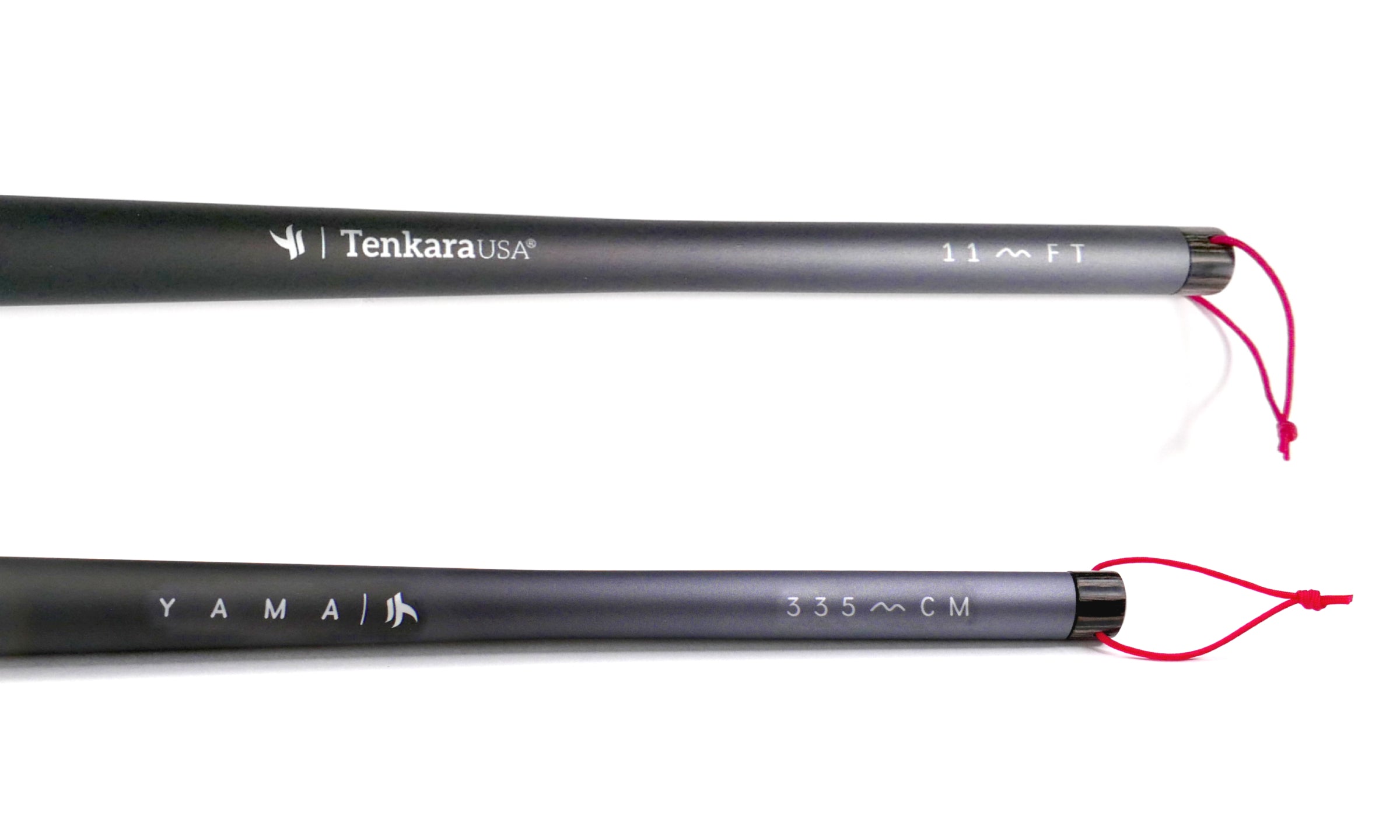
The benefit of having a fixed line is this: this is tight quarters, with a lot of brush. We're going to be using a lot of footwork, walking through bushes. The beauty of this tenkara rod is that I can keep it collapsed, walk through all these bushes, and then open it when I get to the river. It makes sense. Remember walking through brush with a 9-foot rod? This piece of water is really fit for this tool. This is tenkara water.
FIRST FISH
All right, so I positioned. I was in the water, took my time, and saw a fish rising. And, hey, buddy. Didn't even use my reel. Oh, yeah, I don't have one. Beautiful little trout.
That's what taking your time gets you. And don't use the same tippet as you did yesterday; change everything out.
I think it's bad luck to catch a fish on the first drift of the day. We'll see. You guys get to spend the day with me.
POSITIONING AND TARGETS
Here's a simple logic I use: never touch a fish with your rod tip. If I have a rising trout in front of me and it's almost in on where my rod tip is, I'll completely back up and get my rod tip out of the way. And number two: it's really hard to hit a golf ball when it's right next to your feet.
After I catch a fish, I look at my fly and I look at my tippet. I run my fingers through the tippet to make sure it's nice and silky. It feels beautiful. I take my fly and put it in my shirt. As I'm doing all this, folks, what it's doing for me is allowing the fish to feed without caution. It's also allowing me to find my targets.
Look for a fish that's actually working, meaning one that keeps coming up. Look at that piece of water as if you're looking at a hula hoop. Once the fish comes up, look across the river, mark the spot, and put that hula hoop on that little mark in your mind. Then make your cast above the hula hoop so the fly drifts through the hula hoop zone. That's all you do. You narrow it down to just that fish, and then you go on to your next one.
I guess catching a fish on your first drift isn't bad luck.
So I'm going to go back and do that check again. I'm going to check the fly and blow it off. Hey, dude. Thank you. As I'm doing all this, I'm looking peripherally. I'm not turning my back on my targets. Okay, I'm looking at my targets again. They are targets. Tick tock.
I guess catching a fish on your first cast isn't bad luck.
THE TOOL
When you talk about tools, this device right here, this tenkara rod, was invented a thousand years ago to put food on the table in water that's exactly like this.
CHECK YOUR TIPPET FOR SCRATCHES
One thing that probably doesn't get addressed very much is what happens when people touch the tippet above the fly and pull their fingers through it. It's very important, if you fish fluorocarbon tippet, that you don't let it get scratched up. If it gets scratched up, it will refract light in those little scratch spots, and you'll have a weird underwater Morse code, tick, tick, dash, dun, going to your fly. Regular monofilament refracts light all along its length, but fluorocarbon doesn't refract light except at the scratches. So I highly recommend you take your time. If you feel any scratches at all, or if you get it in one of these and it wraps around, be sure you switch it out. It's the difference between catching and not.
We're back to knot tying again. It's not romantic, but it's what we do.
FISH THE PROFITS
You guys, use every cast with value. Fish the profits. The "profit water" is where I've already had success. In my mind I'm looking at these lanes and remembering where the fish were rising in each of them, so I'm throwing back to those profits. After I go through the profit water, I'll start going to the parts I haven't fished yet.
It's all about presentation. Pick your target. Don't forget your positioning. Pivot your shoulders if you need to.
CLOSING
Okay, that wraps this episode. So grateful to have you guys with us. Hope you had fun. See you on the next one.
Featured in this episode
Shop the episode
Keep watching
More from the Tenkara Masterclass
JOIN OUR COMMUNITY
Welcome
Get new Masterclass episodes, tenkara tips and exclusive sales in your inbox.