

Tenkara Cast / Episode 17 / Skills and how-to
Tenkara techniques - an overview
- 53 min
- Apple Podcasts
- SoundCloud
- RSS
- Download MP3
-
Link copied to clipboard
Tenkara is often described as more about technique than gear, to the point that many experienced anglers rarely change flies. Daniel Galhardo explains what that means in practice by walking through the six presentations he uses once the fly is already on the water.
He learned much of this from Dr. Hisao Shigaki, who has fished one fly pattern for about ten years, and from other teachers. Daniel's point is that fly fishing is not only the dead drift.
In this episode
- Dead drift: about 80 percent of Daniel's fishing. Keep the rod tip high on the forward cast, and start with your arm close to your body, then push it out and downstream so the fly stays in the seam.
- Pulsing: a steady up-and-down rhythm of the rod tip that opens and closes a reverse-hackle fly. Small movements for slow water, bigger ones for fast or deep water.
- Pause and pause-and-drift: stop the fly in front of submerged rocks, then let it drift a foot or two. The drift gives fish a better chance to take it.
- Pulling: a low rod tip, a few feet of line in the water, and pulls of a foot or two toward shore or upstream, never downstream.
- Plunging: using plunges, fast channels and small whirlpools to sink a fly without weight, or casting far upstream in calm water.
- How Daniel starts a day: 15 to 20 minutes cycling through techniques, then mostly dead drifts, and avoiding too much second-guessing.
Mentioned in this episode
- Dr. Hisao Shigaki, Daniel's main teacher
- Ed Engle, who used the phrase “the dogma of the dead drift”
- Mr. Yoshida, who joked about holding a fly still for five seconds
- Boulder Creek and the Madison River
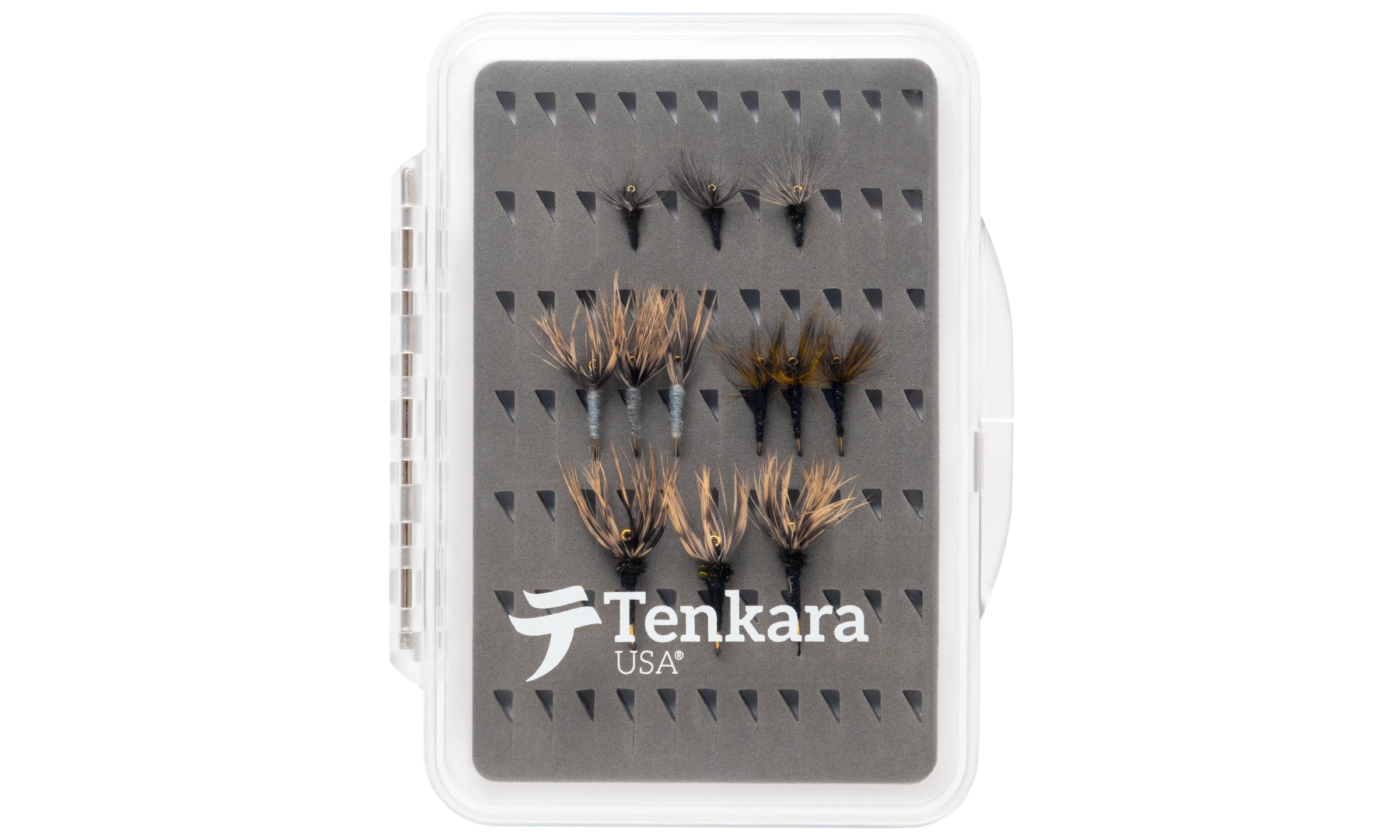
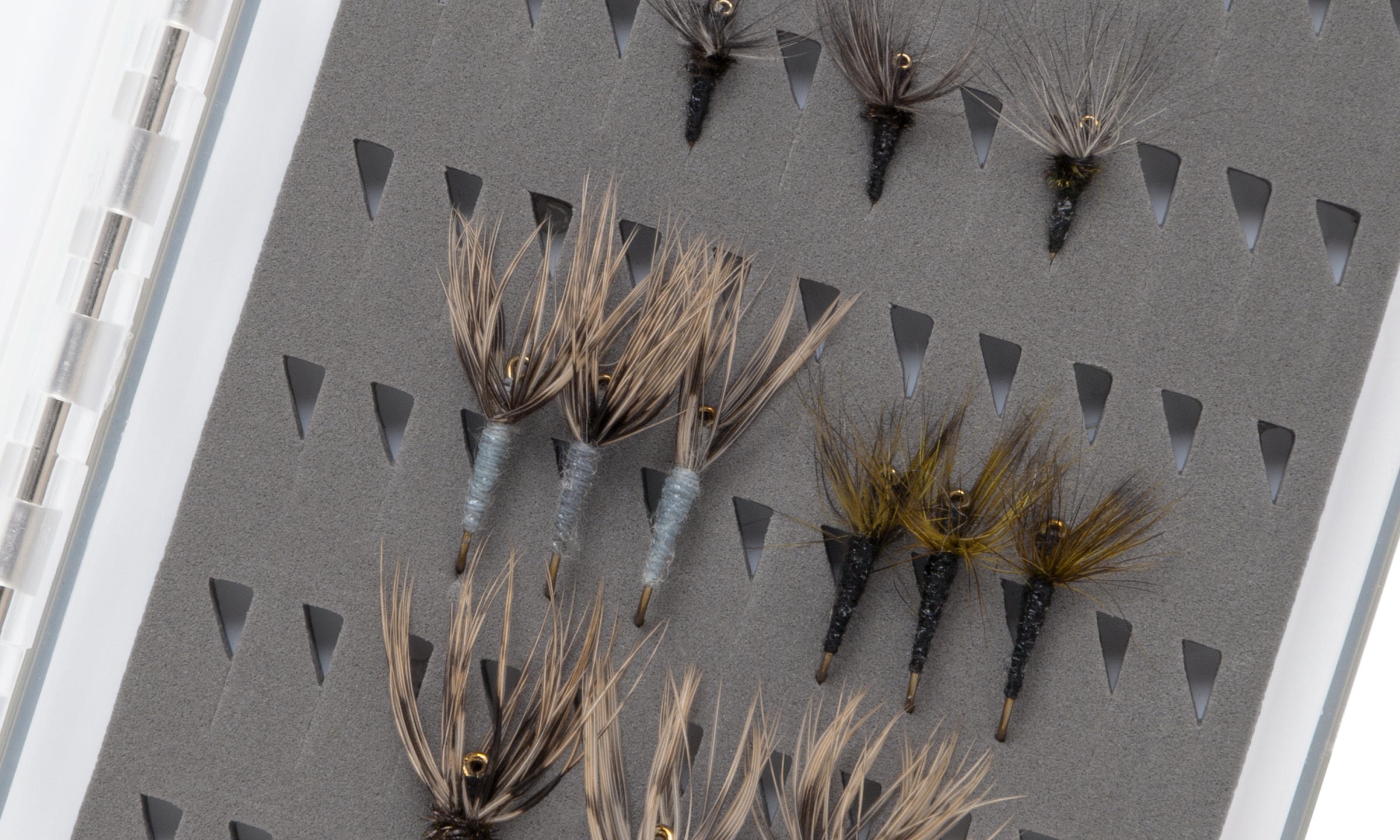
- 12 Tenkara Flies in Box
Read the full transcript
0:00This is Daniel Galhardo and you're listening to the Tenkara Cast, a podcast about the simple Japanese method of fly-fishing, Tenkara. In the Tenkara Cast we'll be sharing information on techniques, history, philosophy, and Tenkara stories from anglers all over the world. This podcast is brought to you by Tenkara USA, introducing Tenkara outside of Japan since 2009. It's only possible we create content such as this podcast and videos because of your support. So we thank you so very much for purchasing Tenkara USA Rods, Lines, and Flies. I hope you enjoy learning more about the simple method of fly fishing. Hey, Tenkara anglers. Hope everyone is having a great fall fishing season. The fall is here in Boulder. We are seeing the leaves changing colors right now. They're bright yellow in some spots, red in others. And I know throughout the country we're seeing pictures of just beautiful fall fishing where people are catching the most colorful fish and having a lot of really good times out there.
1:08The air is crisp and the water is cold. And I think this is one of those seasons that Tenkara anglers rejoice in. There's also fewer leaves for flies to get caught on the trees behind you. I'm really enjoying fall. I've been fishing here on and off as much as I can. And I was kind of thinking the other day about, you know, techniques. I haven't really talked about techniques here in the podcast yet. I've talked, I had one episode about skill, which was where I talked about vision, the ability to see things when you're fishing. But, you know, in terms of techniques, specifically presenting the fly, I haven't talked about that yet. And I thought I'd take a few minutes to talk about techniques today. As some of you know, a lot of times we talk about how in Tenkara there's much less emphasis on the gear and much more emphasis on technique and presentation of the flies.
2:11There's the whole concept of one fly, you know, like where I've joked in previous episodes where we never blame the fly because the fly that is in the water is the fly that's going to catch fish. and of course there is also the idea of just really not worrying too much about what fly you're going to tie on. You know I should note if you haven't heard about this concept it's pretty intriguing. It's something that caught my eye when I started learning about Tenkara and I learned that Tenkara anglers in Japan they're not changing flies when they're going out fishing. They're typically sticking with one fly and working on their presentation and techniques to entice fish and a combination of that with the kinds of presentations that Tenkara anglers are going to use to entice fish is what I want to talk to you about today. A long time ago I heard somebody using the term the dogma of the drag-free drift or the dogma of the dead drift and what he was referring to and I honestly don't remember exactly who used that term right now. I wish I did but he was talking about how in fly fishing a lot of times we you know people are led to believe that the only way to fish is to have your fly landing upstream from the fish and then the fly does a dead drift it drifts down with the current as if it was a dead bug and you know and then the objective of course being to have this beautiful perfect drag-free drift you know he referred to that as the dogma of the drag-free drift or the dead drift because we're allowed to believe that's the only way to present a fly and in this context you know I was actually telling him about how you know or whoever he was I was telling him or her about how uh oh I remember who he was now I'm glad I'm talking about this this is a I think it was a conversation about that I was having with Ed Engle, and Ed Engle used that term.
4:17And I was talking about how in Tenkara we have different presentations, like, for example, like skating the fly, which is not too unusual for anybody with a fly fishing background, but also dragging the fly, like deliberately dragging the fly or stopping the fly on the surface of the water can entice fish to take it. And then he used that term, the dogma, the dead drift. And essentially, that's not the only way to think about presenting a fly. I'd like to say that one of the biggest values of Tenkara is to show us that there's a different way of thinking about fly fishing. And that comes to several different aspects of fly fishing, including, hey, you don't necessarily have to use a reel to catch fish. Tenkara shows us that there's this different way of thinking about it, and the reel is not something they necessarily need. When it comes to, you know, casting, it's like, hey, you don't have to do a bunch of false casts to present your fly.
5:20You know, you can just do this kind of like nice up and down cast and present the fly deliberately and accurately where you want. And the one that I like talking about most is what the Tenkara flies or Tenkara fly selection shows us about fly fishing that is a little different. when I first heard the concept of using one fly was when about a month after I started Tenkara USA and I met Dr. Hisaio Ishigaki who became my main teacher and he talked about how tenkara anglers in Japan don't change flies he has only used this one fly pattern for about 10 years but they focus a lot on the presentation and I like that concept you know it's um but I wasn't necessarily very sure what he meant by presentation. I think when he first talked about that, you know, the main thing that came to mind was, because I was mostly Western fly fishing until that point, what came to mind was this lightweight, delicate landing of the fly on the water.
6:27You know, presentation in my mind was usually, what I thought about presentation was the way the fly landed in the water. Is he splashing or is he landing like a bug would? But when I started fishing with him, I realized that presentation was a lot of different things. Yes, it was how the fly landed, but also where he landed, from which direction he landed, and then how the fly was actually going to behave in the water. Until that time, I was a believer that that drift was pretty much the only way to present a fly, and I worked really hard to improve my presentation. But as I started fishing with him, I learned that there's different ways to present the fly. If the dead drift is not working, maybe you can put some motion on the fly. If that's not working and you see certain things underwater, you can stop the fly in front of obstacles and that kind of thing. So over the years of learning with him and different teachers, I realized that we can probably put the presentations of Tenkara flies in six main categories.
7:33So we have the dead drift. And don't get me wrong, the dead drift is in Tenkara, at least in my own Tenkara fishing and most of the teachers that I fish with, the dead drift is also considered the main way to present a fly. You want to get the fly to drift with the current in as natural a way as possible. So that's number one, a dead drift. But if that's not working, maybe we can try a few different things. pulsating the fly a lot of you might have heard of the concept of pulsating the fly with the most typical tenkara flies which have this reverse hackle the sakasa kebari if you twitch the fly let you move the rod up and down a little bit and the every time you pull the rod tip up the fly is going to come up a little bit and the hackle is going to open you know the reverse hackle that's facing the surface is going to come back and open, you know, kind of like a flower petals opening. And then you let it relax and the fly kind of goes down a little bit and the hackle is going to move up towards the surface, kind of closing. So if you do that twitching, the fly is going to open and close really nicely. So that's a second presentation out of six that, you know, I realize that we can impart on the fly. Now, the third one is the idea of pausing the fly.
8:58And pausing the fly, you know, it can be a little tricky to visualize, but because, you know, like, are we trying to pause in a vertical plane or horizontal? But primarily, it's stopping the fly in specific spots on the water. And the way to do that is to have your rod tip upstream from the fly, and the line is going to be completely stretched, and you're going to stop the fly. That's the third presentation that I like, and you pick select spots, and you try to stop the fly there for two seconds or so. And I particularly like that when there's, like, obstacles, like big submerged rocks, for example. So that's pausing the fly. the fourth presentation that i really like is a combination of the pause and the drift and that's what we call the pause and drift technique it's probably one of my favorite presentations and i'll talk a little bit more about each one of these presentations that we can use with tenkara a little bit more in depth but the pause and the fly and let it drift is really good because it's if you imagine a fish is kind of holding a spot holding a spot in the water and all of a sudden it sees this bug coming down and stops and then it drifts a little closer and stops you know that can be really enticing and I've had a lot of fish taking the fly either when it stops or on the drift but a lot of times on the stops for sure so that's presentation number four the fifth presentation is what I call pulling and pulling it's going to typically be towards the shore, of course towards the angler usually, or upstream.
10:42We never really want to be pulling our flight downstream. And the pulling, and usually we're going to be pulling about a foot or so at a time, maybe two feet, and I'll talk a little bit more about that in a few minutes. But the pulling is a little different from the pulsating technique. whereas the pulsating technique you're moving your rod more like up and down pulling you're moving the rod more horizontally parallel to the water towards the shore or upstream from where it started so those are like the five kind of main ways to manipulate the fly in a way in the sixth presentation i mentioned there's six kind of main things that i like to talk about the six is what i call plunging or sinking the fly and that's a way to present the fly in a different water column whereas most of the techniques a lot of times we might focus a little bit on the you know the top layers of the water sometimes we might see fish a little deeper and there's ways to sink the fly to get closer to the fish the you know so sinking the fly just by using current the primary way and I usually call it plunging is because you're going to be casting upstream from little plunges where the water is kind of going over a boulder.
12:00And that current, when it goes over, it's going to help sink the fly for you. It's going to suck the fly under and carry it in deeper water columns. So those are going to be the six main techniques that I'm going to be talking about today. It's going to be the dead drift. It's going to be pulsating the fly, pausing, pausing and drifting, pulling the fly and then the plunge we can which can be used with any of the previous techniques that i mentioned and again one of the main reasons i wanted to talk about this is because it is to show you a different way of thinking about fly fishing and presentations as i mentioned for me presentation before tenkara it was all about how the fly landed in the water but in this episode I'm going to talk about how we present the fly when the fly is in the water already. And it's a different way of thinking about fly fishing. Fly fishing is not all about the dead drift. So let me talk about the six techniques a little bit more in depth, when I use them, and how I like to do my techniques.
13:16So the dead drift. The dead drift is by far the technique that I use the most. It's the most important technique in our arsenal of presentations. And there's a lot to be said about a dead drift and also how to improve the dead drift. So the dead drift, as I mentioned earlier, is the idea of getting the flight to drift along with the speed of the current. so if you were to cast let's say you're casting directly upstream from you directly upstream you cast and as the fly starts coming down towards you with the speed of the current you're slowly lifting the tip of the rod and keeping up pace with the current when the fly gets to about just below the tip of the rod at whatever point you're going to cast again if you were to cast a quarter uh let's say a quarter upstream or more like across the stream you're going to cast and you're going to be moving the rod from let's say if i'm casting on my left side my left arm is upstream i'm going to cast and then i'm going to start moving my rod slowly towards my right uh to keep along uh keep up with the speed of the current if i were to cast and fish downstream and I want to get a dead drift, I'm going to cast closer to me and I'm going to start slowly lowering the tip of the rod and just to keep up the speed of the current.
14:50One of the beautiful things about Tenkara is that we have this ability to keep a lot of line off the water. So we don't have like a lot of drag happening on our line. Drag-free drifts are much easier to accomplish with a tenkater rod because we have this long rod and you're casting a very very light line out and you're kind of like having this more of a more of a vertical presentation you don't have a lot of line laying across currents so the dead drift is going to be easier to accomplish we you know we don't have to deal with as much drag we don't have to be mending and that kind of thing. Now the main tip that I like to give is on your forward cast, if you're coming from a fly fishing background, on your forward cast, just make sure to stop your rod tip kind of high, you know, 10 or 2 o'clock approximately in the clock face, just to keep the line off the water and then just kind of keep up with it. If you lay your line on the water, then you're going to be forced to, you know, man and that kind of thing, and we don't want to be talking too much about that so one of the biggest advantages of Tenkara is this beautiful drag free presentations that we can accomplish one of the and I'd say that the dead drift even for my own fishing I would say it's about 80 percent of the fishing that I do that's always the technique that I like to get started with tends to be a lot of times the most productive technique so I don't want to give the impression that you know in Tenkara we're always pulsating or fly and that kind of thing. So that drift is a good place to start. And it can be used in a variety of different waters and conditions. That's just what you're going to be using most of the time. In the other presentations, I'll talk about when I like to use them. But with this one, the main thing that I want to talk about is how do we improve our presentation.
16:48As I mentioned, accomplishing a drag-free drift with Tenkara is easy because we don't have line touching the water but there's a couple of things that you start noticing that you can improve upon and one of the main things that i like showing people if you're cast if you're trying to get a good dead drift and you're casting primarily across or a quarter upstream always start with your arm closer to your body and this is going to be particularly important if the the water is kind of moving a little bit away from you if like the current seam is bending and kind of pushing the fly away from you as opposed to kind of pushing the fly towards you but what you're going to do is you're going to cast a quarter upstream or across with your arm close to your body when you start the presentation and now try this as the fly starts moving downstream start pushing your arm out and downstream with it so you're starting with your arm close to your body kind of tucked in there a little bit as the fly starts moving down you start pushing arm out and downstream with it and you're going to notice something really cool the fly is going to stay with the seam that you're trying to fish as opposed to kind of start moving towards you and that's a very very subtle thing that I didn't really notice existed until I really started learning more about and caught in fishing with different teachers, but Dr. Ishigaki showed me this.
18:17And very often what happens is, you know, in a dead drift, maybe the fish is going to see this fly drifting with the current, and he's been eating bugs there all day. So he sees the fly coming towards him. And, of course, as small as their brain is, the fish is also going to be forecasting where the fly is going to be in a moment. And if your arm stays close to your body the whole time, or if you have your arm extended out the whole time. What's going to happen is the fly is going to start slowly moving towards you at the same time it goes downstream. And sometimes you'll miss strikes because the fish is going to jump to where it thought the fly was going to be, but at that point the fly has moved a fraction of an inch closer to you. So you see the strikes, and a lot of times I've seen that happen with myself as well as with people that have been teaching. you missed the strike and I'm like oh shoot I missed a strike and he missed another one and then he noticed that actually the fish is the one that missed the fly more than you missed missed the strike uh he might have even even touched your fly but he didn't quite take it where it was intended so you end up losing strikes that way whereas if you keep if you start with arm close to your body which is going to allow you to push it out and downstream the fly is going to stay in a more predictable pattern along with the current, and then the fish is going to have a better chance of taking the fly. So that's kind of the main tip that I give for improving presentation of a fly. Now I'm going to talk a little bit about the second technique that we cover in Tenkara, the pulsating technique. So the pulsating technique is where you move your rod tip up and downstream, and the fly is going to be kind of open and closing if you have this reverse hackle tenkara fly style.
20:13But even with other flies, you know, it's going to work as well. But it's primarily going to be the most efficient technique with a reverse hackle fly because the reverse hackle also allows the fly to be anchored in the water. If you were to have like a nymph or a soft hackle wet fly with a hackle facing the band of the hook and you try to pulsate the fly, there's no resistance. So typically the fly is going to kind of come out of the water skipping. So primarily effective with the reverse hacklefly, although it will work with the other flies. Now, in this technique, the main thing that I like to talk about, first of all, I'll talk about when I use it. So when the dead drift is not working and I want to try something different, that's probably the second technique that I like to try. And it's just one of those things, you know, where you're kind of trying to give this impression of life to trout and other fish.
21:18Fish are very predatorial. They want to eat something that is going to be food. And for them, food is typically moving. It's going to be bugs. And sometimes, you know, if you have a fly that is dead, sometimes the fish are not going to be quite as curious about it, I don't think. whereas the dead drift works most of the time and it's primarily the primary technique because fish are going to be feeding on a bunch of things um i think that's the dead drift is best when the fish are just actively eating a bunch of stuff that is coming to them but sometimes we kind of want to turn on their their predatorial instinct maybe they're not quite feeding as much they're they're not as much food coming to them, and we want to present a fly to them that's going to entice them to come and check it out. You know, it's like, hey, there's a live piece of food. I'm going to go eat it. So that's why I think it works well in certain situations. And I find that it works best when the fish are very active.
22:21I do like to use the posting technique early on in the day when I'm kind of cycling through techniques to see what's happening. Are they very aggressive or are they just kind of feeding on stuff that's coming to them? So the pulsing technique, again, is going to be moving the fly up and down, kind of make imparting motion into the fly. And the main thing that I kind of like to emphasize with this technique in terms of improving it and in terms of what I've seen, A lot of times when I introduce the concept of a pulsing fly to anglers, they immediately start doing this kind of erratic motion, kind of like shaking the fly. Whereas the most effective way that I found with the pulsing technique is you want to have a nice rhythm, an up and down kind of motion. And it's going to do a couple of things. First, it's going to make the fly a little bit, the fly pattern, moving pattern, a little bit more predictable to the fish.
23:23So if you're moving the rod up and down, it's like, you know, and a fish may be watching that, you might be able to detect where it's going to be a little bit better. If you do it very erratically, kind of shaking the fly, the fly is going to be all over the place, and yes, you're going to get strikes, but you're also going to miss a lot of strikes. So moving the rod up and down. and the second benefit of having this nice rhythm up and down rhythm with the the fly is that every time you move the rod up it's an instant hook set so that's one of the things that i really like about it you know maybe a fish took the fly when it was kind of relaxing and sinking a little bit but then you immediately pulled it up and you set the hook instantly without even thinking about it so that's mostly what i wanted to kind of talk about in terms of the pulsing but I should also note, you can vary any of these presentations too, but the posing in particular, it can be very little poses, very short, like two to three inch movements, which is particularly going to be helpful in slower moving water and maybe shallower water. But you can also make very big poses, like maybe a foot almost at a time, which is particularly going to be helpful and useful when you're fishing faster moving waters, deeper waters, and when you're using heavier flies. So sometimes if I'm fishing a big river like the Madison River in Montana, I'll make these big poses with a bigger fly. If I'm fishing Boulder Creek, I'll just do tiny little poses. The other techniques that I'm going to be talking about here are going to be essentially dragging the fly or pausing the fly. So I call it the pause technique.
25:09And the idea here is to pause the fly in select spots where you think the fish are likely to be holding. And I tend to use the technique a lot when I see submerged, large submerged rocks underwater. You know, anytime there's a submerged rock underwater, there's going to probably be fish holding in front of it and you're trying to get this fish that is holding in front of rock that is not really too interested in moving you know a reason to kind of come up and eat something so when I see submerged rocks maybe I don't see the fish in front of them but I love stopping the fly in front of the submerged rock so maybe I'll stop the fly in front of one rock for like a second or two, maybe I'll let the fly move with the current to the next rock and stop in front of that, or maybe I'll just cast again to a different rock, or cast to the same rock. But the idea here is just to pause the fly for a second or two in front of obstacles where you think the fish are going to be holding.
26:12There was a Mr. Yoshida one time, I think he was pulling my leg or maybe just telling me a joke, but he said that if you can stop your fly exactly in the same spot for about five seconds, or I think he said for five seconds exactly, if you can stop your fly exactly in the same spot for five seconds, you're guaranteed to catch a fish. And I thought that was pretty interesting, but then I kind of realized that, you know, even when I tried to hold my fly in a spot, one spot it was impossible to make my fly and really stop because the currents are kind of moving and making the fly go from side to side a little bit so I wonder if he was kind of pulling my leg or maybe it was like one of those philosophical things that you know it's like it's never going to happen but hey if you ever make a fly stop exactly in the same space for five seconds you're going to get a strike I have gotten strikes by stopping the fly in one spot for several seconds, just letting the fly drag on the surface.
27:17Now with this technique to especially the pausing and the pausing and drifting, which I'm going to talk here in a second, keep in mind there's two kind of main variations that you can use. So you're always going to have your rod tip upstream from the fly to do these. So you're casting across, letting the fly drift a little bit down, and then keeping the rod still or moving the rod upstream even farther. But that's how you stop a fly. Now, if you have your rod tip high, like pointed up a little bit, then the fly is going to be riding right on the surface of the water. If you point your rod tip low, maybe point it into the water, and you're going to have a lot more of your tenkara line in the water, then the fly is going to be riding below the surface. So those are the two main variations. rod high is going to be riding the fly on the surface, rod tip pointing down into the water, you're going to have the fly riding below the surface. now one drawback with the pausing technique is that a lot of times you're going to actually get strikes but you're also going to miss fish and i think what's happening is you're you know without even trying you're kind of pulling the fly away from the fish so the fish comes up tries to take your fly but you kind of pulled it out of its mouth so that's one of the drawbacks i think it's a great scouting technique i love it during the summer when the fish are very active to see where the fish are kind of holding and just to see how aggressive the fish really are but i do find that I miss a lot of strikes with that technique. A more effective presentation is combined, in my opinion, is combining the pause with a drift. So that's what I call the pause and drift technique.
29:22Again, I'm going to use this particularly where I see obstacles underwater, but pretty much anywhere else too, because there's going to be fish holding in different spots. But all you're going to be doing is you have the rod tip upstream from the fly, you stop it for a second or so, and then you let it drift down about a foot or two. And then you stop, let it drift down. And remember when I talked about the dead drift and how to improve it, I talked about pushing your arm out and downstream. That can be really useful for this technique as well. So start with your arm close to your body, and rod tip is going to be upstream from the fly. You stop the fly, let it drift about a foot or two. Stop, let it drift. And as you do that, also start pushing your arm out and downstream with it. You know, and I do that three, four times or until close to the end of your reach. Typically, when you're fishing kind of downstream or across and down, which is what we're doing with this techniques, we don't want to get to the very, very end of our reach because if a fish were to take the fly at that point, it's probably going to break you off because there's no flex on the rod.
30:34So one tip is to focus on shorter sections of the stream. So you do your pause and drift until, you know, keeping the rod, or you start with the rod tip kind of higher or more angled up. And, you know, there's going to be a point if you were to imagine the fly, the rod is pointing kind of downstream the fly is pretty much maxed out it's you know reaching as far as you'll get and then there's the fly if a fish takes it at that point there's no give on the rod so it's going to break off so stop a little bit sooner as you start going down keeping a little bit of this angle between the rod and where the fish is going to be so that if a fish takes he can make the rod flex for you and then move on to the next section down so we're working in sections I think is always a much more effective way to fish with Tenkara. Now the Paws in Drift, again, when there's submerged obstacles, I like to use it a lot, but also I've had a lot of success with that in spring creeks, and I'll post a video of what this technique looks like, and as a matter of fact, I'll post a video with the overview of all these techniques, and then one where I catch a nice fish using the Paws in Drift on our website, tenkarausa.com forward slash podcast in the section where I talk about techniques.
32:02So I have those two videos up there, and you can kind of see what I mean a little bit more about them. Sometimes I think it helps to have this visual. Hopefully, you know, this is hard. Podcast is kind of a new medium for you. Hopefully, I'm kind of painting a good picture in your mind so that if you're driving or working, you can kind of picture what I'm trying to tried to describe here in the studio I am actually making motion with my arm to kind of see how it explain it so I'm making this up as I go and I hope you're bearing with me but hopefully you're picturing the techniques in your brain as I talk about them so that was the pause and drift and I'll have that video up on our website now the next one is going to be pulling and pulling if you're coming from a fly fishing background it's a kind of like pulling a streamer towards you or upstream you know you're just kind of giving the fly some action that is counter to the currents either cross current or against the current we never want to pull really our fly downstream because that's going to be kind of making the fly move faster than current and the fish is unless you have a very aggressive fish there's a good chance it's not going to be able to take your fly. And our objective here is to make it first to entice fish, but also to make it easier for the fish to take a fly. Now with the pulling technique, you're going to be casting across or downstream from you. And when you cast across, you can move the rod, you're going to be moving the rod parallel to the water towards the shore where you are. And the main tip here is you're going to have to have your rod tip kind of low, close to the water, so you cast, and you're going to have a good, at least a couple of feet of your main tenkara line in the water. If you were to keep your rod tip very high, and you try to pull it towards you, very quickly the fly is going to skip out of the water and make it hard for any fish to take it. So you're going to keep the rod tip kind of low, rod parallel to the water, and pull it about a foot or two at a time towards the shore and i don't i can't say that there's a particular instance where i know to use that technique but uh primarily like when i'm when you know like if i find that there's aggressive brown trout in a particular water uh if the fish are very active i would say it's one of the techniques that i have least success with uh maybe because i don't use it a whole lot um but maybe depends on a very particular behavior from the fish for the technique to work well.
34:49But pulling across, having a couple of feet of the line in the water to anchor the fly and the line in there. Again, if you keep your rod tip high, it's going to skip out of the water. So you have to have the line to anchor everything in. And then, of course, you're going to pull it to a certain extent, and you're going to get to a certain point where you're going to have to recast. and typically you know it's just going to be when your rod is getting close to parallel with the shore just a little bit before it gets to that point you're going to cast again you don't want to go too far behind you usually because then you start getting caught on brush and trees behind you so if you were to imagine casting across and your rod tip it starts pointing directly in front of and then you can pull it towards either shoulder. I tend to like pulling towards my shoulder, my upstream shoulder, and about a foot or two at a time, depending a little bit of how fast the water is moving, how big the fly is and that kind of thing.
35:52And that's something that you're going to develop a feel for. If the fly starts skipping out of the water, even if you have some line in the water, maybe just do a little bit of a slower or shorter pull. If you have very large fly with a lot of hackle, you can get away with a bigger pull, a little bit more of a violent kind of pull, if you will. And then the same thing with upstream pulls. Typically in that case, you're going to cast a little bit more downstream, a quarter down or even directly downstream. And then you just pull a foot or two upstream at a time. And just like in the pausing and pausing and drifting, you can have the two variations. you can have the rod tip a little bit higher to keep the fly closer to the surface, or rod tip lower to fish a little deeper. But regardless, it's going to be lower than the pausing and drifting, the rod tip, because you want to keep some line in the water as you apply this technique. Now the last one is, you know, it's going to be the plunging or sinking technique, and it's not quite so much a manipulation technique like the the other techniques that i talked about it's more a way to present the fly in different water columns and this is always a you know an interesting thing to notice because we i don't use weight i don't use split shot and i don't carry weights with me and i don't carry heavy lines and that kind of thing but i have learned over the years to use currents to sink my fly deep for me. And this is just a little introduction because there's probably a lot that I can talk about in terms of sinking the fly and what current currents to use. But if you don't have weight with you, if you forgot your box split shot, you don't have any weighted flies and that kind of thing, it'll be really useful for you to know what kind of techniques I'm using to sink my flies. And then the plunging and the sinking technique can be used with any of the other techniques that I mentioned in the past few minutes here in the podcast. So once you sink your fly, you can have it adrift. Once you sink your fly, you can kind of pulsate the fly as it goes downstream. Once you get your fly kind of deeper, you can also make it stop in a couple of spots or stop and drift. Or you can make it sink and then pull it upstream or across so you can combine it with anything but typically I do it primarily with a dead drift sometimes with pulsating those are the ones that I combine the most with sinking but the basic idea here is to learn how to use currents to sink the fly for you and there's three main ways that I sink my fly if I'm fishing a mountain stream with little plunge pools or even like smaller obstacles like a smaller mountain stream in a metal sometimes you find little plunges and what you're going to be looking for are going to be plunges channels where the water gets faster or even whirlpools where the water just kind of makes this little tiny whirlpool that's going to suck your fly under so you're trying to identify those three currents and sometimes it can be subtle sometimes it can be very obvious But once you find the plunge, so that's the one that I love teaching on because it's a little easier to identify.
39:47You're going to see where the water is going to be plunging over rocks and obstacles. You cast upstream from it. Let the fly drift until it gets to the plunge. And if you were to look at a plunge, you're going to see this kind of water going over the rock. And I've seen it in a few spaces where you can actually see the water. it's almost like the water is sliding underneath all the bubbles that are happening in front of it. So you're looking for the white water, and a lot of times we only see the white water, but what's happening, the water that is closest to the rock is going down and going under all the bubbly turbulence that you see. So you're going to cast upstream from that plunge, follow the fly until it gets to the plunge, and then relax the line a little bit. Start lowering the fly down. When you're doing it right, it's going to look like it's kind of stuck in place for a second or a couple of seconds. And when you're hitting the best spots that are going to sink your fly deepest and fastest for you, it's going to really look like it's stuck.
40:54And you can lift your rod a little bit when you're first learning to kind of see if it is stuck. But what's going to start happening is the fly is going to either start moving in a circle, which is an indicator that there's a really good current happening down there, and it's taking your fly deeper and deeper for you, or it's going to start moving downstream. The best pools, you know, you get into the plunge, the fly is going to look like it's stuck. Two seconds later, it's going to start moving in a circle, and then it's going to start moving downstream. Try to find those. Try to see when you can identify those. Sometimes it's just going to look like it's stuck for a second, and then it's going to start immediately moving downstream. And other times, you know, you'll sink it down a little bit, but not quite as deep. And, you know, it's going to go a few inches under, and it's going to immediately move downstream. But essentially, you are sinking your fly. Every current is going to be different. And the only thing here is experience. You have to really try to leave your weight and weighted flies behind a little bit and see what the currents are doing to your fly to start learning what's happening. As I mentioned early on, it's a different way of thinking about it. I'm not telling you necessarily you have to leave weights behind.
42:09I've got nothing against weighted flies, nothing against split shot, even though I don't like to use them. But it is a different way of thinking about fly fishing. And if you leave your weights behind or weighted flies behind you can start learning how to use currents to take your flies down for you so that's on the plunges those are going to be most obvious the other things to look for are little channels where the water gets faster so like maybe between two rocks if if there's no plunge necessarily forming over boulders and that kind of thing maybe there's going to be a place where the water gets funneled into a faster channel between two large boulders for example and that's going to do a very similar thing usually it doesn't take the fly quite as deep but if you cast upstream from it and the fly gets into that channel a lot of times it's going to sink underneath a little bit faster than you would and the other the third way to sink flies without using just by using the currents is to look for micro little whirlpools sometimes they're going before me in the same spot and you cast and try to get your fly there and I've seen it where the fly just seems to drop like six inches or ten inches when it hits those little tiny currents now you might tell me oh Daniel I don't fish in places that are have all these features you're talking about you know i usually fish uh spring creeks or you know slow moving water there's no plunges there's no visible currents that i can see uh what do i do and there's actually ways to sink your fly uh in that kind of place when you don't have any weights on you uh the but it primarily consists of casting the fly as far upstream as you can and let the fly sink naturally, as you know, as it will. Sometimes there's going to be little tiny currents that can take your fly down for you, and even in waters that look fairly calm. The one limitation that I accept with this, the approach of not using weights, is that I cannot sink my fly deep fast, but I can sink it fairly deep if I'm willing to take some time, and I can sink it fast but not very deep. So that's kind of what I'm working with. It's a self-imposed limitation, and I'm okay with it because I don't have to deal with little boxes of weights and that kind of thing. But in places with calmer water, there's ways to sink or fly deep as well. And the primary technique that I like to use in that kind of water is to cast as far upstream as I can. You know, and of course, it's going to depend on whereabouts in the river I want to fish. But let the fly go down naturally and keep following the fly down and see how far it's going to sink. When it gets close to the end of your drift, what you're going to do is keeping a rod pointed down into the water, slowly pull your rod tip upstream and bring it to essentially the beginning of your drift is as far up as you can bring just being careful not to make the fly right back up to the surface so you're going to bring your fly upstream and then repeat the process let the fly kind of move deeper and deeper and then you can repeat that a couple of times to get to the depth that you want to one thing that i kind of like to do like when I'm usually doing this is I bring the fly upstream slowly with the rod tip pointed down so that the fly doesn't ride up and as the fly starts moving downstream again I almost make this kind of little pulsing movement as it goes down it's uh it actually looks a little bit more like the pause and drift and to me I almost get I always get the impression that I'm pushing my fly deeper I don't know exactly what's happening there but I've noticed that it looks like I'm pushing my fly a little bit deeper when I do this kind of pulsing motion.
46:28But you don't have to do it. It's just something that I do like to do. So that's how you sink the fly or start looking at sinking the fly deeper without using any weights. Well, it's a longer episode, but I know some of you have been asking for more information on techniques for tenkara. You know, it's a simple method of fishing, but there's a lot of emphasis on the techniques. and hopefully this kind of gives you a nice overview of the techniques that I'm using when I'm fishing. And I should have mentioned too, like there's two things that I probably should have mentioned. First, how I usually go through them, and second, the idea of not second-guessing techniques too much. So usually the way I fish, I would say the first 15-20 minutes of my day when I get to a new spot for a new day of fishing, I tend to cycle through the techniques a little bit more. So I'll do several dead drifts and I'll fish, I'll probably guess that I'll fish dead drifts for five to 10 minutes. And then I start cycling through the different techniques for another five to 10 minutes and see if there's anything in particular that's causing the fish to bite. Sometimes I might play around a little bit longer and sometimes I'll immediately kind of find that something is working a little bit better than others. If in the first 15 to 20 minutes I don't kind of get any clear ideas of what is most effective that day, I'll just focus mostly on the dead drifts and then once in a while I'll kind of play a little bit depending on what it looks like. And also the other thing too is usually I fish upstream and typically when I get to a nice little run or nice pool, my first couple of presentations are going to be the dead drift.
48:18But if it's a really good looking pool and I didn't get a fish, I might move to the side of the pool or even to the upstream portion of the pool. And then I'll try the other techniques like pulsating the fly or pausing and drifting. Because it's like, in my opinion, if the pool looks really good and I should have caught a fish there, but I didn't get anything on my dead drift, maybe there's going to be a different technique for that particular fish or those particular fish that's going to entice them so that's how i usually approach it that drift again probably my my main one but sometimes you find that one technique seems to be what the fish are more kidding on and the second thing that i probably should mention is kind of like with flies you know we talk about not changing flies a whole lot because essentially if you're changing flies is what you're actually doing is second-guessing your fly choice a whole lot. And, you know, first of all, what is to say that the next fish was not going to be intrigued by that first technique?
49:20So when you're second-guessing your techniques a whole lot and you're changing over and over again, it doesn't kind of give you any chance to see if the fish are into something in particular. But, again, you know, I don't want to give the wrong impression. I don't want to give the impression that with Tenkara we're manipulating the fly the whole time. That that drift is probably the main technique. And that's what I like to tell people to focus on typically. So don't cycle through it too much because then you might be missing some opportunities as well. well so hopefully that's a really good overview um i tried to do as best as i could to give you an overview of the techniques that i use you know how i usually go through them in the beginning which i just talked about uh i typically don't second guess them a whole lot the dead drift is my main technique but then I'll also try pulsating the fly a little motion up and down I try to pause my fly in places where I think the fish might be holding a little bit more I try to pause and drift which is a really good technique because it's uh the drift oftentimes oftentimes gives a chance for the fish to uh to take the fly in its mouth as opposed to the pause which kind of pulls the fly away then I talked about pulling the fly towards the shore or upstream and then sinking the fly without using any weights and which you can combine with any of the other techniques and with most techniques if you have the rod tip up high it's going to be with the fly closer to the surface if you have the rod tip lower closer to the water you're going to have the fly riding a little deeper and those are the main presentations that i use with tenkara fishing and you know go ahead and give them a try it's um i think the you know the only way to to to learn really these techniques is to go out fishing because then you need the currents to kind of see what the currents are going to be doing to your fly to take it deep or in terms of the presentations themselves how do you make the fly pause in a spot or how do you make it pause and then drift into another spot all right um so let me know um what techniques you like to use what you've had success with check out our page for the podcast tenkarausa.com forward slash podcast uh i'm gonna post those two videos in there so you can see what i'm talking about and if you like this episode i'd love to ask you for a review in iTunes. Most people, we're learning through our stats here that a lot of you are subscribing to our podcast via iTunes, and those reviews are invaluable. It tells me what I could be doing better, tells people what to expect with the podcasts, and it just allows you to tell the world what you think about what we're doing here and your experiences with Tenkara.
52:46so subscribe in iTunes leave us a review and check out our page tenkarausa.com forward slash podcast and until next time on the Tenkara Cast I'd like to extend a special thank you to Nick Ogawa also known as Takenobu check out his music at takenobumusic.com we'll be posting links to any references we made in this podcast such as Takenobu's music on our website www.tenkarausa.com And until next time on a Tenkara Cast.
This transcript was generated automatically and may contain errors.
Keep listening
More from the Tenkara Cast
Ep. 65Skills and how-to
How to fish a mountain stream
49 minEp. 64Skills and how-to
Tenkara Q&A Part 2: Tenkara Lines, Tenkara Flies, and more
50 minEp. 63Gear
Tenkara Q&A Part 1: Tenkara Rods
42 minEp. 61Skills and how-to
Covering Water + a 5-minute Meditation
1 hr 3 minEp. 60Skills and how-to
How to Find and Explore New Fishing Waters
35 minEp. 58Conversations
Tenkara in Salt? A Conversation with Henry Barber + The River Network
With Henry Barber, Nicole Silk
1 hr 37 min
Mentioned in this episode
Shop the episode
Watch next
Related videos



JOIN OUR COMMUNITY
Welcome
Get tenkara tips, new videos and exclusive sales in your inbox.