

Tenkara Cast / Episode 19 / Conversations
An interview with Allie Rae Marriott
- 44 min
- With Allie Rae Marriott
- Apple Podcasts
- SoundCloud
- RSS
- Download MP3
-
Link copied to clipboard
Daniel Galhardo meets Allie Rae Marriott, a Boulder, Colorado guide whom he first met when she was in guide school near Leadville and he came to give a tenkara clinic. She has since moved home to Boulder, works at the fly shop Rocky Mountain Anglers and guides with both tenkara and conventional fly gear.
They talk about her path into fishing, what drew her to tenkara, and the clinics and fish-alongs she runs for women in Boulder.
In this episode
- Allie started fishing as a child through her grandfather, and began fly fishing as a teenager before attending a guide program at Colorado Mountain College.
- Her first impression of tenkara was its simplicity, plus worries about landing big fish that Daniel's demonstration quickly cleared up. She now lands large trout and carp on tenkara rods.
- The shop's women-focused intro classes and fish-alongs, who attends, and the Women's Showcase at the Fly Fishing Show in Denver.
- Daniel compares learning to cast tenkara and then a western rod to driving an automatic before a manual car.
- Allie keeps the kebari profile on a tenkara setup, tying her own color variations, but enjoys trying other flies and fishes traditional wet flies on tenkara rods too.
- Why guides use tenkara with kids and beginners, and why clients remember learning something new.
- Her favorite waters: small Front Range creeks such as South Boulder Creek and Four Mile Creek, with tailwaters like the Blue River in winter.
Mentioned in this episode
- Rocky Mountain Anglers, Boulder, Colorado
- Dr. Hisao Shigaki and his tenkara teaching
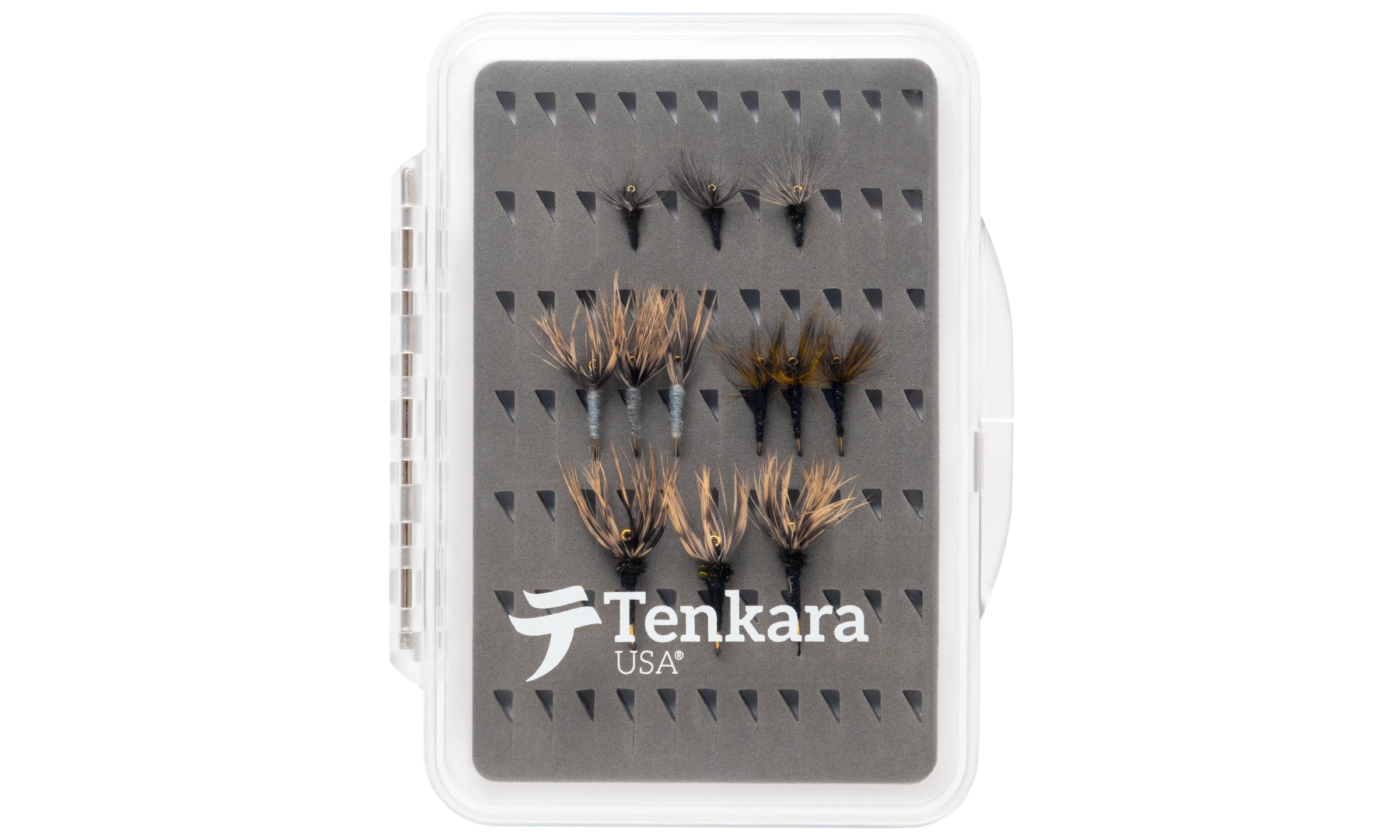
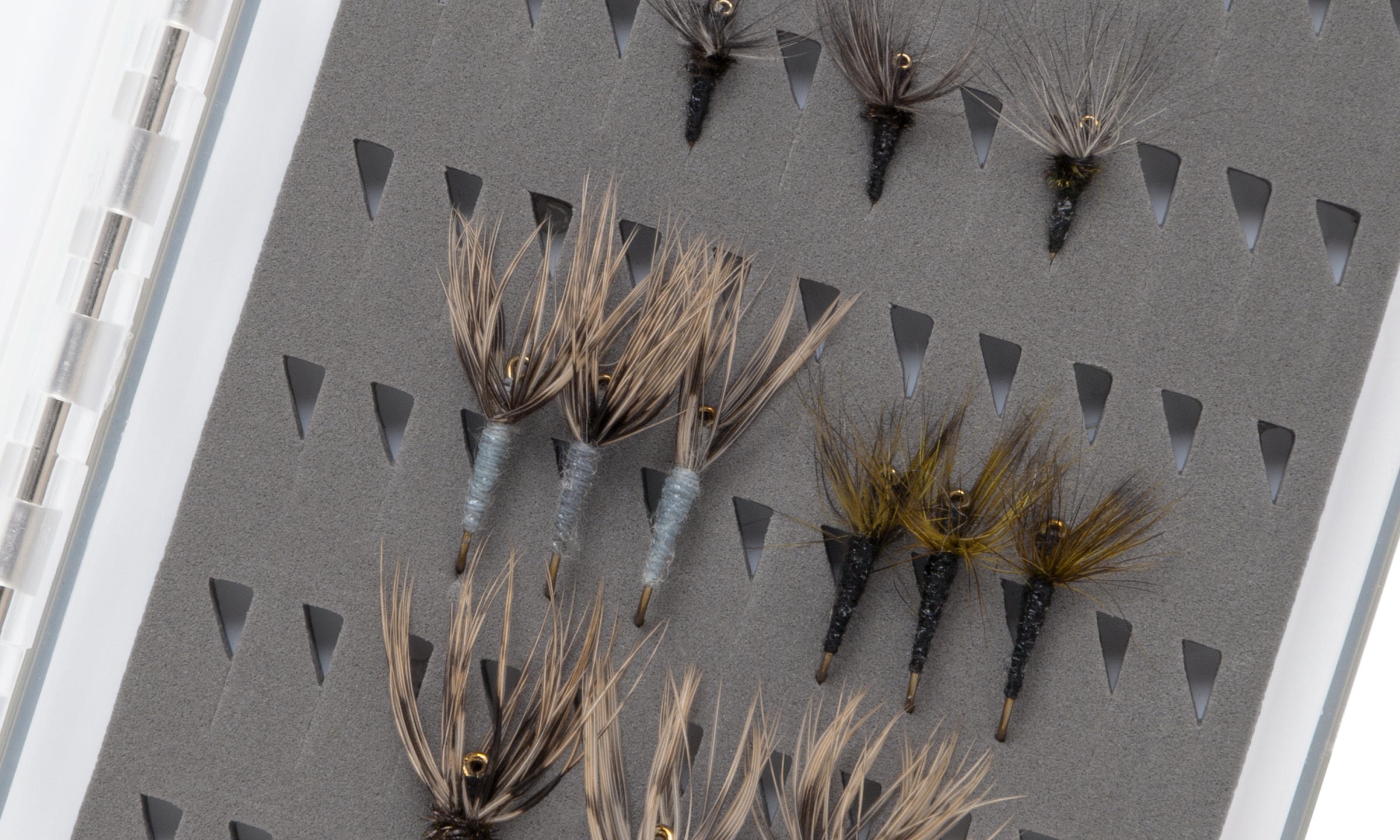
- 12 Tenkara Flies in Box
Read the full transcript
0:00This is Daniel Galhardo and you're listening to the Tenkara Cast, a podcast about the simple Japanese method of fly-fishing, Tenkara. In the Tenkara Cast we'll be sharing information on techniques, history, philosophy, and Tenkara stories from anglers all over the world. This podcast is brought to you by Tenkara USA, introducing Tenkara outside of Japan since 2009. It's only possible we create content such as this podcast and videos because of your support. So we thank you so very much for purchasing Tenkara USA rods, lines, and flies. I hope you enjoy learning more about the simple method of fly fishing. Today we have here Allie Ray Marriott. And Allie is a guide that I met years ago when she was in guiding school out in Leadville area. And I went there to do a little bit of a clinic and just teach the guides there about Tenkara. and now she moved to Boulder and she's working at a fly shop and guiding both with Tenkara as well as Western Fly Gear. Hey Ellie, thanks for coming in and joining us. No problem, Daniel.
1:06Thanks for having me. So yeah, I'm a native Boulderite, so I just moved back home and got a job with the local fly shop, Rocky Mountain Anglers. I'm one of the few people in the shop that kind of know the whole background with Tenkara and have helped you a little bit at IFC with the Women's Showcase, which was a lot of fun. I've been hooked ever since you showed me. Yeah, that was pretty fun, yeah. The Women's Showcase at the fly fishing show in January, and I think that we're going to do it again this year. Oh, good. Yeah, so the fly fishing show circuit, we start in Denver, and the very first one, they started this thing, the Women's Showcase. And how was that last year? That was so exciting. It was a better turnout than I thought it would be, even though they stuck us way in the back. but I'm hoping for a little bit better of a room this year but I'm I'm excited and I know a lot of ladies are too because it'll be a good year and what did they do there like you did a presentation on Tenkara and what else was the what was the format of that women showcase it was pretty much just to uh kind of introduce the world of Tenkara history and all to women but not women specifically just anybody that wants to get into or learn about Tenkara and its history and it was just a brief little example but yeah we had quite a few people and you brought in your casting class which was a bunch of guys of course right yeah we didn't barge in after my casting class I was like hey let's check out the women's showcase and we all walked over there and it was pretty fun to catch some of your presentation actually I didn't have to do my introduction because you guys are doing a really good job so I was like okay I'll pick it up where they left yeah exactly we introduced you as you walked in the door so um that was that ended up being perfect yeah i'd like to see a little bit more maybe next year i'm hoping or this coming year i should say well besides the women's showcase too you have been introducing a lot of women here in boulder you know how to fly fish rock mountain anglers has been really good at kind of bringing women together tell us about the interest level that you guys have had here in boulder and how are women taking it up we actually in the shop run a women-specific fish along, as we call it.
3:20But prior to that, we'll actually do free introduction classes for women specifically. And the majority of the time, I'm fishing tenkara on these fish alongs anyways, because it's so easy to go to. And honestly, I haven't fished Western style, as I'll call it, really at all. Because it's just such an easy go-to, and I've gotten so many people, what is that? wow, that looks so fluid. Oh my gosh, I have to do it now. So yeah, I've gotten a couple ladies who buy it right off the bat. So Ellie, I want to discover more about how you eventually got into Tenkara, but let's talk a little bit about how you got into fishing period. How long have you been fishing? Pretty much my whole life because of my grandfather. He was a huge influence in my life as far as the natural world goes but he didn't get me started on fly fishing it's a little expensive to get into and a little intimidating the culture but I started with a fly and a bobber that was it on a spinning rig and it worked and then once I got into actual fly fishing I I didn't look back and kind of same with Tenkara it was just once I got into it I'd almost rather do that. And your grandfather introduced it as fly fishing eventually? He didn't have a chance.
4:39He passed away in 2009 and that was really before I started getting a lot of that gear. So he got me into the world of fishing, let's just say. But he gave me my first flies, which was this cute little wallet of Orvis flies selection. And also his wife, my grandmother, her father had tied his own flies up in Wyoming and he gave me that little wallet as well. Cool that's great so you grew up fishing with him and that was here in Boulder or where? Here in Boulder Wyoming. Okay so he took you to the ponds nearby and Boulder Creek high mountain streams great. So that's that's my my natural areas. And how did you eventually decide to pick up fly fishing? Well the allure of the whole sport is just I mean it's so beautiful how could you not I love it I mean it's more than just the gear it's more than just the fish it's it's about being out there and kind of finding peace i mean i live by that uh that quote henry david throw said is many men go fishing but without realizing that it's not the fish they are after yeah that's very true beautiful quote and i don't think we use it enough sometimes it's uh yeah and so when you became interested in fly fishing like the allure of fly fishing did you decide to go to a fly shop because it's always intimidating for people to take up fly fishing like myself I taught myself how to fly fish in Brazil and there's no equipment there's no fly shops but it's exactly like you I just found it beautiful and like the idea of using flies to catch fish I mean there was a lot of stuff that attracted me to it and when I was about 14 15 I went out and I found like a fly fishing set like a scientific angler's thing and I bought it and taught myself how to cast. How did you kind of start teaching yourself? Kind of, yeah, similar. I mean, I've always been interested with the natural world. So as far as thinking like a fish, being a fishful thinker, let's call it, or having that interest in aquatic entomology, bugs, I've always had that. So it kind of just fell into place when I started, so to speak, hunting for them in a more natural way with their own prey.
7:00Well, fake versions of it. But yeah, I tried to teach myself. And then once I did find out about that program at CMC, Colorado Mountain College that Mark Cole does, once I did that, then the learning curve just went to full extent. I learned so much more than I had teaching myself, and I'm super grateful for that. I think that's where it really started and where it really kicked off. And then coming back here and immersing myself in a culture of nothing but from Randy Hicks, who owns Rocky Mountain Anglers, my boss. I mean, the way he fishes is completely different than the way I fish, but still he's got, he's full of knowledge. I mean, to the umph degree. And then for, and yourself, you've taught me many things. Kit, my boyfriend, he's taught me many things. So I just kind of take little bits where I can. So you pretty much picked it up like pretty much before I met you. I mean, you had not been fly fishing for that long before you decided to actually go full in and attend guide school, huh? Pretty much. Wow. I knew I wanted to do, I wanted to be some sort of teacher and educator. It's fun to kind of pass something on that you're passionate about. I mean, who doesn't love that? And something in the outdoor world. I mean, we live in one of the greatest states. It's Colorado. It's beautiful. You can't help but be outside. And you're a great teacher too. I've heard from a lot of people that, a lot of gals especially, that have gone to the women clinics that you've put together and the fly tying. And they really appreciate you teaching and like the fly tying, like everything from the fly tying to the knots to the cast.
8:40I mean, you're touching a lot of people in this area for sure. That's the whole reason why I do the ladies fish along, because it's fun more than anything. And I like to see people, you know, with smiles on their face, not just, you know, with a rod bent over. That's great to see, too. Heidi, she caught on our last fish along a 14-inch brown out of Boulder Creek. And who is Heidi? She's one of our ladies who joins our fish-alongs pretty much every time. She started with a guide trip with Harris Spudig and then went to a couple of the women's specific intro classes and then started joining our fish-alongs. She's been in the shop pretty much at least twice a month since we first started seeing her in the spring. She loves it. I mean, she found her passion. that's great so that's kind of thing you know like just kind of giving the path for somebody to know how they can get into fly fishing that's great and you're doing that yeah opening it up for these people that you know it's it's an intimidating culture i'd say at least it was for me when i was starting especially for women it's kind of weird and i i want it to be the complete opposite i want to people that come in walk in and be like what do i need to get started all right well here I am we're going to get you started right now if this is what you want to do so let's find out perfect so let's go back to the little bit of a timeline so you've been fishing your whole life and then you decided to pick up a fly rod and soon after that you decided I'm going to go to guide school out in Leadville and then I came over to do a little clinic that's where I met you what was your first impression of Tenkara? My first impression was it was very intriguing and I mean, I love the simplicity. I think this is kind of similar to what a lot of people think.
10:31The simplicity was amazing. It's beautiful. But the worries were, what do I do when I catch a fish? What do I do if I catch a big fish? How applicable is it in all fishing situations? Is it not? The more I learned, the more comfortable I became with it. And the learning curve with that was much shorter than, as we call it, Western fly fishing, just rotten reel, because there's far less to pay attention to, to concentrate on, so therefore you can relax, I'd say, a little bit more, and that was the first feeling I got from it, was a complete and total sense of relaxation. What about the worries, like, you know, how do I land a fish, how do I, what happens if I land a, if I catch a big fish, did you get those answered relatively quickly? Yeah, those fears were pretty much wiped out right away. I mean, mostly with just your demonstration.
11:32More my fear was, am I going to catch a fish? Because this do thing, it seems so intimidating. And I didn't for the first time. I didn't for the first couple times. And then I borrowed some of the rods that you lent to Mark. And then I finally hooked him to some fish. and it was uh it was great fun it was almost more exciting just the way it felt so because you just it felt more natural like i i would like to say that's the best way to describe it and then right after that you moved to boulder and you started like looking for jobs with within the fly fishing industry and uh randy had just bought rocky mountain anglers i believe pretty much he was in the process of it and um right when he brought me onto the shop is when he took ownership of it And then he hired you. He hired me with that mindset of bringing more women into the industry as well. He wanted to start that because it's kind of still a niche place in this industry, in the outdoor industry.
12:36And it's hard. I mean, a lot of women, especially in Boulder, they're so active that it's hard to concentrate on one thing. And, you know, you've got to put quite a bit of effort into fishing before you really get it down. I feel like it's, I mean, I fish pretty much every day. But yeah, I can see that presenting a challenge. I mean, you know, like, I mean, it's a little bit like myself, even, you know, fishing, trying to find a time to go rock climbing and then trying to find a time to go fishing and biking. I mean, just, you know, it is a very active town. but I think what I'm finding out too is that people are becoming more and more open to you know adopting fishing as a part of their life if we tell them that it doesn't have to be all they do it's like you don't have to just just fish right so you can I think having those evenings that they can put on their calendar and they they know it's going to be a fish along or the weekends and then it can block it up and it's like that's going to be the the fishing day I've seen some of them doing that definitely and uh i mean having these little events definitely i mean i've gotten huge turnout this year it's greater than it was last year the enthusiasm is definitely there and i love that and uh so i'm excited i'm excited for this you know this coming year i mean it's it's still going to be tricky but you know we're getting a we're getting a good turnout so no it's great and now like let's talk a little just a little bit about the demographics too because we have an interesting within the women group there's an interesting demographic in boulder it's a really young town uh what is what are the women that are coming to these clinics and fish alongs like i mean how old are they and you know are they going to school and becoming interested in fishing or who are they the age range is pretty great we do get quite a few of those young students coming in they want something to do um maybe it's boyfriend influence or maybe it was a father influence i or maybe it was just them i'm finding more and more girls that are uh or women that they do it for themselves which i love i mean that's why i do it and well i mean other than my grandfather i guess there was a male influence but there's uh yeah there's more and more of that but yeah the age range like early 20s all the way up until I'd say mid 60s easy and I mean these ladies they're all super enthusiastic they're fun it's great some of them have been fishing their entire life too and they just kind of they want to get with some other ladies that fish because it's a little bit more relaxing I mean there's there's definitely some some guys out there that like to do you know they're more competitive yeah yeah the dynamics changed quite a bit it was really interesting like for example i think it was a couple years ago now i was doing a little demonstration here in boulder and sasha you know she came by and she's like oh i've always wanted to learn how to fly fish but you know there's too much stuff and then she actually had a shoulder injury and you know i was like well you know take a look at these rods i mean you don't have to move your shoulder a whole lot it's a very little movement it's like oh, I can do this.
15:49You know, she got super excited. And so she's in her late 20s, early 30s, I think. And all of a sudden, like, you know, we scheduled to do a little outing. And she just brought all these friends that work with her at the university. And they're all in their late 20s, early 30s. And it was just a group of them that had always wanted to fly fish. All of a sudden, they're going out pretty often and kind of, and they started calling themselves the Tenkara Fly Girls. You know, so it was pretty neat to see that, you know, A group of young women that just out of their own interest, they wanted to go and see what was beneath the surface of the water. They wanted to see if there was trout. Because some of them actually didn't even realize that Boulder Creek and South Boulder Creek have trout. And that kind of picked their interest, I think. And just being outside and enjoying nature, exploring a little bit. I mean, it encompasses so much. And for these women, they just have fun being there, standing in the water and feeling that whole relaxation.
16:50It's wonderful. So, yeah, that's huge. And whatever you get out of it, as long as you're out there, right? Yeah, and I think, you know, the other thing, too, that I like to think, it's just one more excuse for us to be outside and not watching TV. I mean, if you're tired from climbing, you're tired from biking, and, you know, you can always choose something to be outside. that kind of works with different muscles, different parts of your brain, different parts of your soul even. Fishing just kind of fills this really kind of, I think it's a very primal, but just very instinctual need that we have. It's kind of hard to tap into that area with other activities. Yeah, I definitely agree. And it's definitely very soul-fulfilling as far as just being in such close contact with not only these very mysterious creatures that seem so much smarter than us when their brains are not even a tenth the size of ours, but just being in contact with the water itself.
17:56I mean, you don't have to get waist deep. You can just ankle. But, I mean, that's where I find my peace. It's great. I feel like a lot of ladies do too. And right now, so you're working at Rocky Mountain Anglers. And how much time are you spending between inside of the shop and guiding? I spend probably more time in the shop. It's a pretty tight core group between Randy and Brian, who's right below them, and then myself and Harris. and then we've got a couple other great kids that work for the shop that have been there since they were little, old enough to tie a fly, and they help out once in a while. But, yeah, we've got a pretty tight group, and considering he's owned it for a year and I've been there for over a year, it's, you know, we're trying to get all these things kick-started, not only the women's groups, the women's intro classes, the fly tying classes that I do and our stream cleanups we've got another one of those coming up big one but also just the intro classes in general we offer those all the time pretty much every week every weekend I should say so we've got a lot on our plate but I still get out there I was out yesterday doing a tenkara guided trip in the morning and it was it was fun it was from a gentleman who's just brought his son here to go to see you and he uh just wanted to fine-tune his techniques a little bit more and that's what I was there for so he said he learned a lot and it was I'll quote him on this he said it was great having a as he said an angel-like voice over his shoulder telling him what to do and kind of what else to kind of look at what a different aspect or a different perspective so that was that was interesting that's cool it was nice i thought it was funny nice yeah it is funny but cute at the same time and it's uh yeah as long as uh you know they thought the angel part of it was kind of you putting them into fish and i kind of think that's yeah exactly i mean i i do love to guide it's it seems like nothing better because just I don't know I I really enjoy watching people fish I don't have to fish with them even though he uh he thought I was going to be which I mean I I showed him how I would do it but yeah it's it's fun just watching yeah yeah I think guiding is um you know I think I would have a hard time with it because sometimes I do want to fish to see like what is it that is going of work in this particular pool you know and i want to kind of yes i can tell somebody and i love the teaching aspect of it but once in a while you know i kind of want to grab the rod and it's like why is this why are we not getting a fish here and see if there's anything that's going to entice a strike so i'd have a hard time i think guiding but i always appreciate guides because it's um you know it's tough to kind of hold back and not just wanted you know to grab the rod out of somebody's hand but if you love if you love teaching uh as as you do it i think you can you can approach guiding from that perspective of teaching more than just putting people into fish and that seems to be your style right yeah i'd rather have them come away from the situation with more knowledge i mean the certain situations that call for let's get you on some fish certainly that's that's great fun all right let's get into some fish but when when you want to learn then all right then I'm there for it I'm going to show you as many different techniques and why and when as I can and what's applicable and I mean when it comes down to just bugs themselves that's what it really comes down to is the bugs but uh in turn the flies and how you're presenting it.
22:03Yeah, and you don't take that approach of like the one fly that I introduce to people. I mean, like you really love the flies. And, you know, so it's really cool because every time we go out fishing, I love it because you're like, this is the fly right here. And you're like, you know, you have very specific flies based on the bugs that are in the water. So, and it seems like you kind of took an interest in fly fishing because of entomology. Is that the help? That is definitely a factor. I love the insects. I love the bug life and their cycles that they go through and why the fish are going to behave in a certain manner because of the insects that they're feeding off of. But at the same time, as far as the different bugs, I mean, yes, I do love to tie. I love tying different patterns. So I tie a lot of different things, different colors. but for the tenkara flies cabaris they're um they're so beautiful in their simplicity that i don't want to change really anything other than i mess with a few of the colors and maybe some of the materials that i add in but i want that same profile because the way it looks and behaves in the water is so perfect and i love explaining it to people because it's just it's So natural and perfect.
23:20I mean, you don't really need to change it. And I do so well on it. So you go back and forth between tenkara flies, western flies. You vary quite a bit. I mean, I'll stick with my kebari on a tenkara setup, definitely. But when I'm fishing western, then I'll get a little more technical. Maybe I'm fishing a streamer, so I'll throw on that little sculp. And the sculpzillas are great. Sparkle minnow, those are a lot of fun. I mean, as the shop favorite goes, the chubby Chernobyl that everybody talks about. But those are fun. I do enjoy fishing all the flies that I can fish. So you really tend to stick. Like when you're doing the real setup, you kind of use more like the western flies. But really when you're using a tenkara rod, you tend to stay with a tenkara fly? Mm-hmm. I've fished for the carp and for bass. I've fished other patterns with the tenkara rod how was that carp fishing trip it was awesome I love carp fishing with the Amago that that is so much fun that's cool and I love people's faces when I tell them that yeah I fish carp with these rods and they're like what and what'd you use for flies I used I used one of uh Jay Zimmerman's patterns the back stabber or yeah that's the backstabber. I'll try to look up that pattern and I'll put it on the tenkarausa.com forward slash podcast. It's a super simple pattern but it's got a little bit more weight to it which I think helped. I could get away with a kebari just the way I was presenting the actual pattern to these fish but I wanted that weight. So do you ever use like western patterns with a tenkara rod going for trout or in that case you you really don't mix it up that much sometimes if i want a a specific profile or behavior from from a certain pattern then yes maybe like let's say i'm trying to skate a caddis maybe i would turn towards a stimulator or an actual caddis pattern to sit on the water just right but i've found through fishing the more i've done it with the more i've become comfortable with tenkara rods, I've become proficient at doing that with a kebari, as long as it kind of has a similar color scheme, let's say. But I do fish traditional wet flies on tenkara rods. That seems more natural, which they have a little bit more variations in patterns and the hackles are going towards the bend of the hook rather than towards the eye.
26:02That's the only difference. So nothing huge, but they've got that same mindset where they can be fished at all levels in the water successfully and it doesn't look inappropriate to the fish. So because of that aspect, I think I'd rather fish, I'd stick with a pattern that can behave that way. And what about using thin cuttle flies with a western rig? Have you done that? I haven't done it. I've been curious. I've been thinking about it. and it's not something that I've kind of dabbled in yet. I'll give it a shot, though. Yeah, why not, I guess. They're flies. So I was just reading some of the articles submitted for the next Tenkara magazine, and one of them was by my teacher, Dr. Ishigaki, who is actually coming here next week. And he has a quote, and there's something along the lines of, people think that when he comes to the States, he has to change flies, but trout don't speak Japanese. You know, the trout in America, they don't speak English or Japanese.
27:04They're just trying to eat. So there's really no reason why you can't use any kind of fly anywhere you want, essentially. Exactly. I mean, if a traditional married-winged salmon fly from Scotland or Norway works in Alaska, then why not a kabare from Japan on the Gray Reef in Wyoming? Exactly. And I have used it there, actually. They've caught some really nice fish in the Great Reef in particular, actually. Exactly. Yeah. So let's talk a little bit about guiding. You know, you're on the Tenkara Guide Network as a Tenkara Guide. You're offering your services here in the Boulder area. But obviously, some of your guide trips are Western setups. Some of them are Tenkara. And I believe, like, once in a while, we introduce people to Tenkara in the middle of a trip. Are people specifically asking, like, can we go out on a Tenkara trip? or is it you kind of giving them the choices? How does that go? Both, but definitely a lot of requests. The gentleman I took out the other day, he found us through Tenkara USA, looked us up, and he remembered me by Purple kebari that I did for the summit last year.
28:17Yeah, that gave me a good laugh. I'll have to post a video on the podcast page here, the Purple kebari. And in turn, he ended up purchasing some thread today from the shop. Purple. Purple thread? Yeah, because I happen to really like purple. I feel like it works really well. I don't know why, but I can't quite explain it. But yeah, so both different ways. I mean, there's people that will walk into the shop knowing that they want Tenkara. They want a guide trip. and then there's people that have no idea and then maybe have heard it just through the grapevine and they're like, well, can we give that a try? I don't know anything about it. What's that about? And I mean, I think it's great, just all the interest that's popping up here. And this guy that I took out the other day, he was from Vermont. And he said nobody really knows about it out there. It's, you know, because it's kind of...
29:19It's kind of traveling. It seems like, which is odd, but. Yeah, there's, I mean, there's a good amount of people doing it in Vermont, but what I found there was really interesting. At least the area that I fish, there's a lot of really small streams with a lot of bands on them and a lot of foliage. So I kind of get the impression that it's a little easier to hide and never see anybody fishing because, you know, you go just a couple hundred yards and you disappear into these woods as opposed to like, let's say, Boulder Creek or Clear Creek. all the creeks that we have in the canyons here where there's a highway going by them. And of course, we have a lot of waters that you can hide a little bit more. But here in Boulder, it's like I'm driving up the canyon, and usually I see one or two Tenkara rods, and I can tell them they're Tenkara because they're so long. So it's kind of become fun to see that. But yeah, I think the people in Vermont can hide a little bit better. Right, yeah. That's definitely true. I mean, I've definitely seen more and more through just being here. And, I mean, being in the shop and seeing the interest and having people that come back after purchasing a rod and they come back for maybe another one or flies or just questions, that's great.
30:32I mean, and then they're telling their friends and then their friends are telling their friends. Have you seen, like, a lot of people really, like, using Tenkara as their entry point to fly fishing? They were like, they don't want to deal with all this stuff. So they try to think out of first. Yeah. A lot of our intro class people, I'll kind of mention it on the side. I mean, it's hard not to mention when it's something that I'm so passionate about and their ears perk up because maybe they've come to our class specifically because they want to learn to fish for their backpacking trips and they want to catch to keep, which is fine as long as you know what you're doing, where you're doing it. But then I introduced this rod that's so lightweight, so packable and so simple. You don't have to spend half your pack on gear just for your fishing. And so they do end up going straight to Tenkara. I like getting the cast down because I'd say the Western cast is, it is more complex. There's more steps to it and it's good to know that cast. But other than that, it's a great place to start.
31:33I mean, there's not much to the cast that I can explain. It's super easy to get people started on it. Yeah, I think I started comparing, you know, like if you're teaching somebody how to cast, you can build off of Tencato because I think it's really similar to like teaching somebody how to drive a stick shift versus an automatic car. On a stick shift, it's almost exactly the same thing. You have to coordinate a couple of different parts like your clutch and your gas. Otherwise, the car is going to stall. And exactly the same thing happens with a Western rod setup. You have to coordinate your two hands. And with Tencato, you don't. You just go up and down and usually about two minutes and you get it. And it's very much like driving an automatic car. You just press on the gas and you kind of go and you have your stops and like you have your brake, of course. But then after you've got that kind of motion figured out, then you can build off of it and, you know, use the Western setup a little bit more easily, too, I think. Yeah, that's definitely true. But of course, I think some people also just stick with it because they realize it works, too.
32:34So I think Tenkara is here to give something to everyone. I mean, some people do like the complexities and the coordination and the rhythms that kind of come with a Western setup. But not everybody does, you know, so it's nice to have the different tools in the quiver. And that's definitely true for me. I mean, there's some days where you want to make like Brad Pitt in River Runs Through It and just, you know, double haul 50 feet of line out there. But we don't all live on the Madison River. so I mean not that's not always applicable and it's tiring I mean I've same with Sasha I've got wrist issues and western style hurts eventually it gets it starts to hurt my wrist but as far as that landing big fish thing that one always that question comes up like well I want to I want to fish to big fish so I can't fish tenkara and I'm like that's that's not true I mean going back to the carp thing they're they're one of the hardest fish to catch because they're incredibly intelligent they're big and they're strong and they also don't build up lactic acid like trout do so trout will tire carp don't so how do i successfully land a carp on tenkara when i have no drag system i mean it's actually easier than you think the rod does the work for you as long as you've got that a little bit of patience and you don't just horse them in which you shouldn't be doing anyway so i've had great fun landing big fish and one of my favorite places to fish is cash laputer up past mishawaka in indian meadows that area rustic those fish are wild and hot and like in the cash laputer off of like fort collins area yeah so you're fighting big trout over there They're pretty good sized and they're strong and they are smart.
34:30And fishing Western would have been, I would have probably lost a lot more fish. And Tenkara, it was too easy. It was a really feel-good day. That's awesome. So now about guiding specifically, we've heard from some guides that there's a good number of guides taking it up. And then there's a little bit of a movement of guides that are using Tenkara only for guided trips. some guides like it because maybe they can introduce a kid who's on the trip and having a hard time with a reel and the kid can pick it up. Or perhaps one of the people in the group, you know, like if you have a group of two to four people, sometimes you have one person that might be struggling if he's just starting, you know, with a reel. So they started bringing some kind of rods along with them. And other guides too, we've kind of seen just at the end of the trip, they like teaching something new to the client because I think a lot of guides are realizing that you know these people are fishing and they can catch a lot of fish but when they go back home they're really going to talk about something that they learned yeah they're going to mention they caught quite a few fish but that's a very short conversation it's like oh yeah we did really well we caught 20 fish and that's where the conversation ends right and but if you if you teach something new to a client like even or you know maybe it's a new fly pattern that a client has never seen Maybe it's a new technique or maybe it's Tenkara, like a whole new method.
35:54That client's going to go back and just talk a lot about it and that kind of thing. What are the values that you've seen in Tenkara? Are you using it sometimes with somebody who is struggling or is it something to kind of share something new? What do you think you like about Tenkara as a guide? Probably going back to the simplicity, getting people into the sport, just getting a feel for fly fishing in general and that cast and the motions of the water and the line and everything because they definitely match up. They parallel, not to every degree, but there's a lot of similarities. And for people that don't quite know, they're a little intimidated by the world of fly fishing and Tenkara is just a little bit more friendly for people to step into. And kids, that is a great point. Kids really like it. It's super kid-friendly. And I've definitely got some kids onto Tenkara, and I think it's great fun.
36:58We've got a lot of clients that get their kids into it as well, and they just go down to the ponds and pick on some little pan fish. I mean, that's great fun. That's awesome. It's a great way to just get kids into fishing in general. because they get discouraged pretty easy, I'd say, from a lot of sports. If they're not having any luck, they need that kinesthetic value of being able to touch and see and kind of understand, and it's more involved with that. Tell me a little bit about the waters that you fish. The waters that I fish the most are probably the high mountain streams, the confluences to the bigger creeks that we have through the Front Range area. I love to focus on South Boulder Creek above Moffitt Tunnel. That's absolutely gorgeous. And there's Mammoth Creek that spills into South Boulder Creek, a little bit farther down into Rollinsville, and the headwaters of Boulder Creek up by, which would be middle Boulder Creek, the North Boulder, the St. Vrain. I think that's an amazing piece of water. And also one that's very close to home is Four Mile Creek. It's very tiny. A lot of people even ask me, does that have fish in it? And because it's so small and it looks like it could be a seasonal creek, those are definitely my favorite because I like to fish to fish that have never tasted a hook before. I don't I don't really like to go after those big monsters that have seen a million different flies and can not only name the pattern but tell you what kind of hook it's tied on.
38:38But as fun as they are. So I like to fish those smaller creeks, definitely. So you like fishing close to home primarily. That's kind of how I feel. I just started getting over to driving to go fishing. There's so much good fishing close to home. and occasionally I'll drive a little bit too. And I think you do too, right? I mean, you do go fishing some other big waters too, right? I do. I'll take a couple trips here and there when I'm feeling a little adventurous. And then in the wintertime, because I fish year-round, those little creeks, they freeze up. I can't fish to them. So I have to focus on tailwater, anything that's spilling out of a dam, a reservoir that has been dammed up. and then that's going to stay, it's going to maintain a certain temperature and you can fish it year round. So I do end up going to Blue River below Dillon Reservoir and fishing to those fish, which they're big monsters that feed on mice's shrimp and everybody else goes out there.
39:41They definitely take some technical fishing, but it's further than an hour. And there's something to be said about fishing to the big lake run brown trout that are coming up to spawn into the section of the south plat that's called Dream's Dream, because hence the name, they get up to about 30 inches. So, I mean, that can be fun, but it's definitely some effort to get out there and almost more stressful than it is worth, which at that point it's kind of like, why am I doing this? Well, I do it once in a while. So, yeah, the small creeks and streams where you can find the prettiest fish, especially because my favorite fish is a cutthroat. I love the Colorado natives. They're beautiful. And if people want to fish with you, Ellie, where can they find you? They can find me at Rocky Mountain Anglers on 19th and Arapahoe, which, you know, it's the one with that big fish mural on the side that Rem Robinson painted.
40:42It's absolutely beautiful, and it's a great shop to work at here in Boulder. Yeah, right by Boulder High School, actually, where I went. Wow, this is our 19th episode of the Tenkara Cast, and I'm absolutely stoked by the level of support we're getting. We've had just about 30,000 listens in the last couple of months, and that to me is a great number. I hope you enjoyed hearing the conversation that I had here with Allie. She's a tremendous guy. I really enjoyed sitting with her and learning a little bit more about her experiences with Tenkara. I hope you enjoyed that as well. So before I forget, I'd love to thank Nick Ogawa Takenobu, as most of you know. I did a great interview with him a couple of months ago about his music. That's what I'm using here in the outro and on the intro for this episode. If you listen to the Tenkara Cast in iTunes, I'd love to ask you for a favor.
41:44And if you don't, maybe you have iTunes on your computer. I'd love to ask for your time to give us a review in iTunes. It gives me a lot of energy when I see new reviews, but it also helps people find the Tenkara Cast and listen to it. That's still how most people are finding podcasts out there. And if you can take a minute to leave us a review on iTunes, that would be awesome. Also, if you have any comments or ideas for the podcast, I'm trying to keep a really varied podcast. I don't want to do it all about techniques or all about the product or all about interviews. I'm trying to kind of bring some variety so that you have some options to listen to, especially as we build a library. I've done a couple of interviews. I've done several short casts where I talk about a tenkara for a few minutes. And usually I just kind of ramble about something that's in my mind. I've done a couple of longer podcast episodes about techniques and that kind of thing.
42:45Um, so if you have any ideas for, or even just comments about how you're liking that format, that kind of diverse format, uh, send us a, uh, drop us a line on tenkarausa.com forward slash podcast. Um, but for most part, I just really want to thank you for taking the time to listen to my voice and my ideas here, along with, uh, the ideas and experiences of other Tenkara anglers, such as Ali. so until next time on the Tenkara Cast and I hope you all get to enjoy some great fishing this weekend
This transcript was generated automatically and may contain errors.
Keep listening
More from the Tenkara Cast
-
44 min
-
42 min
Ep. 64Skills and how-to
Tenkara Q&A Part 2: Tenkara Lines, Tenkara Flies, and more
50 minEp. 63Gear
Tenkara Q&A Part 1: Tenkara Rods
42 minEp. 59Stories and philosophy
Social Distancing
32 minEp. 58Conversations
Tenkara in Salt? A Conversation with Henry Barber + The River Network
With Henry Barber, Nicole Silk
1 hr 37 min
Mentioned in this episode
Shop the episode
Watch next
Related videos


JOIN OUR COMMUNITY
Welcome
Get tenkara tips, new videos and exclusive sales in your inbox.